
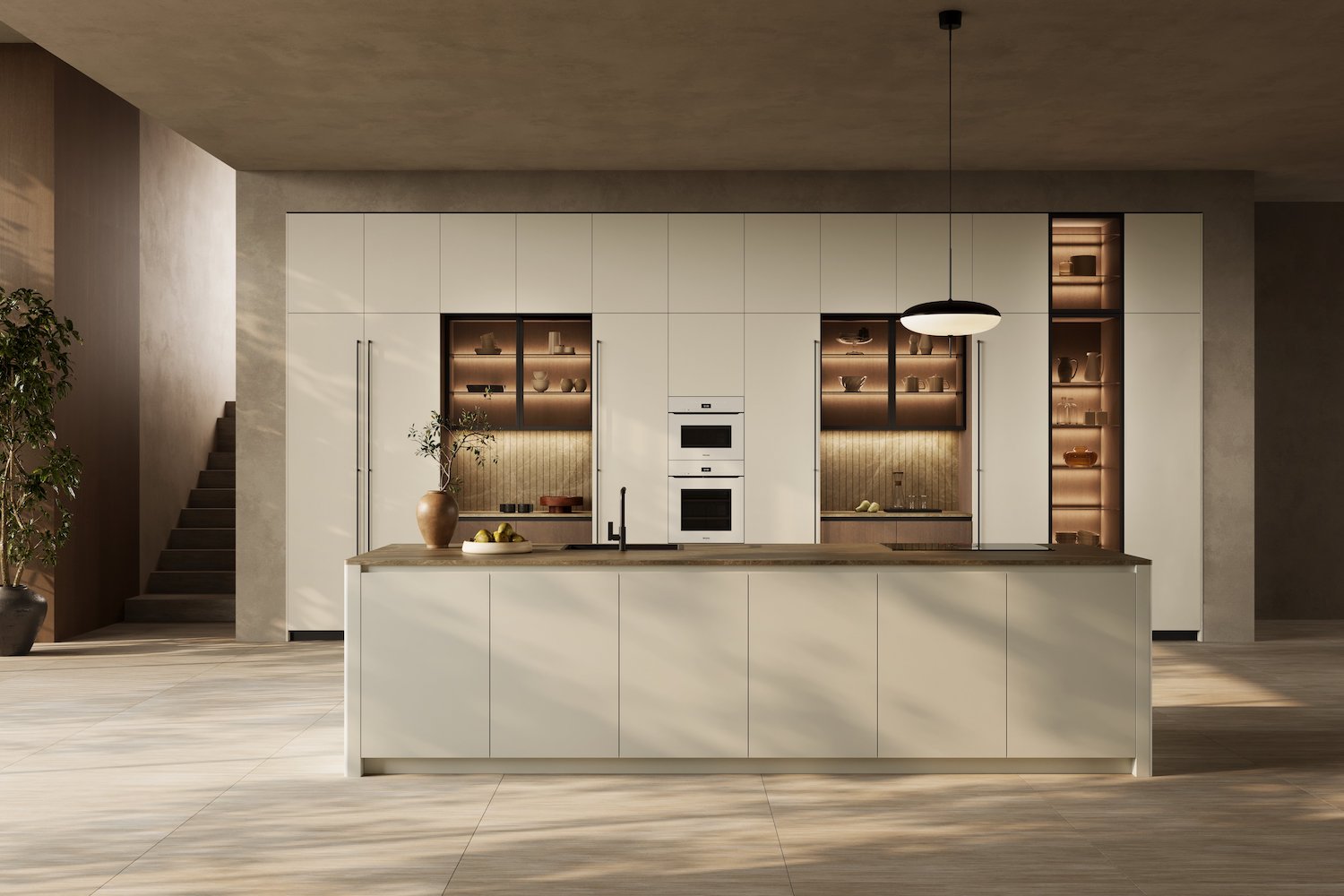
In contemporary kitchen design, certain layouts have the ability to transform a simple arrangement of cabinetry into a clear architectural gesture. Among these, the kitchen alcove has emerged as a refined way to organise the kitchen wall. More than a compositional strategy, it is a design approach that allows architects and designers to shape volumes, introduce depth and define space with precision.
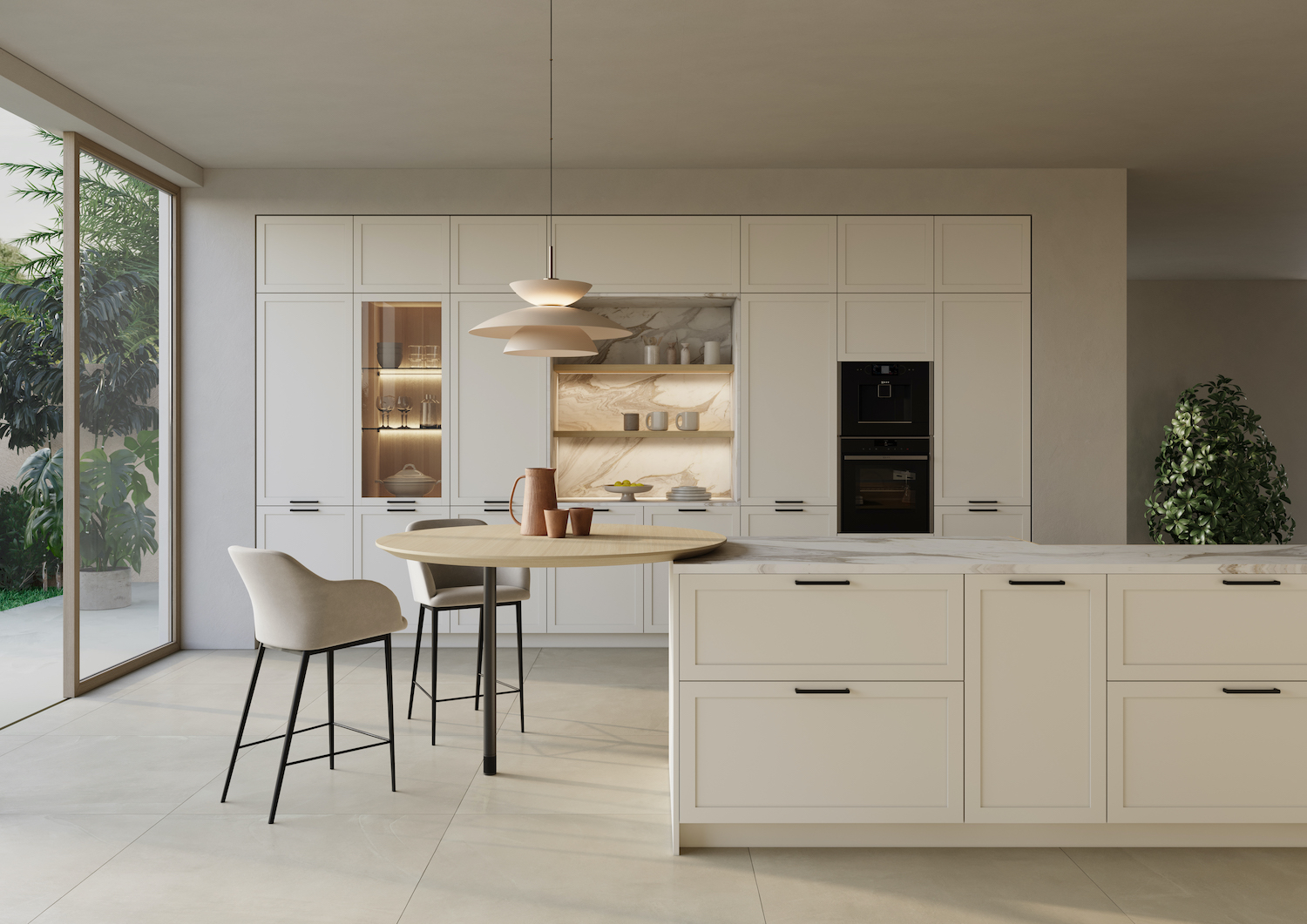
Increasingly, interior designers frame the working area of the kitchen within a recessed niche integrated into the wall. Two full-height columns — typically housing pantry storage, ovens or refrigeration — establish a clear vertical perimeter. Between these volumes, a central zone opens up, accommodating the worktop, appliances and lighting.
The result is a kitchen that appears embedded within the architecture of the home: a balanced composition of solids and voids that brings rhythm, clarity and visual continuity.
At a glance
Framing the kitchen wall
This type of composition is based on a simple architectural idea: framing the operational area of the kitchen within two vertical volumes. Tall units define the sides, while an overhead element or integrated structure completes the composition, creating a recessed working zone within the wall.
At first glance, the configuration might recall traditional wall cabinets, a solution often associated with past kitchen layouts. Over time, however, the concept has evolved into a far more architectural approach. Tall columns become structural elements of the interior, while the central space becomes a fully integrated workstation.
From a design perspective, this strategy reflects a principle architects value deeply: working through subtraction rather than addition. Instead of layering elements onto the wall, the design carves out a recessed space that organises functions with clarity and precision.
The composition appears compact, yet the depth of the alcove introduces a sense of spatial breathing room.
From framed kitchen wall to operational alcove
Within contemporary design language, this configuration increasingly aligns with the concept of a kitchen alcove — a dedicated working niche integrated into the kitchen wall.
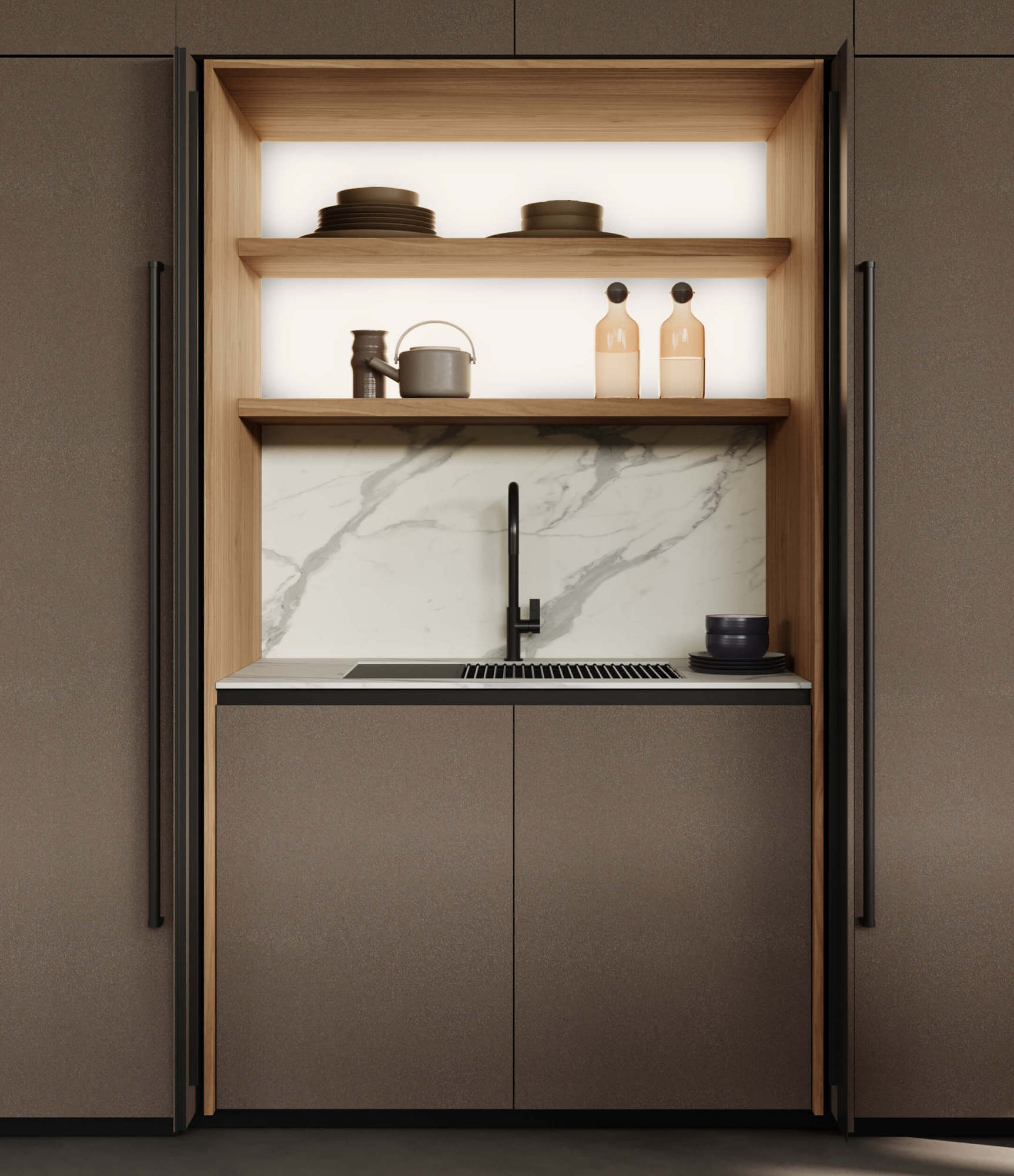
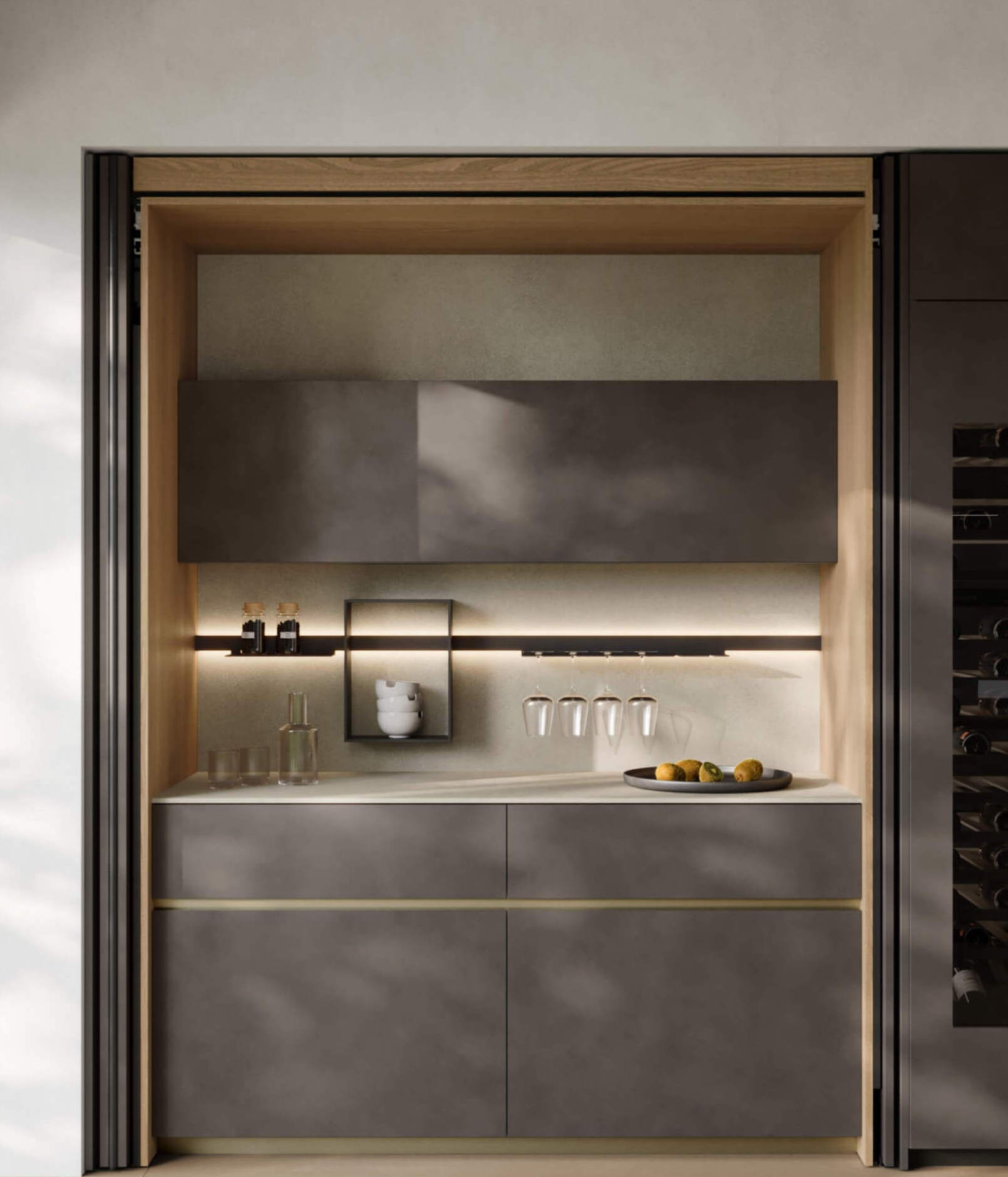
Within the Zecchinon design ecosystem, this approach is enhanced through advanced systems such as Exedra and Revego. In this case, the alcove is not merely a visual recess but a dynamic space that can either be revealed or concealed.
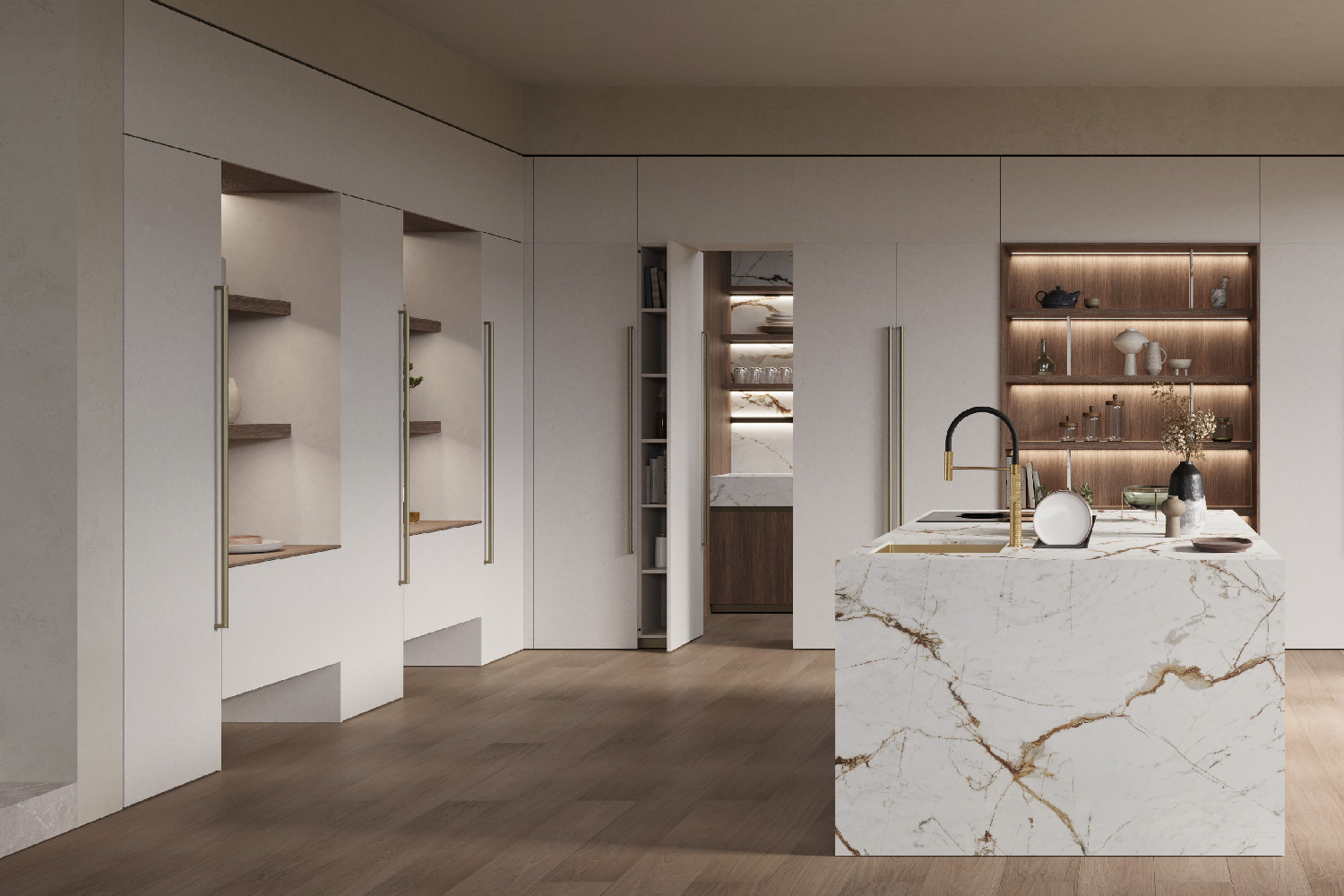
Thanks to pocket doors — fully retractable panels — the kitchen can shift effortlessly between two states. When the doors slide laterally into the columns, the workstation is fully visible and operational. When closed, the kitchen becomes a continuous architectural volume.
For designers, this flexibility allows for precise control over the balance between function and formal clarity,particularly in open-plan interiors, where the kitchen is in constant dialogue with the living space.
Geometry, alignment and flush surfaces
A contemporary kitchen alcove relies on a careful balance between proportions and technical detailing.
Full-height columns establish the vertical rhythm of the composition, while the recessed niche introduces depth and spatial layering. The most refined projects achieve a perfectly flush composition, where aligned fronts, continuous handle profiles and controlled thicknesses create a seamless surface.
In many contemporary interiors, the entire kitchen wall extends from floor to ceiling, reinforcing the architectural presence of the composition and enhancing the perception of visual order.
In this way, the kitchen is no longer perceived as a collection of modules but as a coherent architectural structure integrated into the home.
Material continuity within the niche
When the kitchen is conceived as a recessed niche, materials play an even more decisive role.
Material continuity becomes a key design tool, capable of amplifying the perception of depth and spatial cohesion. Natural stone, technical ceramics or wood veneers can line the entire interior of the alcove — from backsplash to worktop and even along the internal sides of the columns — creating a refined monomaterial effect.
This approach highlights the depth of the composition while giving greater prominence to the central workstation. Integrated lighting further emphasises the three-dimensional quality of the surfaces, contributing to a more intimate and sophisticated atmosphere.
Kitchen alcoves in contemporary open-plan interiors
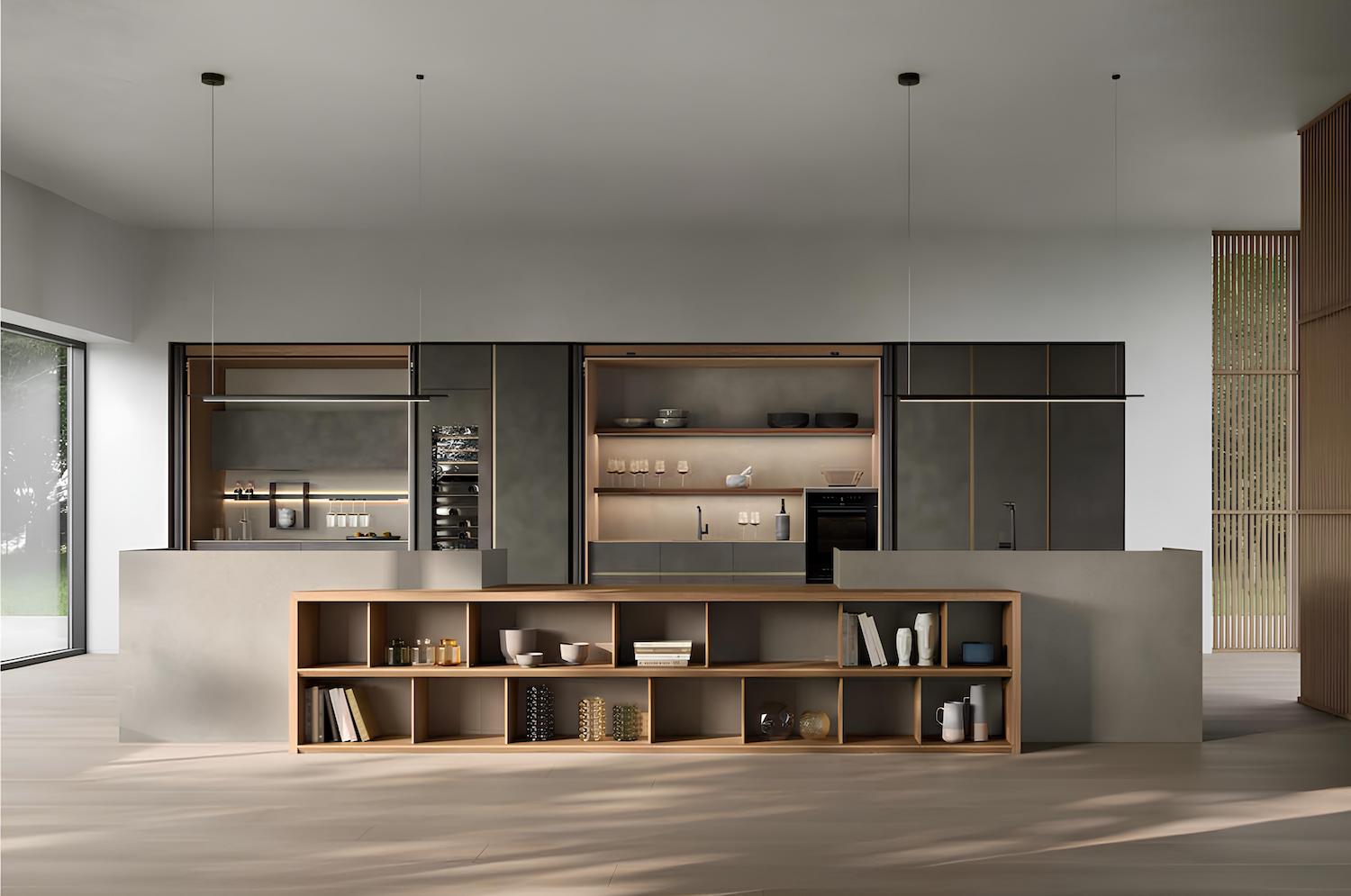
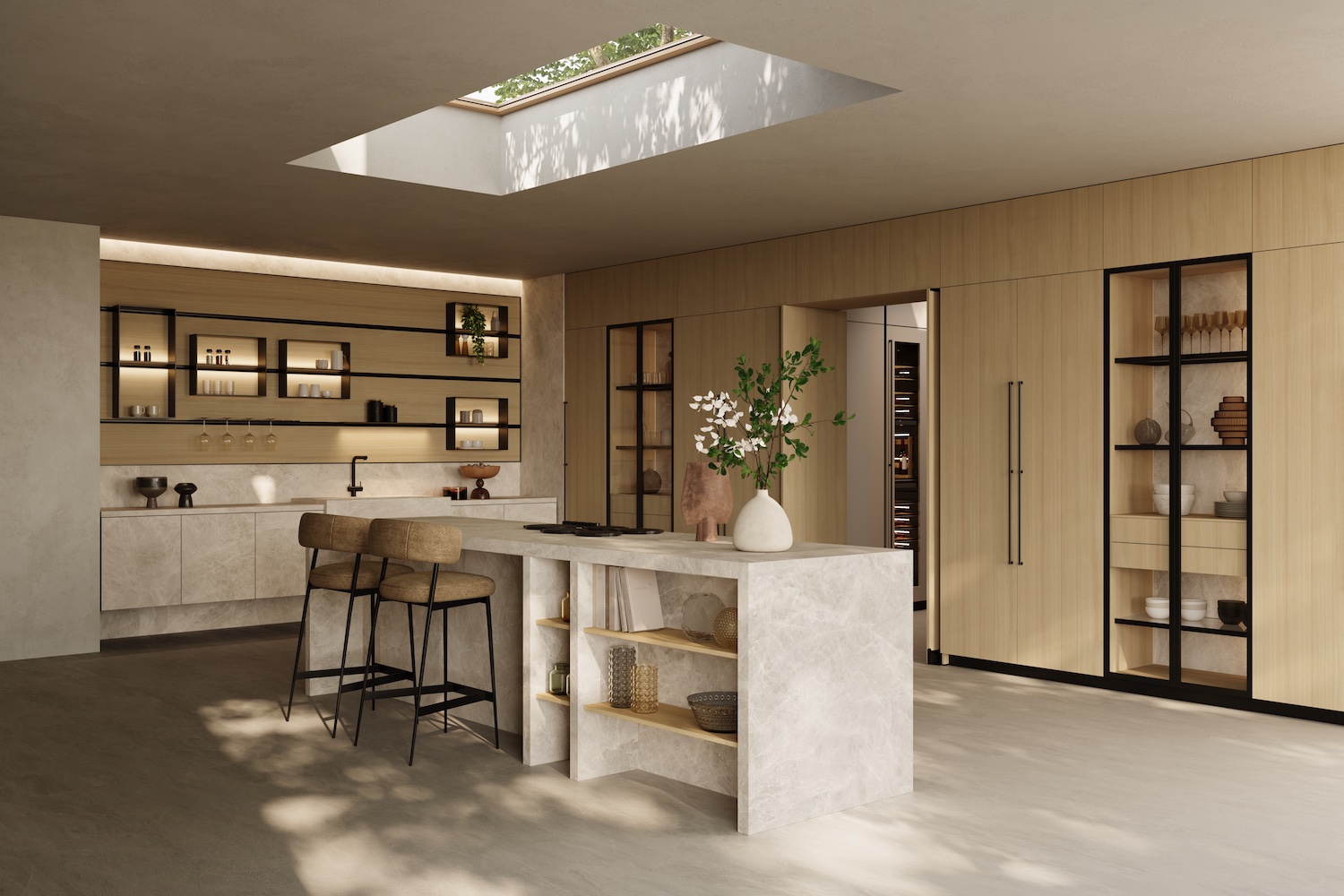
In larger open-plan environments, this configuration allows the operational kitchen wall to be organised with strong compositional clarity. The alcove accommodates preparation and cooking, while appliances and storage are integrated into the surrounding tall units, forming a clean architectural surface.
In more expansive projects, this solution can also interact with a fully equipped back kitchen, which absorbs the more technical activities and allows the alcove to take on a more scenographic role.
The composition is often completed by a central island, which becomes the social heart of the space. Here everyday preparation, informal meals and convivial moments unfold, while the recessed kitchen wall maintains the technical organisation of the kitchen.
The same principle works equally well in smaller homes and apartments. By concentrating functions within a carefully designed alcove, the kitchen achieves visual order and architectural continuity even where space is limited.
It is a solution capable of adapting to different scales while maintaining a consistent balance between function, proportion and the quality of domestic space.




What do you think?