
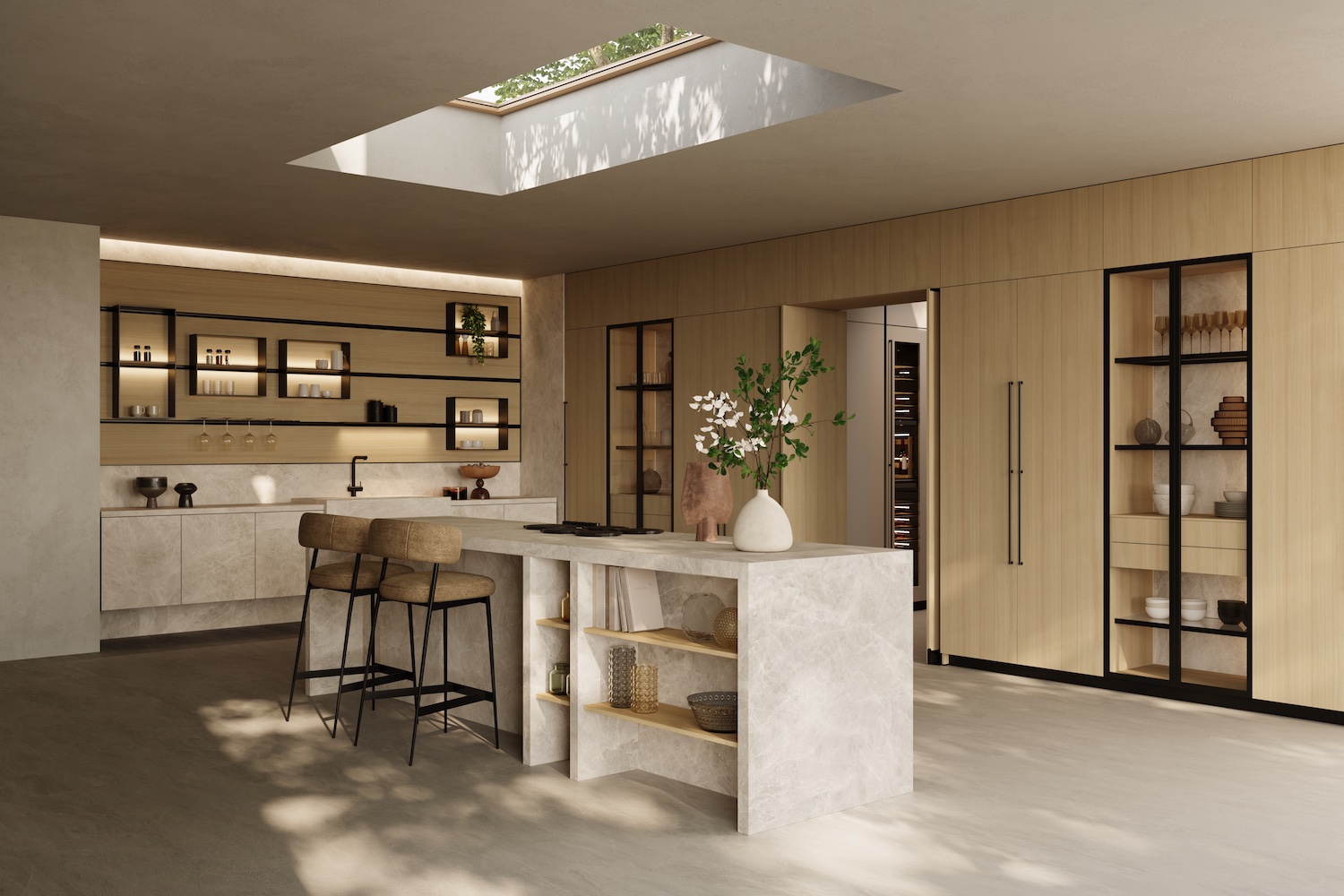
In the kitchen, every design choice reflects a way of living in the space. The wall-unit-free kitchen stems precisely from this vision: it is not merely an aesthetic trend, but a design approach born of the desire to free up the walls to create brighter spaces that flow seamlessly into the living area.
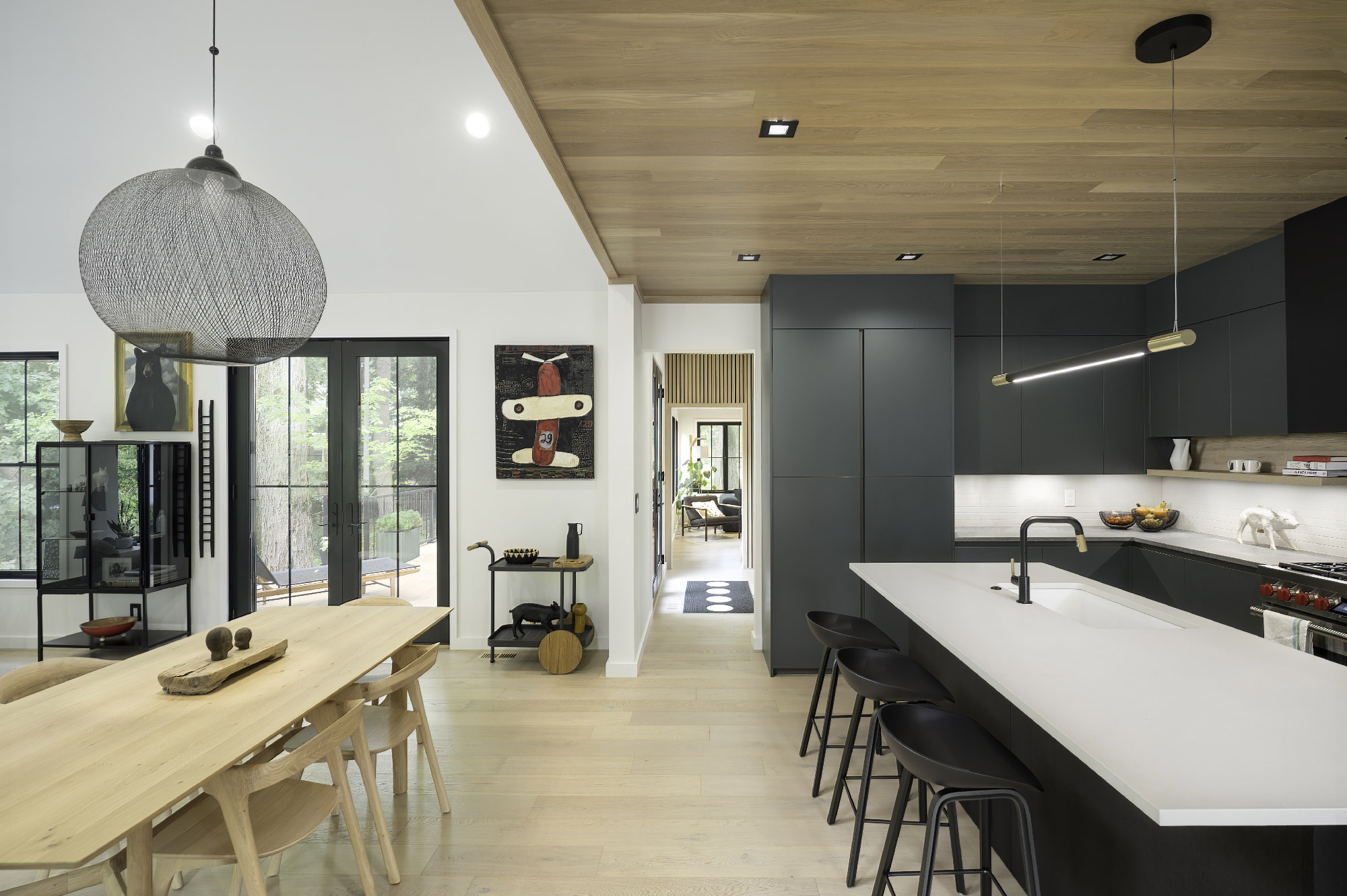
More and more contemporary designs are opting to do away with traditional wall-mounted units to make way for new ways of organising the space. This choice finds its most natural expression in open-plan spaces, where the kitchen becomes an integral part of a more fluid environment and creates a visual sense of lightness.
At a glance
What is meant by a kitchen without wall units
Talking about a kitchen without wall units means referring to a layout where the wall above the worktop is left free or reinterpreted through alternative solutions. It is therefore not a question of removing functionality, but of redistributing it.
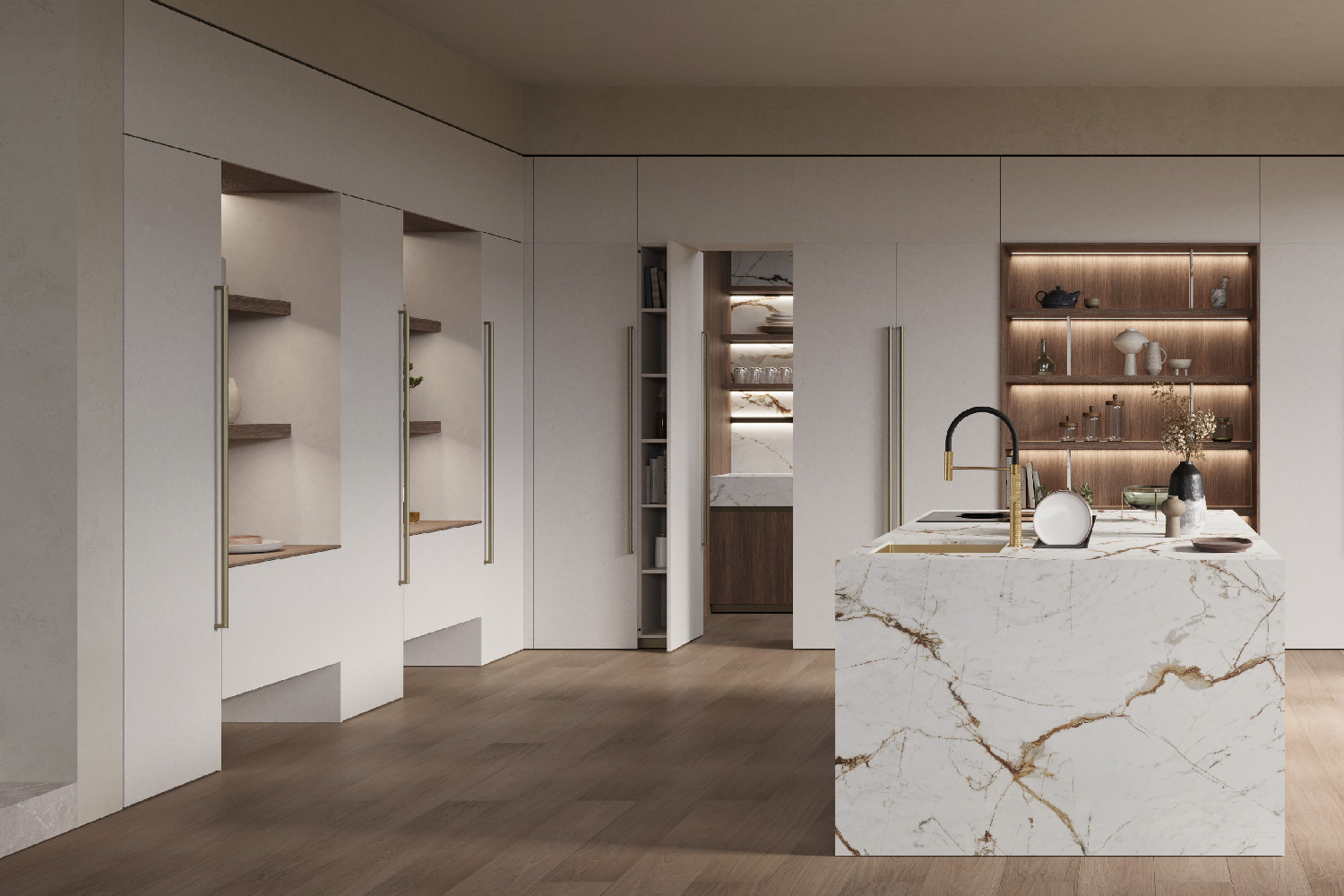
In these kitchens, storage does not disappear, but changes position and form. It shifts from the upper level to deeper base units, full-height tall units and integrated, discreet systems, which keep the layout clean and tidy. Freed from wall-mounted units, the wall takes on a new role in : it becomes a space that showcases materials and finishes, transforming the kitchen from a utilitarian space into a living area.
What are the advantages of a kitchen without wall units?
Choosing a modern kitchen without wall units means creating more airy and welcoming spaces. The absence of wall-mounted units frees the eye, amplifies the perception of the overall space and gives the room a minimalist, contemporary aesthetic.
Greater brightness
When the wall above the worktop remains unobstructed, natural light flows freely. In open-plan spaces, this brightness enhances the continuity with the living area, creating a harmonious dialogue between the kitchen and the living room. As the light flows across the surfaces, it highlights the textures and quality of the materials, adding character to the entire space.
Perception of a larger space
The absence of suspended elements removes visual barriers, allowing the eye to move freely. The result is a perception of greater spaciousness and lightness, particularly valuable in compact spaces.
A more minimalist and contemporary aesthetic
The design of a kitchen without wall units is based on clean lines, surfaces that interact with one another and a refined minimalism. Without the bulk of wall units, lighter and more minimalist compositions emerge, capable of blending in with the other spaces in the home. This solution highlights the materials and their tactile quality, creating a pure visual narrative that showcases the kitchen as a key element of contemporary living.
What to put in place of wall units in the kitchen?
Doing away with wall units does not mean sacrificing functionality, but rethinking it from a design perspective. Tall units, open shelves or wall-mounted storage systems become alternatives that accommodate everyday items without disrupting visual continuity.
Storage columns
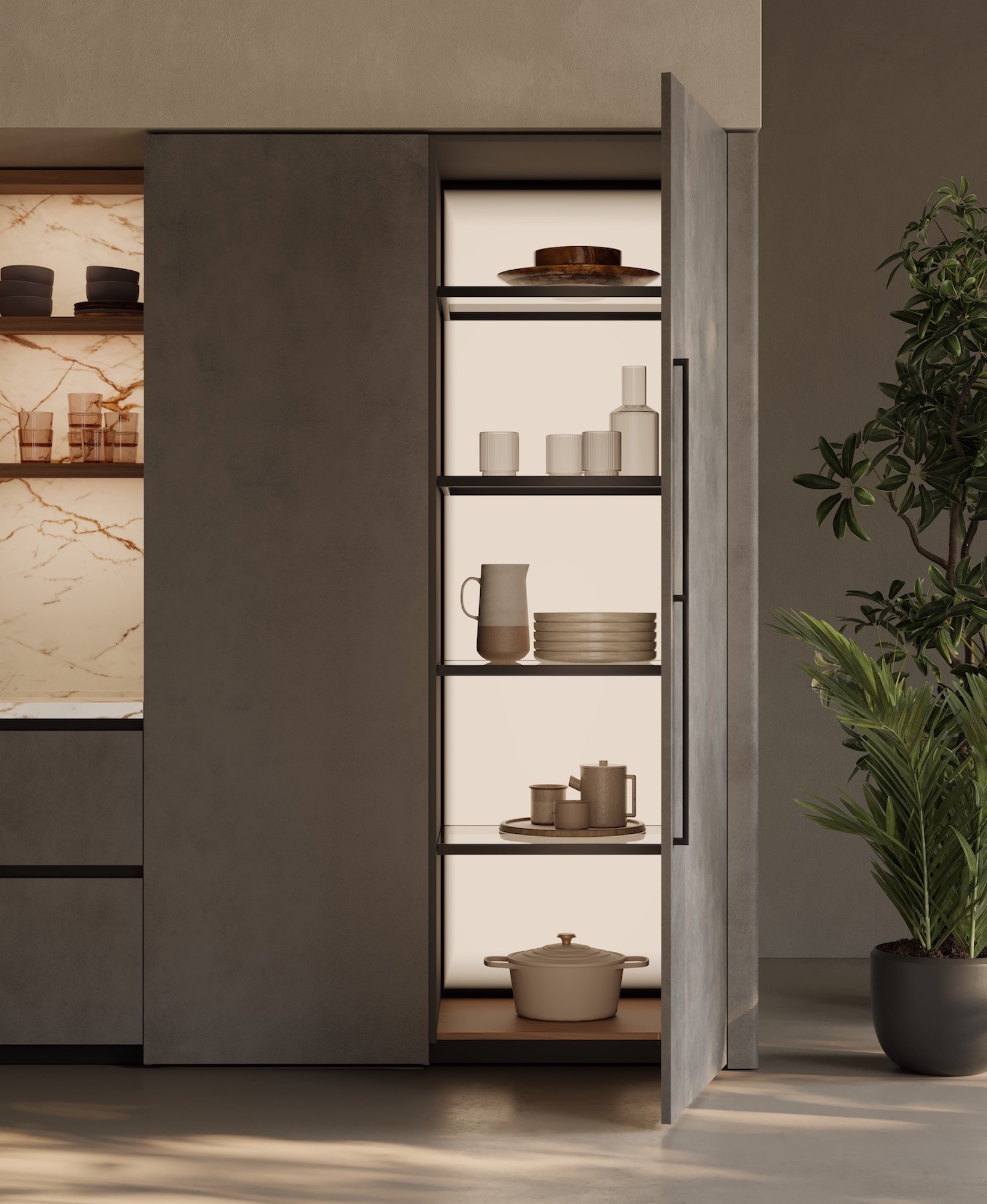
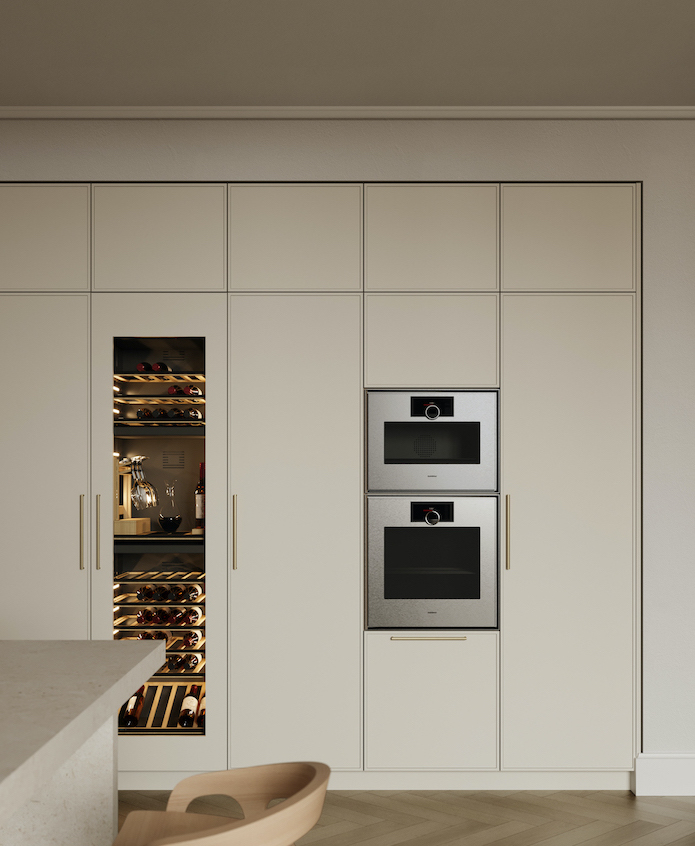
Full-height tall units become the focal points of the layout. They offer ample storage space and allow everything you need to be arranged vertically, keeping the work surface clear. The modular design of the tall units allows you to play with solid and open spaces, alternating between closed surfaces and open compartments, creating a balanced and airy visual rhythm.
Open shelves
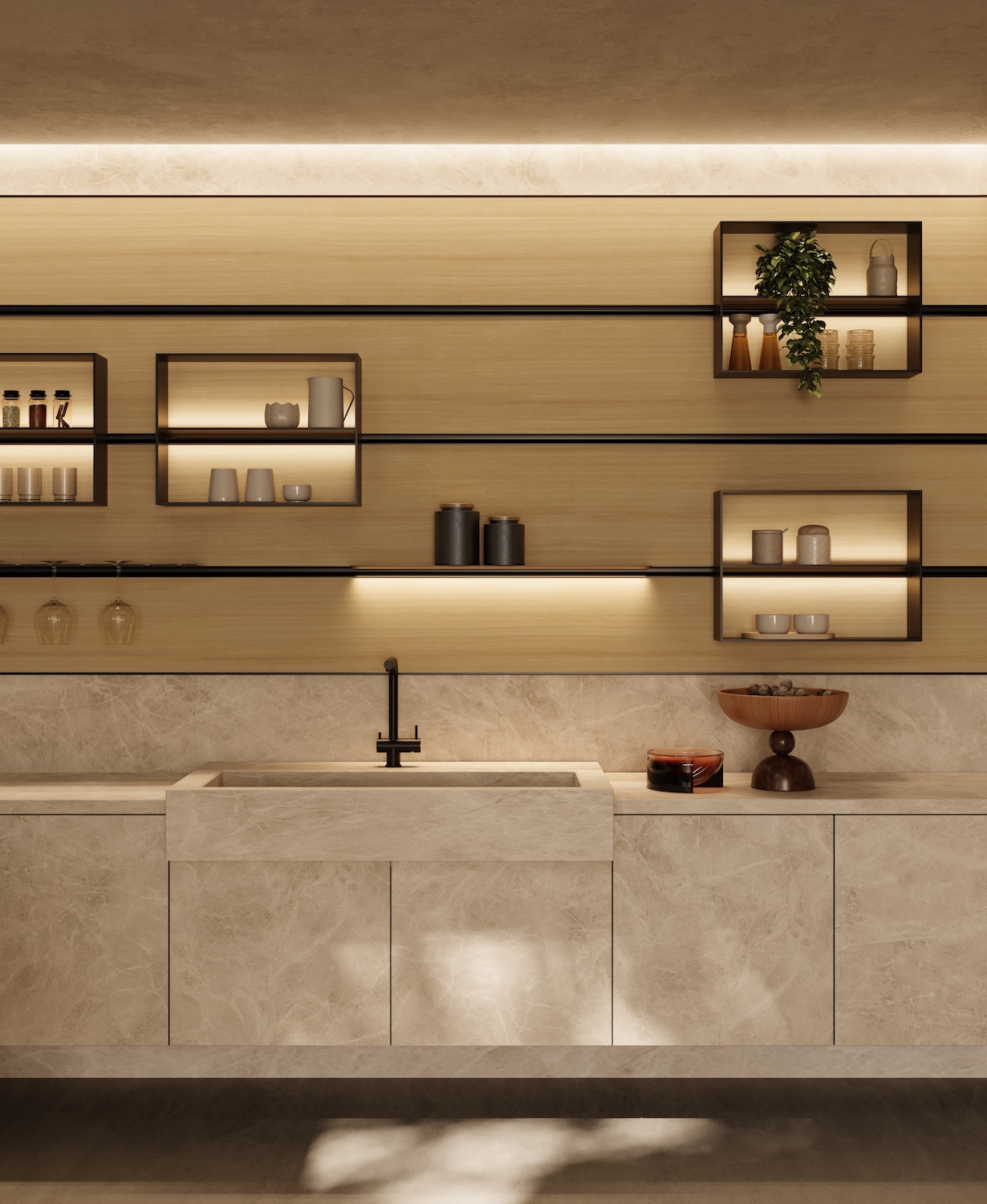
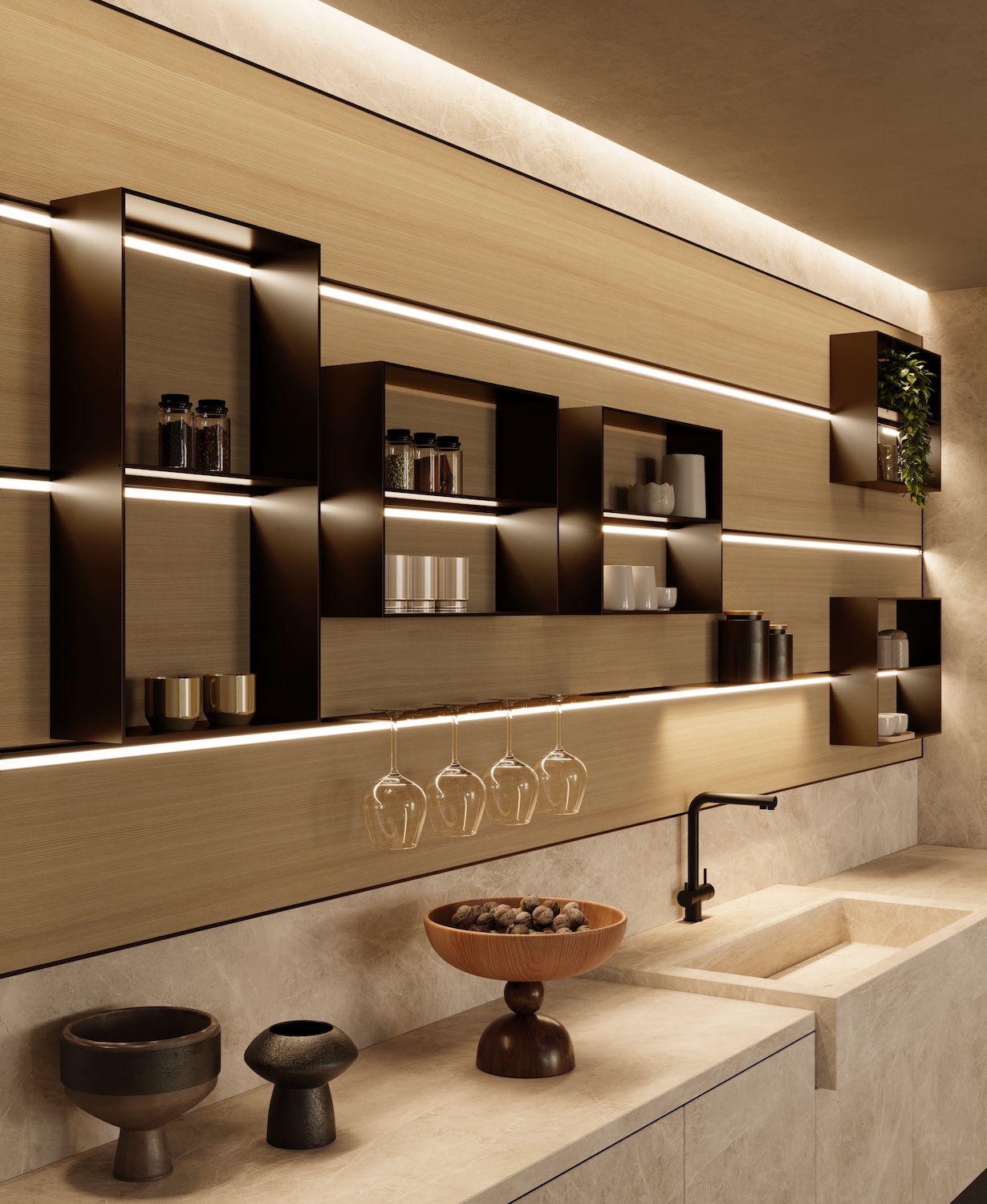
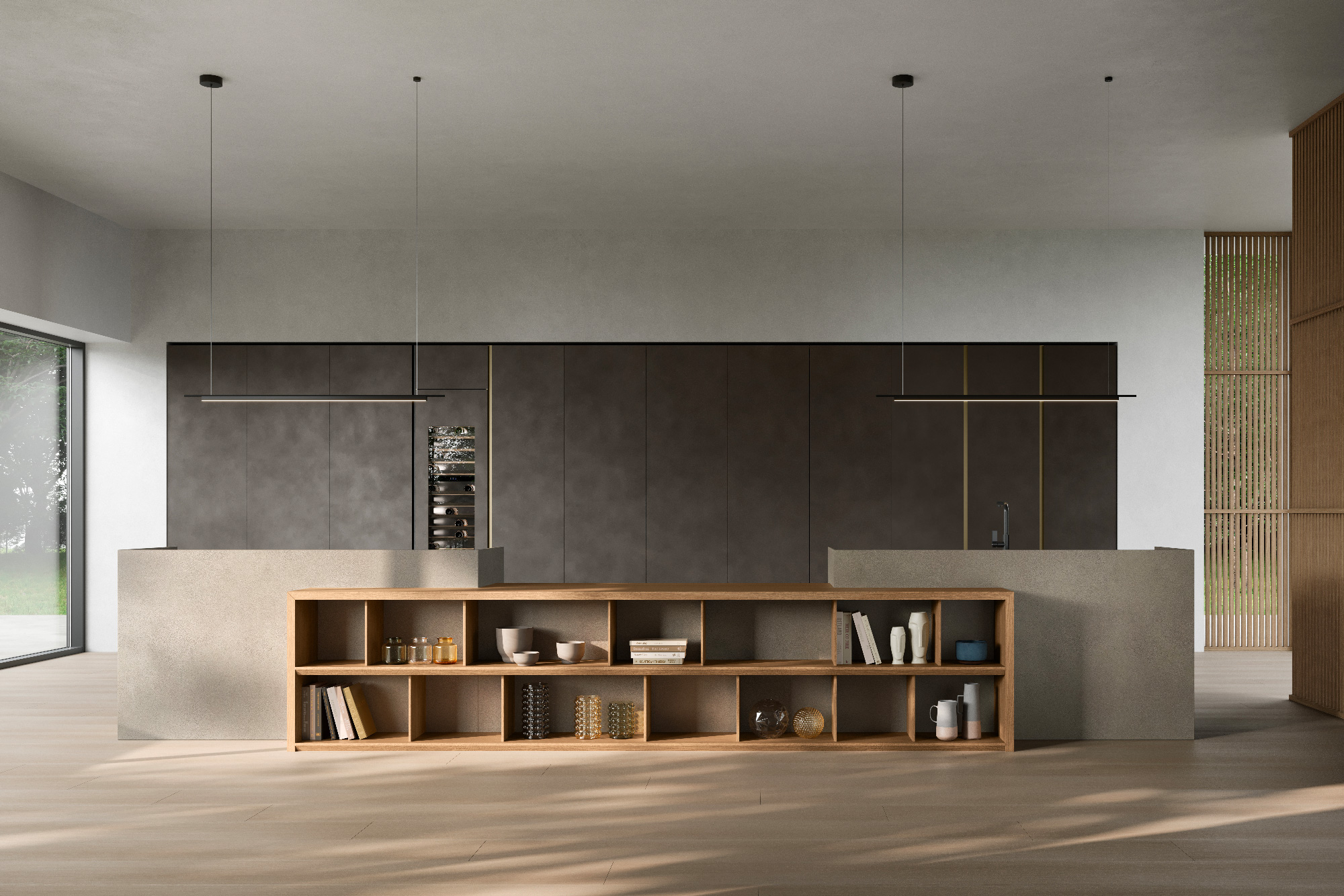
Exposed shelves lend a certain dynamism to the entire composition: they can be designed as simple shelves in continuity with the worktop and therefore made from the same material, or as a contrast with different finishes. The shelves do not detract from the lightness of the design and provide useful surfaces on which to place everyday objects or decorative items.
Wall units
Wall units represent a hybrid solution, where storage and design come together in a single system. They incorporate modules, shelves, open and closed compartments, creating a fluid system that facilitates everyday use without weighing down the composition.
Designer hoods
In the absence of wall units, the hood can become a true architectural feature. Designer models, whether suspended or wall-mounted, can create a focal point above the hob and contribute to the visual balance of the entire kitchen.
How to organise space in a kitchen without wall units
In modern kitchens without wall units, every centimetre takes on strategic importance. The absence of wall-mounted units does not reduce functionality, but encourages a more ergonomic and intelligent approach to organisation.
Base units become deeper and much more spacious, ready to accommodate fitted drawers. Inside, organisation systems allow spaces to be divided precisely, improving ergonomics and practicality. Pantry tall units offer vertical storage spaces designed to house foodstuffs and small appliances, incorporating adjustable shelves and pull-out drawers for a functional user experience.
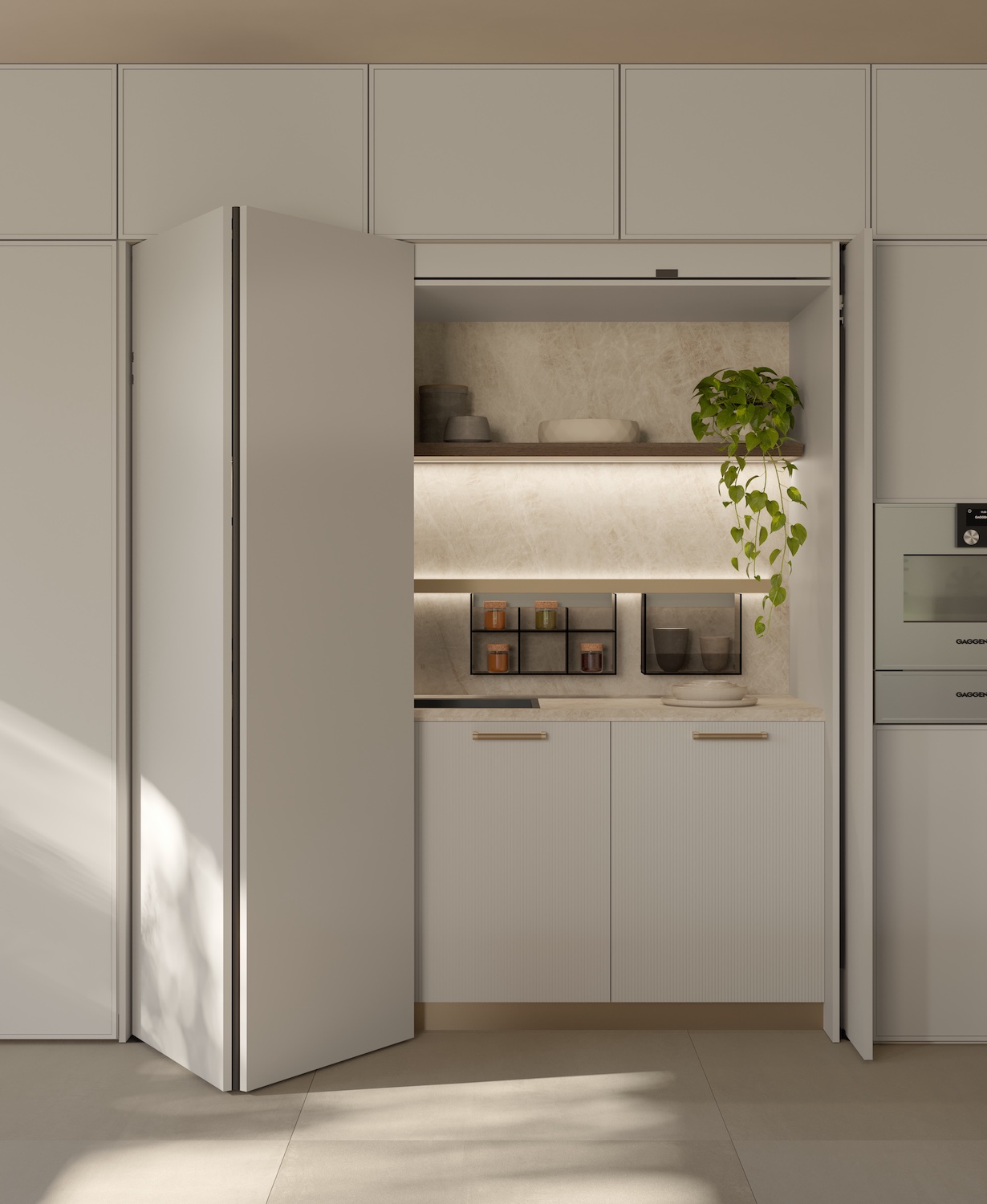
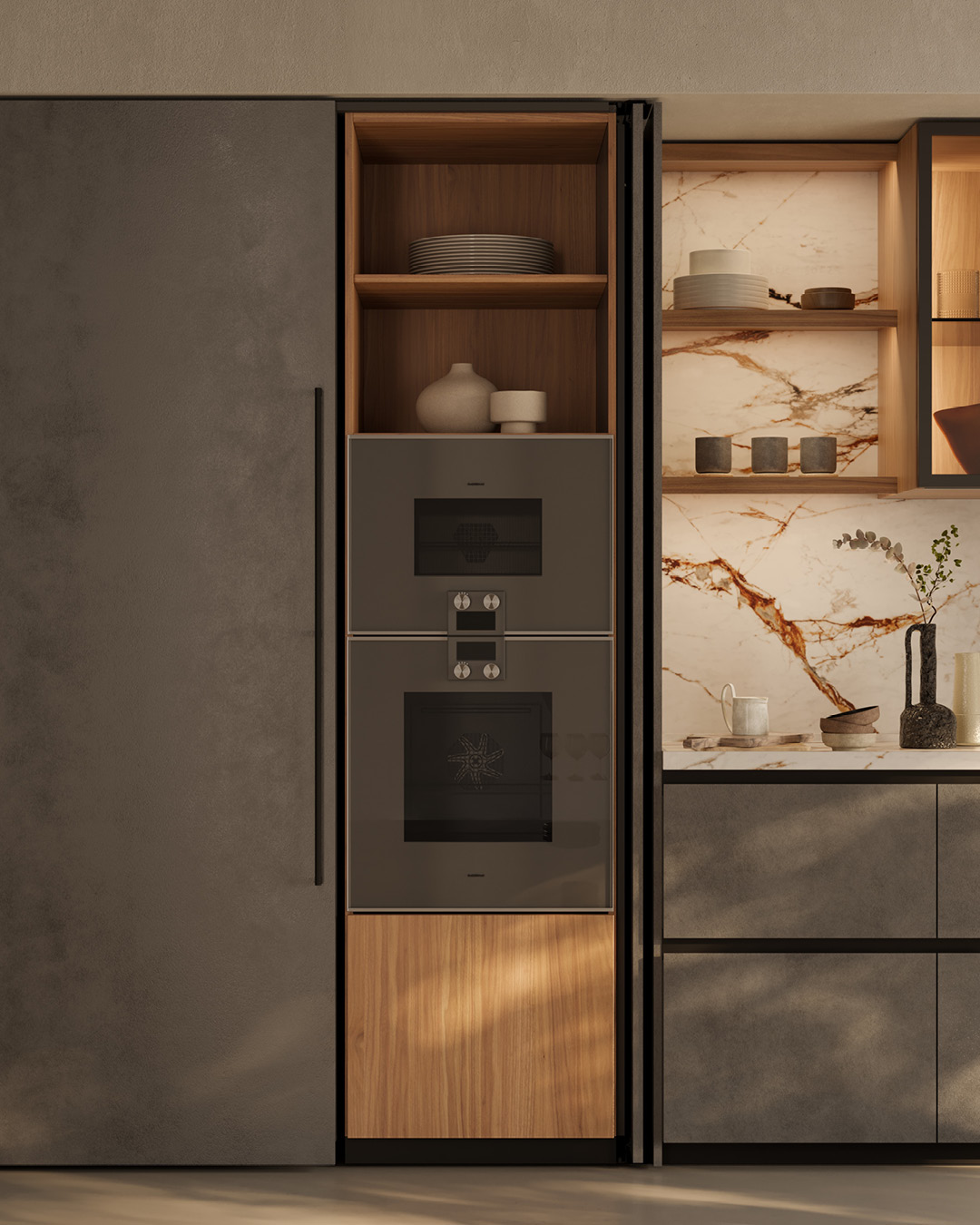
In this context, Zecchinon offers hidden storage solutions, such as the Exedra and Revego systems, which represent an evolution of the concept of storage. The working spaces close with a simple gesture, disappear from view and create a minimalist, cohesive environment, ready to adapt to daily needs.
Every detail becomes part of a compositional language: functionality and design interact, creating a space without visual interruptions, where order is not imposed but natural.
Kitchens without wall units in small spaces
In compact spaces, the decision to remove wall units proves a winning choice: freeing up the upper wall allows for a greater sense of space and lightens the overall volume. In linear kitchens, near windows or within an open-plan space, this solution enhances the flow of natural light and creates a more harmonious environment.
Even in minimalist settings, where clean lines and simplicity take centre stage, the absence of wall units helps to maintain a clean, uncluttered look, avoiding visual clutter and disruptions.
Materials and surfaces that enhance a kitchen without wall units
Materials are not merely coverings: they define the kitchen’s identity. Textured surfaces, with deep textures and natural finishes, convey a sense of warmth and tactile quality, transforming every wall and worktop into a coherent narrative of style and quality.
The use of neutral surfaces or those with subtle tactile variations introduces personality without weighing down the space. Natural materials, such as wood, stone or textured finishes, add depth and tactile sensitivity.
Every choice of material thus becomes part of a broader narrative: the kitchen without wall units is transformed into an architecture of surfaces and volumes, designed to be experienced with elegance and awareness.




What do you think?