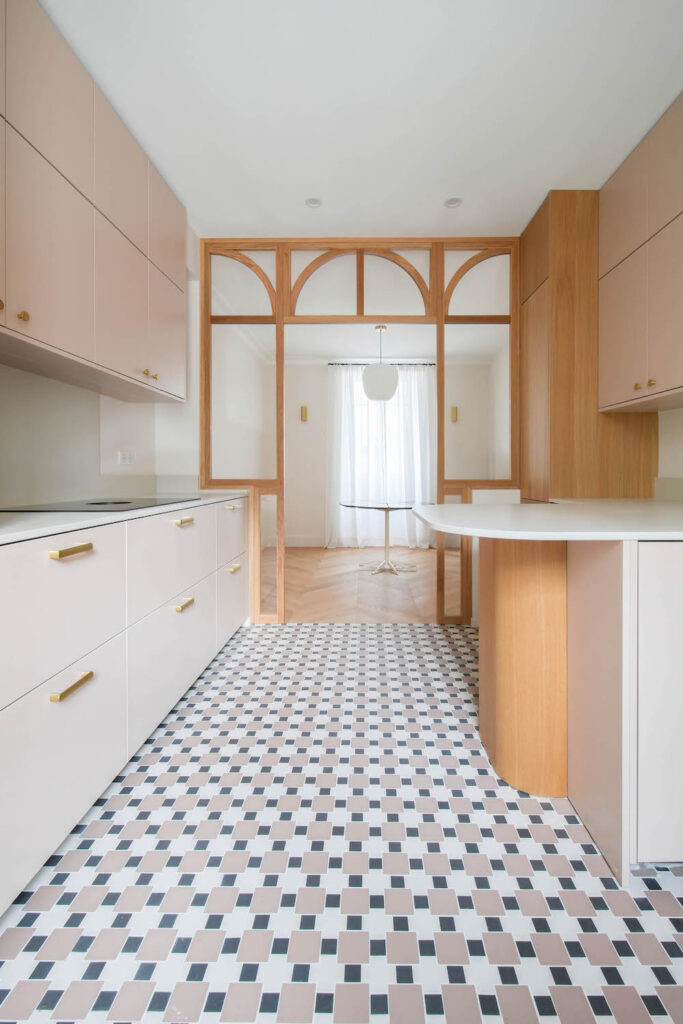
In Biarritz, on France’s Atlantic coast, a kitchen designed by L’Atelier Contemporain becomes the starting point for reimagining the balance of an entire townhouse.
Developed with Zecchinon, the project demonstrates how even the most complex layouts can evolve into spaces that are elegant, functional and deeply aligned with the architecture of the home.
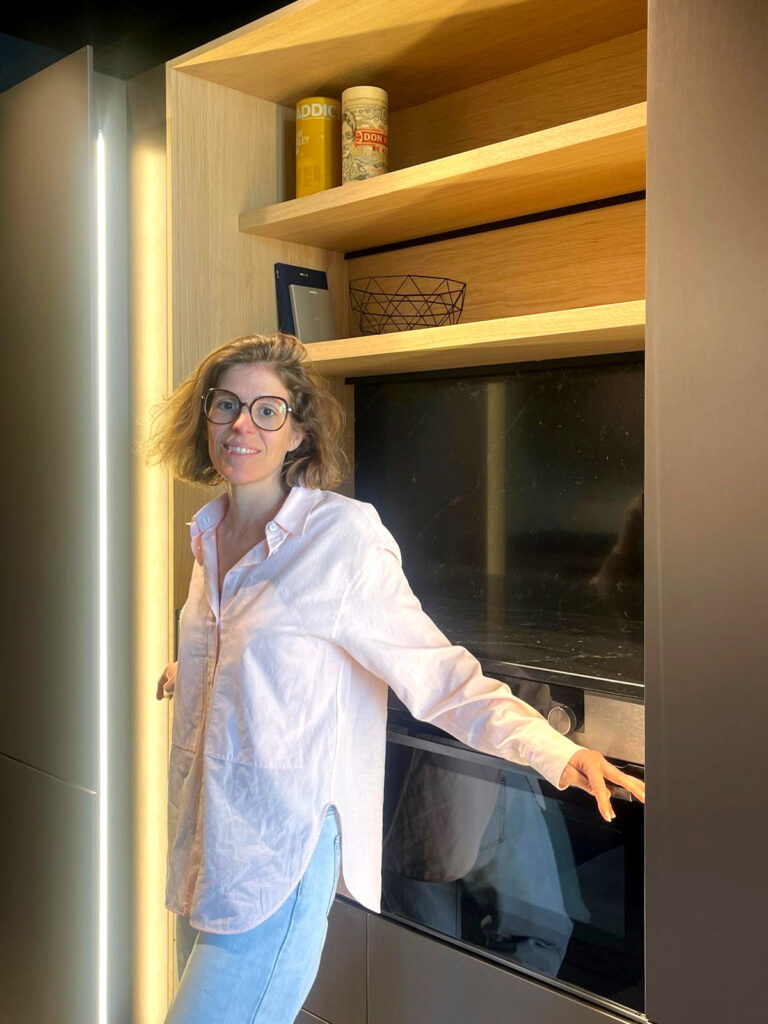
We spoke about the project with Malvina Dieulangard, head of the design studio.
At a glance
Can you tell us the story behind L’Atelier Contemporain?
L’Atelier Contemporain was founded in 2007, with the opening of our first showroom. From the beginning, we wanted to build an independent studio, not tied to any franchise model.
Our ambition was to offer clients comprehensive support—from design and planning to material selection and craftsmanship. This approach grew naturally from our backgrounds in interior design and artisanal production, shaped by our individual professional experiences.
In 2010, we reconsidered the format of the showroom and moved to a more central location in Biarritz.
A real turning point came in 2019, when we relocated to an area of the city that was rapidly becoming a hub for our sector. The move allowed us to strengthen our identity further, also through very precise graphic and aesthetic choices in the design of the new showroom.
Why did you choose to work with Zecchinon?
The Zecchinon brand quickly became part of our offering and soon established itself as one of our key references.
For us, the human dimension is fundamental—it lies at the heart of our profession. With Zecchinon we first encountered passionate, determined people who are genuinely attentive to both our needs and those of our clients.
The quality of the materials, the aesthetic character of the collections and the continuous evolution of the ranges provide remarkable design freedom. Their modular systems adapt perfectly to bespoke solutions, allowing us to combine ergonomics, functionality and elegance.
Today we are proud to have been part of this collaboration for nearly twenty years, contributing to the growth of a brand whose international recognition continues to expand.
Can you tell us about the Biarritz project?
A few months ago, long-standing clients returned to us to design the interiors of their townhouse.
The property is quite vertical in layout, overlooking a beautiful sunlit patio. However, the kitchen area was crossed by several circulation routes within the house and remained rather compact—a configuration that was not particularly functional for the couple’s lifestyle.
The house already had a great deal of architectural character, and we knew that through the renovation, materials would play a central role in shaping the project.
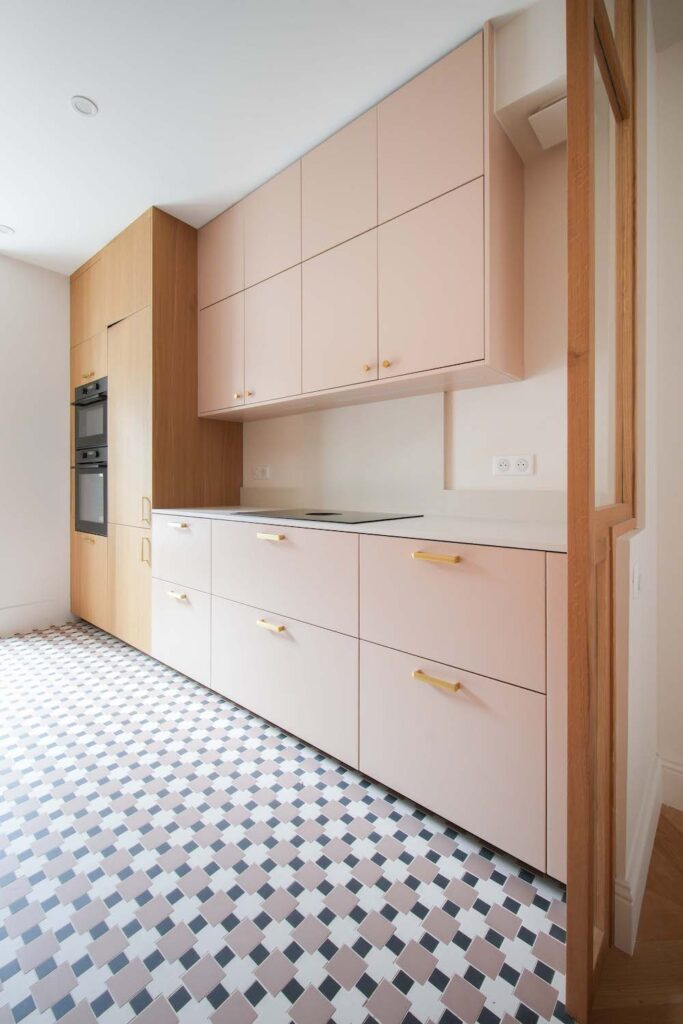
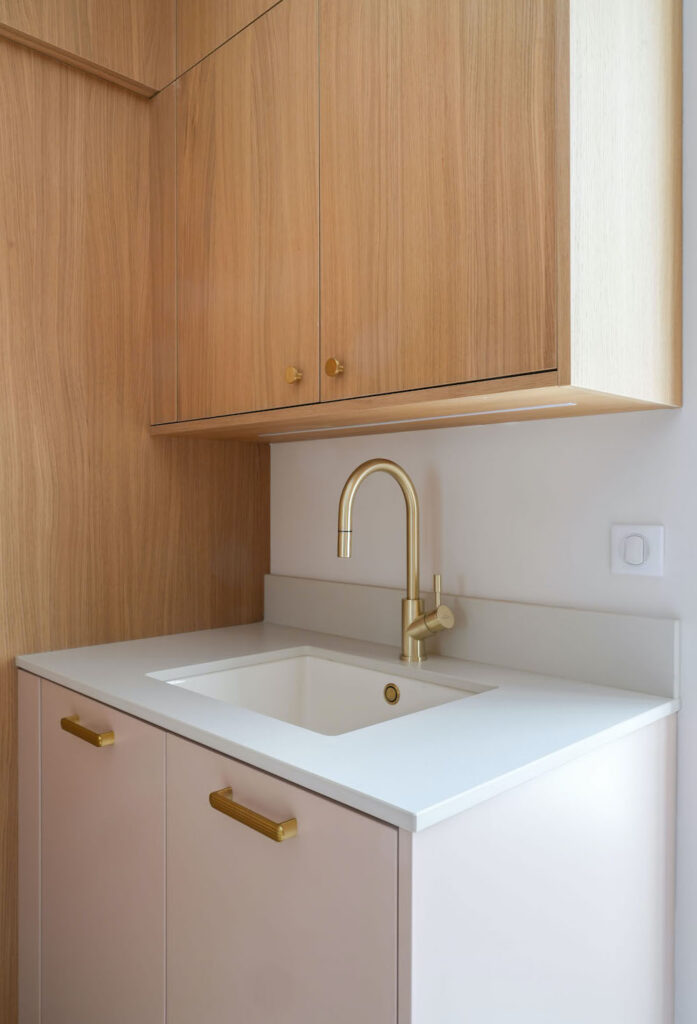
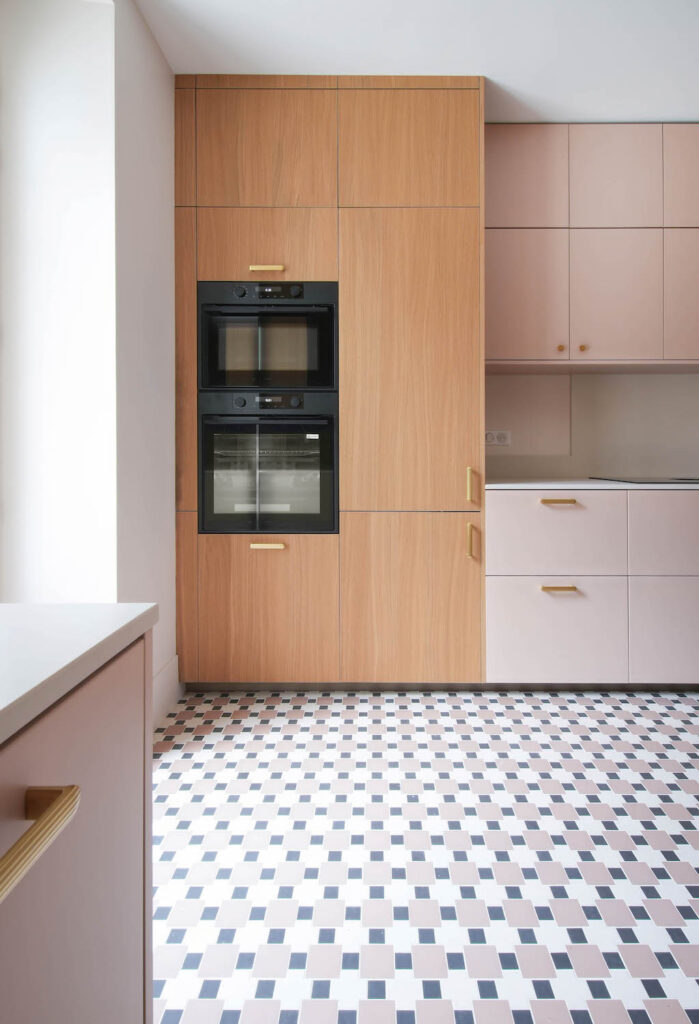
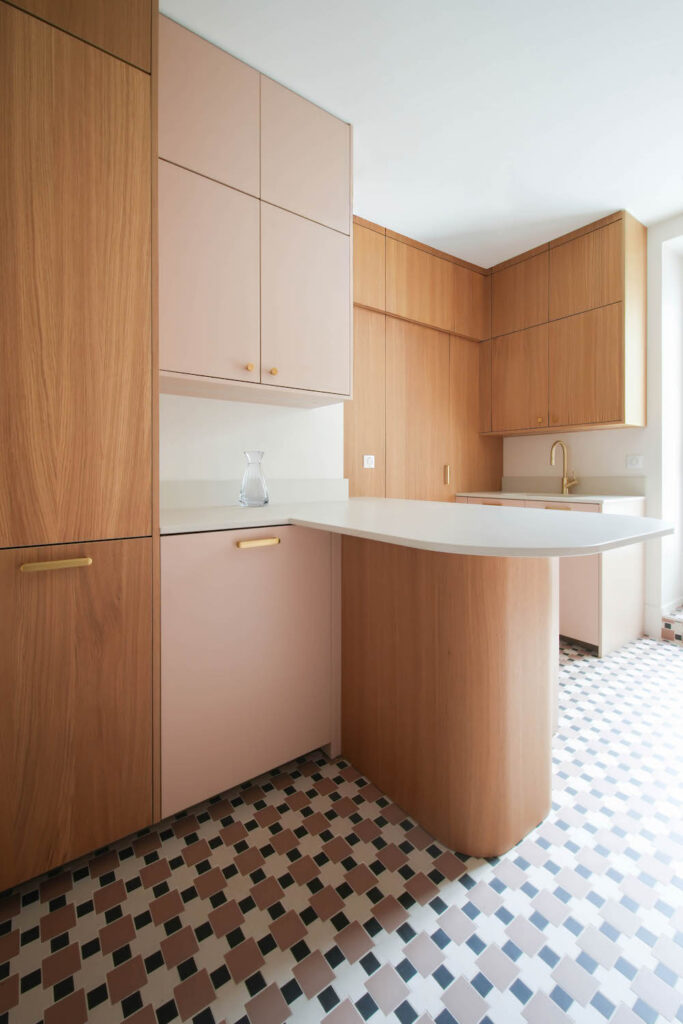
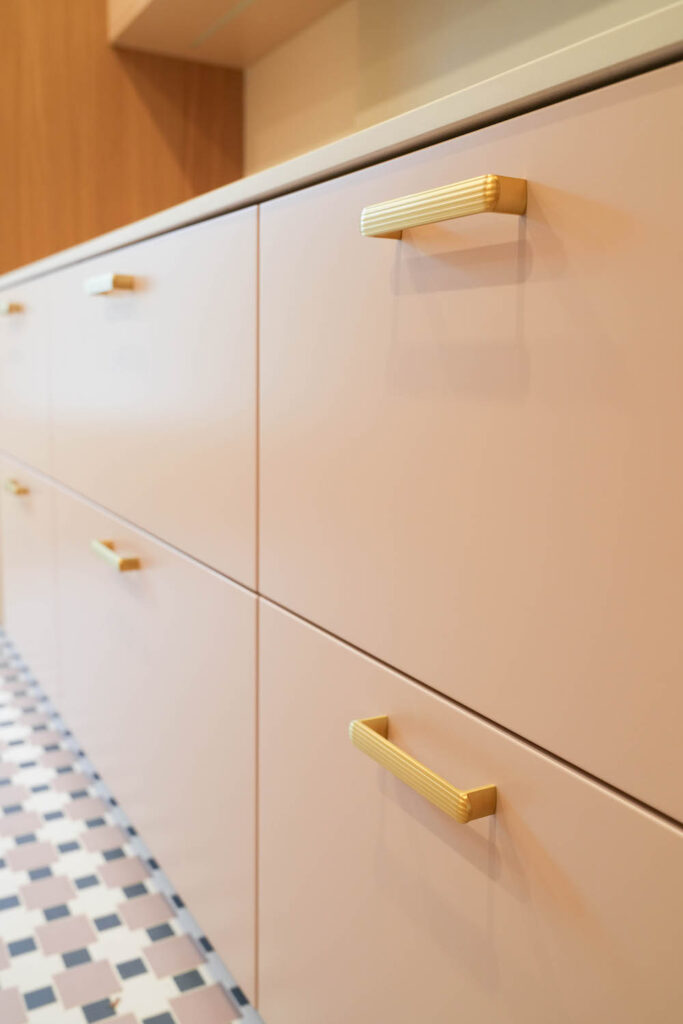
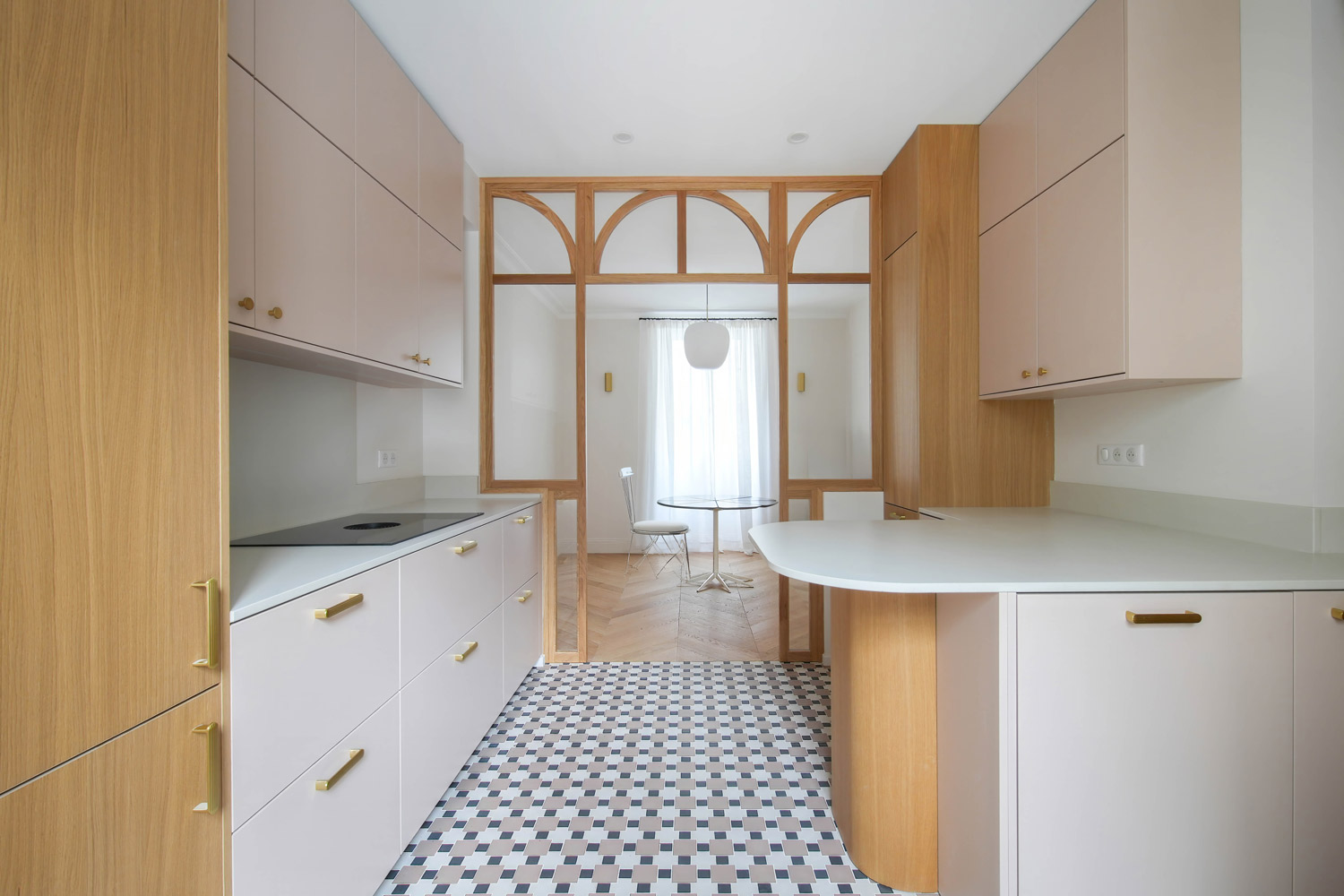
From the outset we chose a custom matte lacquer, inspired by the Farrow & Ball palette: a delicate powder pink, paired with a warm oak veneer. As the project progressed, additional elements enriched the composition, including a graphic English-pattern floor and subtle brass accents on knobs, handles and the mixer tap.
How did working with Zecchinon influence the development of the project?
Collaborating with Zecchinon on this renovation was a real pleasure, because the modularity of the system allowed me to design without real constraints.
It enabled us to integrate all the functionalities required by the clients, including the cladding of a wall along the staircase. Within this element we concealed a hidden door leading to a small back kitchen with freezer, wine storage and space for household equipment.
What I particularly appreciate in this project is the restraint of the lines and the gentle curvature of certain elements, which echo the aesthetic of the glazed partition we developed together with the carpenter on site.
What trends do you see emerging in contemporary kitchen design?
In recent years we have observed a return to more intimate kitchens—spaces that are less central and less “aseptic”. Without reverting to a completely closed room, the kitchen remains a convivial environment but also a highly functional one.
There is no longer the same need to hide everything we use every day. Small appliances, fruit baskets or everyday objects can remain visible and become part of the life of the home.
Where space allows, a back kitchen is a major asset, as is a dedicated laundry area. In more compact apartments, solutions such as pocket doors, pantry cupboards or integrated laundry units are becoming increasingly popular, helping to organise space more efficiently.
How do you think Zecchinon can respond to these evolving design needs?
2026 marks an important moment for Zecchinon. The company is undertaking a significant revision of its modularity and the proportions of its entire range.
For an industrial manufacturer, this is far from a trivial process, yet it clearly demonstrates a desire to evolve—making kitchens even more functional and refined. The lines are becoming increasingly essential, allowing only what is truly necessary to emerge.
The new collections of wood finishes and PET materials are also extremely promising.
I am convinced that the brand will continue to grow. Today Zecchinon is already recognised as an important reference in Italian design, and it may soon define an iconic model capable of becoming truly indispensable within the sector.


What do you think?