
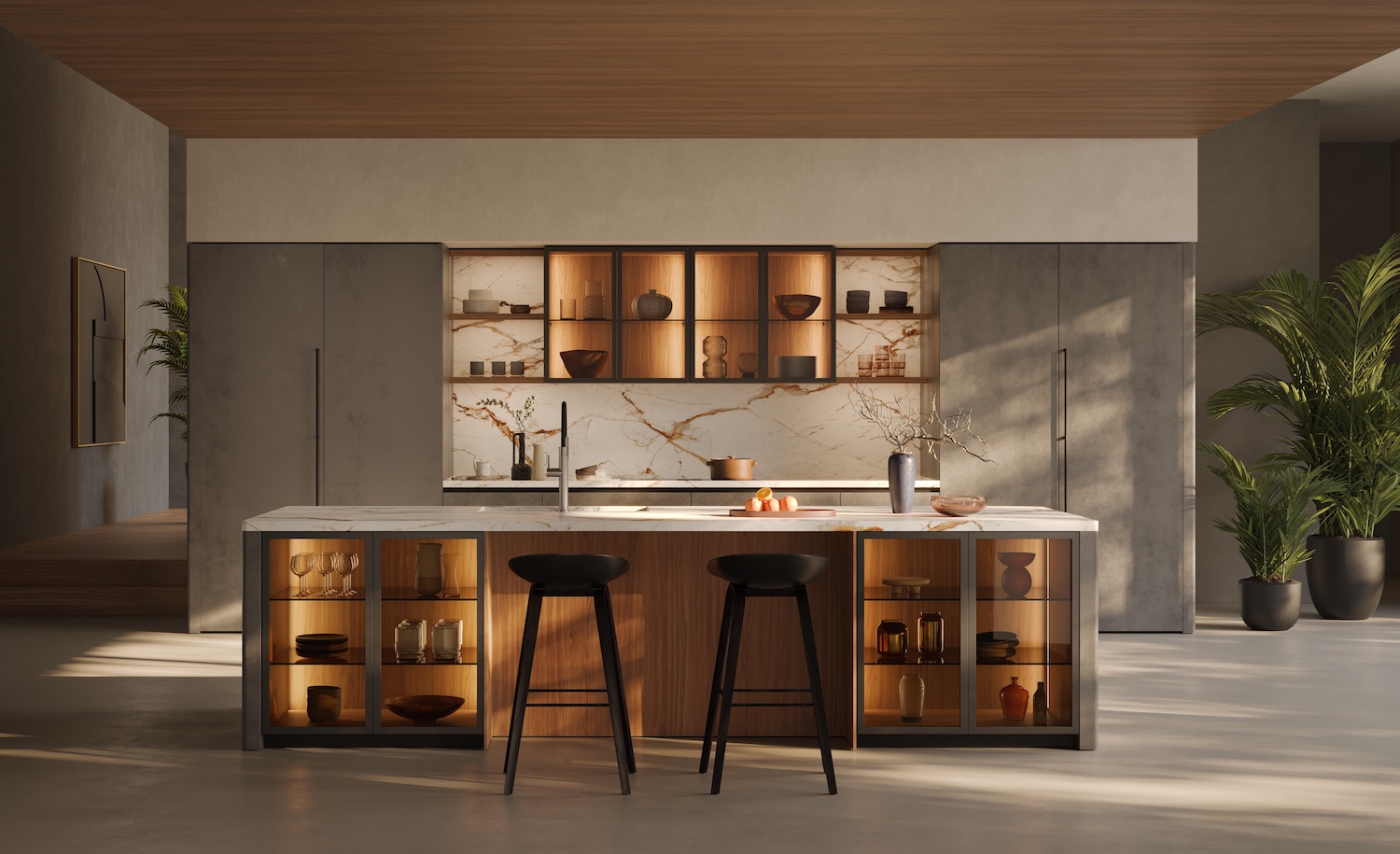
The work triangle is one of the foundational principles of ergonomic kitchen design. It connects three essential points: storage, washing and cooking, with the aim of reducing movement and making food preparation more efficient.
Originally conceived as a model of efficiency for the modern kitchens of the twentieth century, it remains a useful reference today. The concept adapts well to many layouts: linear kitchens, L- or U-shaped compositions, galley kitchens and even some island configurations. It would be inaccurate to consider it outdated. The principle still works, although contemporary design often requires a broader perspective.
At a glance
What the work triangle is and why it works
The work triangle describes the relationship between the refrigerator, sink and cooktop. The idea is straightforward: position these three elements so that the connections between them are short, intuitive and unobstructed.
In most projects, each side of the triangle measures between 120 and 270 cm, with a total circulation distance of roughly 4 to 7.5 metres. These are not strict rules but practical guidelines. They help prevent two opposite problems: a kitchen that is too dispersed, or one so compact that movement becomes uncomfortable.
This spatial logic has its roots in the rationalisation of the modern kitchen. The most frequently cited precedent is the Frankfurt Kitchen, designed by Margarete Schütte-Lihotzky in 1926. It was conceived as a compact environment intended to make domestic work faster, more orderly and more efficient.
The triangle still works, but it no longer explains everything
The work triangle is not a model to discard. It still functions well in many layouts, particularly the more traditional ones, and continues to offer genuine ergonomic value. Even when the geometry of the kitchen changes, with islands, peninsulas or open-plan layouts, the relationship between storage, washing and cooking remains a useful starting point.
Its limits appear when it becomes the only design principle. In contemporary kitchens, activities no longer revolve around three abstract points. Today the project must also consider pantries, preparation areas, cooking zones, washing areas, recycling systems, small appliances and additional work surfaces.
Another change concerns how the kitchen is used. It is now common for two people to cook at the same time.
The classic triangle was originally conceived for a single user. Early twentieth-century domestic kitchens typically revolved around one person. In contemporary homes, cooking together has become part of everyday life.
For this reason, arranging only three elements is no longer sufficient. Designers need to consider the sequence of activities and ensure that people can work comfortably without interfering with one another.
Functional zones in the kitchen
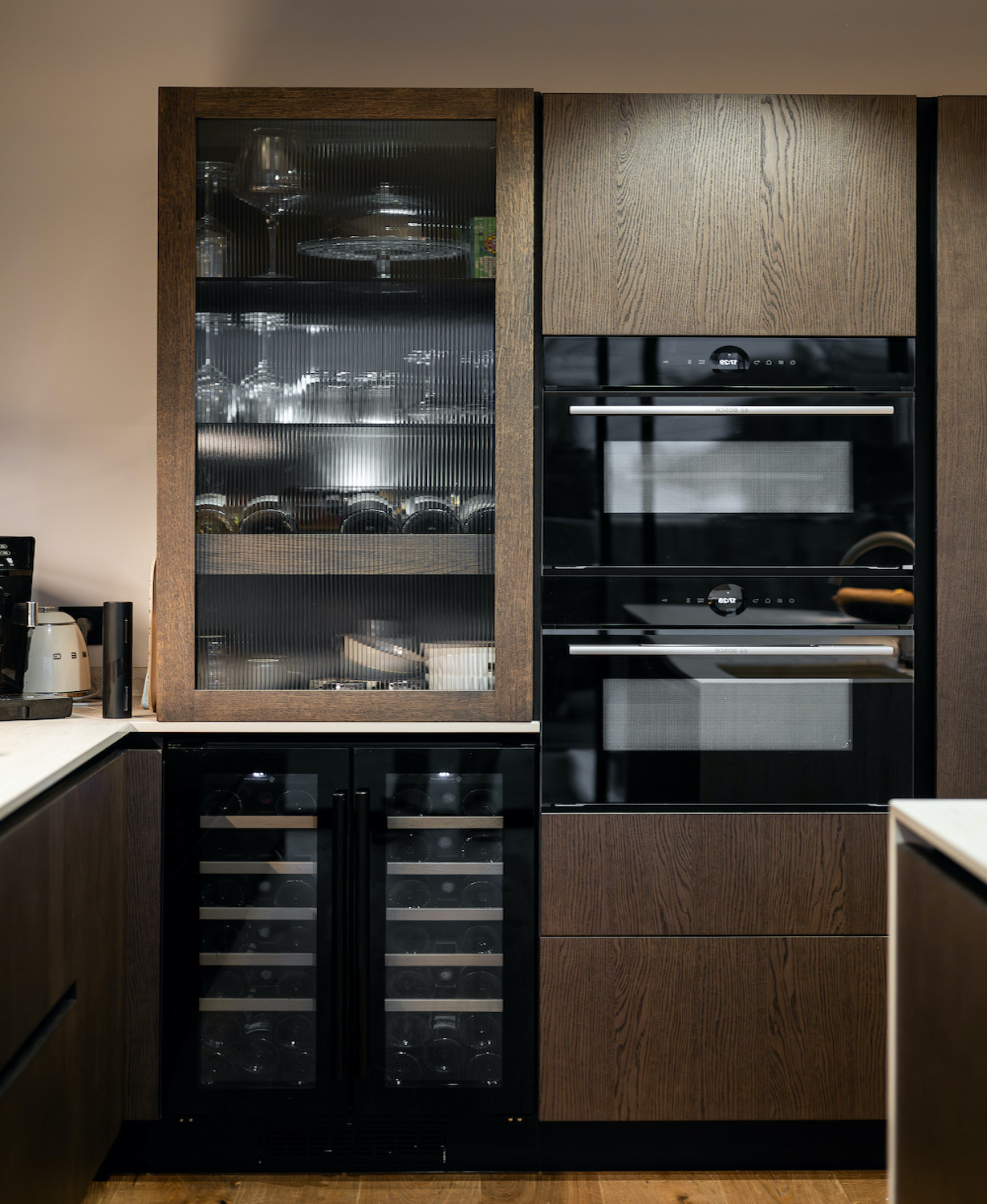
Many designers organise the kitchen into functional zones. In most cases there are four main ones: storage, preparation, cooking and washing, although the system can expand depending on the project.
- Storage zone
Refrigerator, freezer and pantry. - Preparation zone
The main work surface where ingredients are washed, cut and organised. - Cooking zone
Cooktop, oven and nearby landing surfaces. - Washing zone
Sink, dishwasher and waste management. - Service or tableware zone
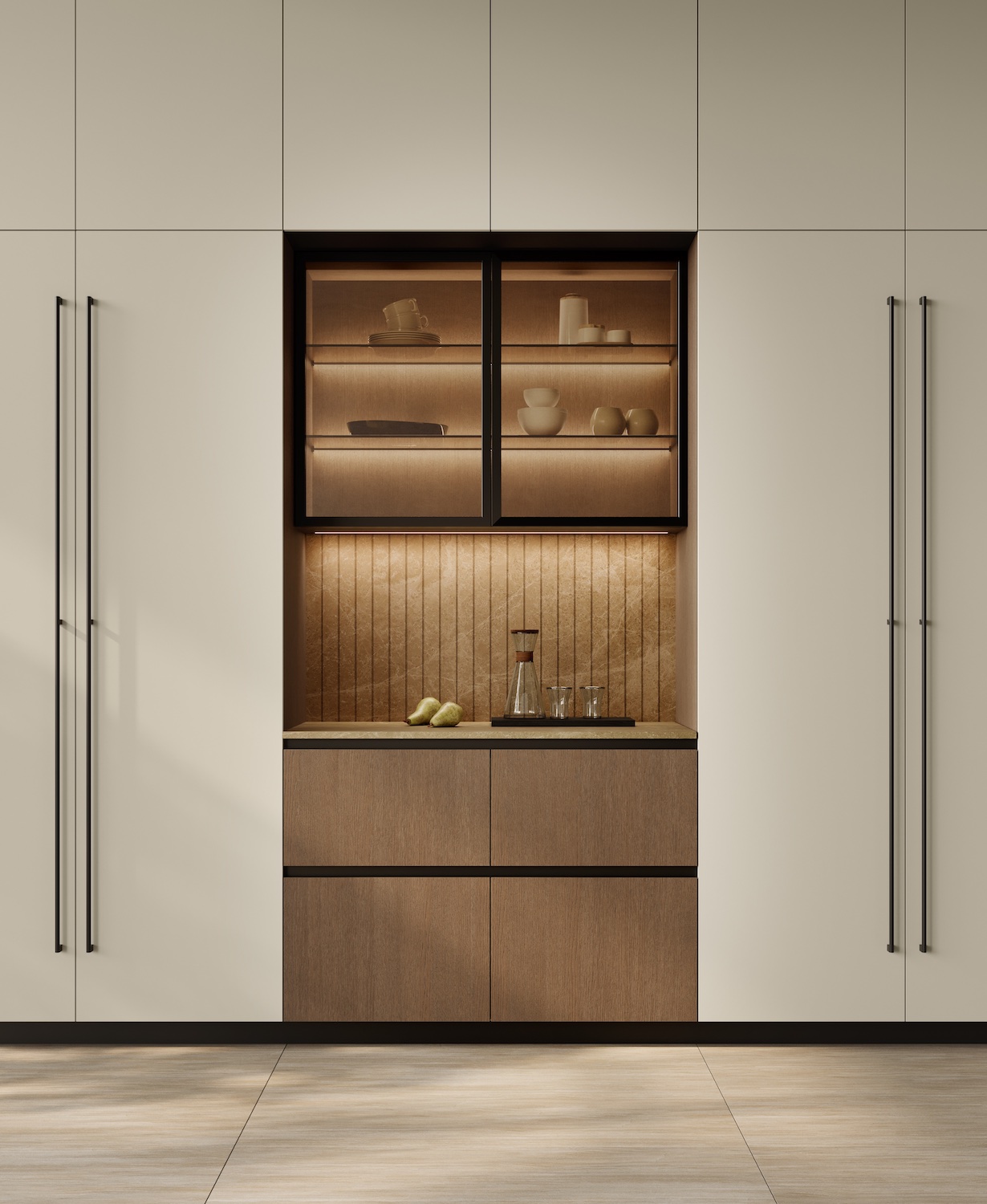
Cabinets for plates, glasses and utensils, often located near the dishwasher. - Small appliance zone
An area dedicated to the coffee machine, kettle, toaster and other everyday appliances. - Social or snack zone
A counter or island used for quick breakfasts, informal meals or aperitifs.
This organisation reflects more closely the way kitchens are actually used in daily life.
What functional clusters are
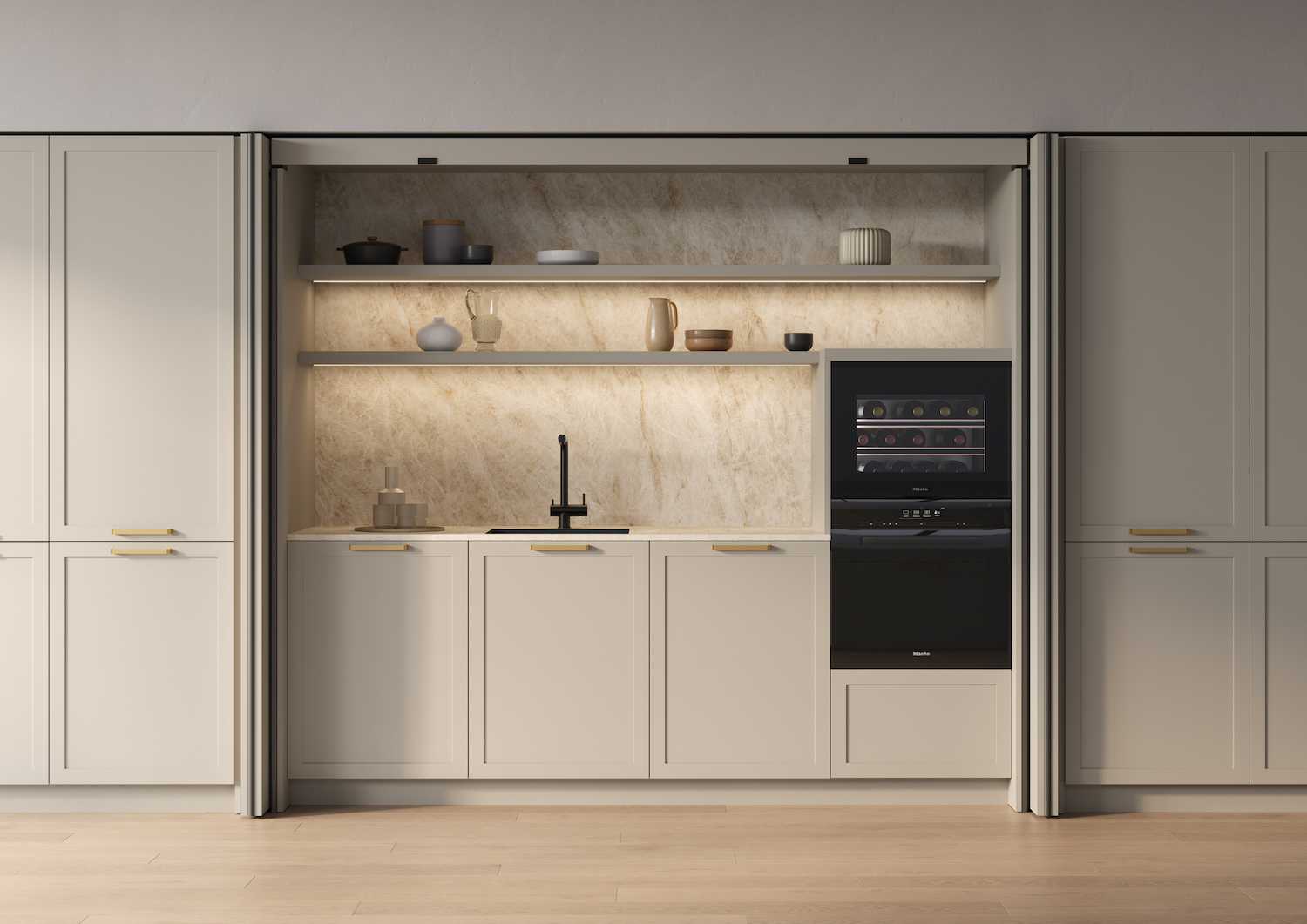
The concept of clusters develops this approach further. A functional cluster can be understood as a small operational station where surfaces, storage, accessories and appliances are arranged around a specific activity.
A preparation cluster, for example, is not simply an empty worktop. It includes utensils, chopping boards, electrical outlets, organised drawers and easy access to both the pantry and refrigerator.
A cooking cluster combines the cooktop with pots, spices and nearby landing surfaces.
A washing cluster extends beyond the sink to include the dishwasher, recycling systems and space for draining dishes.
A clear everyday example is the breakfast cluster. Coffee machine, kettle or toaster sit together with drawers containing cups and teaspoons, sometimes with a small compartment for sugar or capsules. Everything is in one place. This simple daily routine illustrates how clusters work. They are not just separate functions but micro-stations organised around a specific action.
Seen in this way, the cluster concept does not replace the triangle. It expands it, translating geometry into a sequence of real gestures.
Why kitchen design now requires an additional step
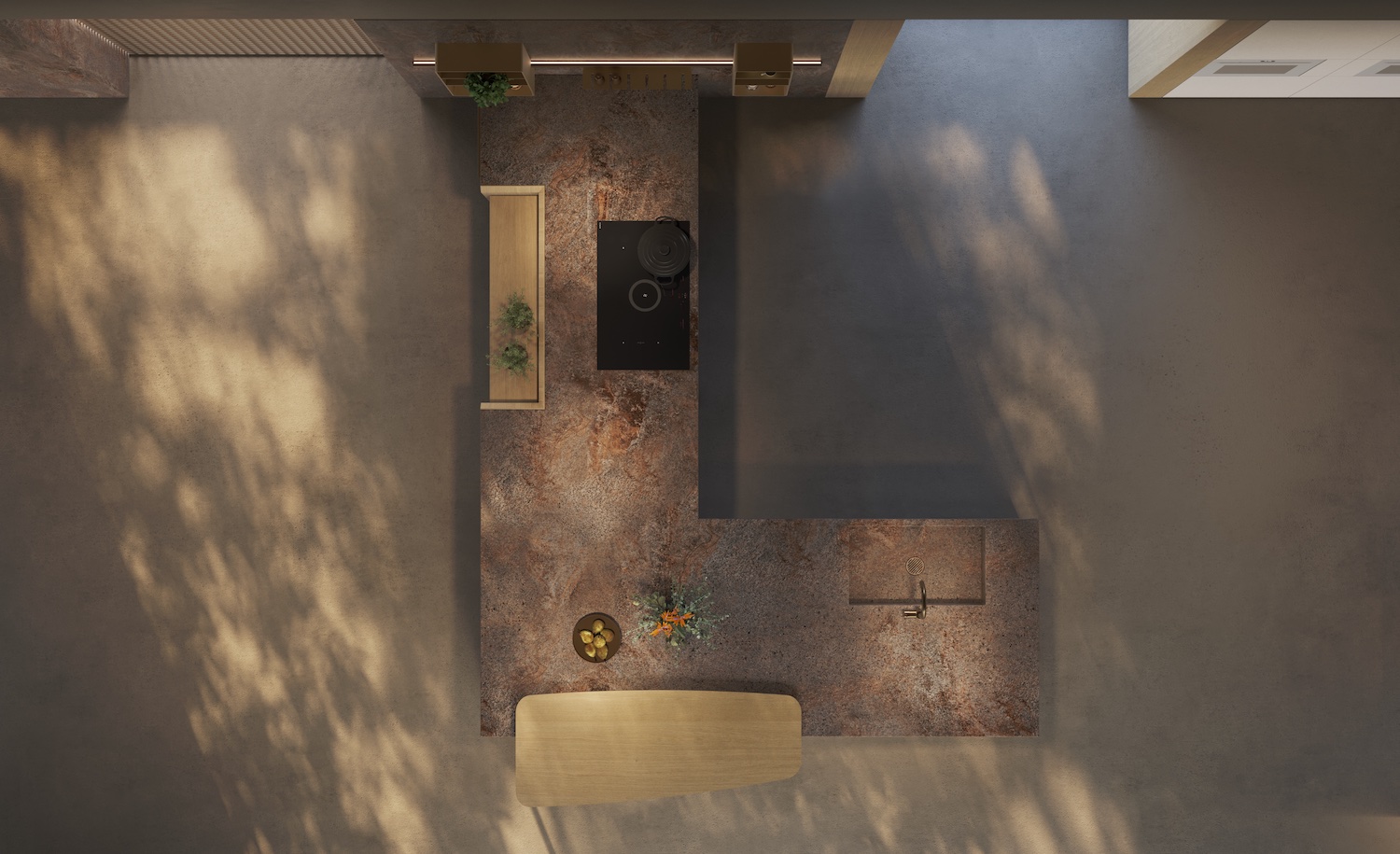
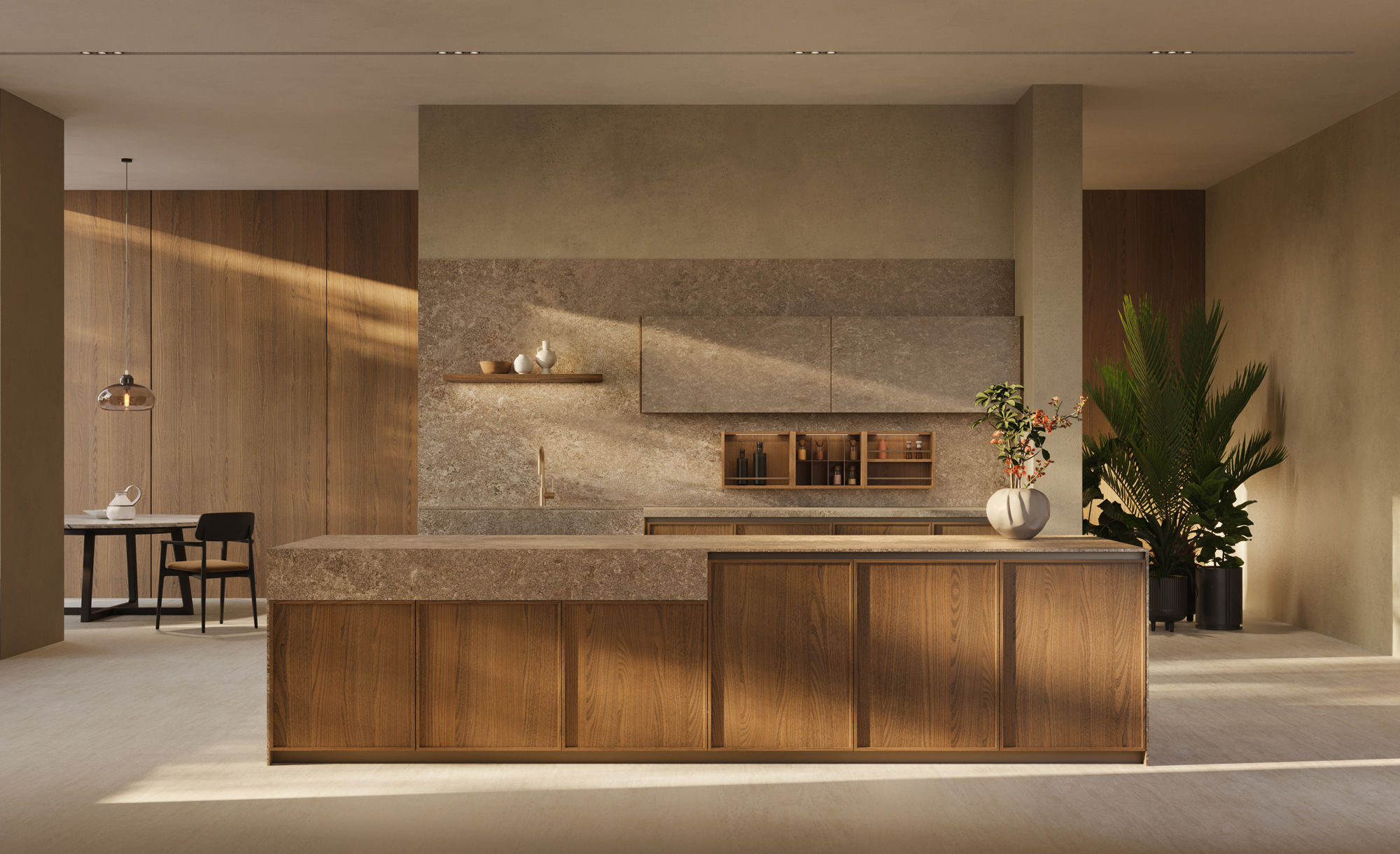
In kitchens with an island, the triangle may still exist but often takes a more complex form. The island frequently becomes a central station for preparation or cooking.
In open-plan spaces, the design must balance efficiency, visual order and the relationship with the living area.
The work triangle remains a solid ergonomic foundation. In contemporary kitchens, however, it is often only the starting point. Good design now considers the actual workflow of daily cooking, organising functions and surfaces in a more precise and articulated way.




What do you think?