
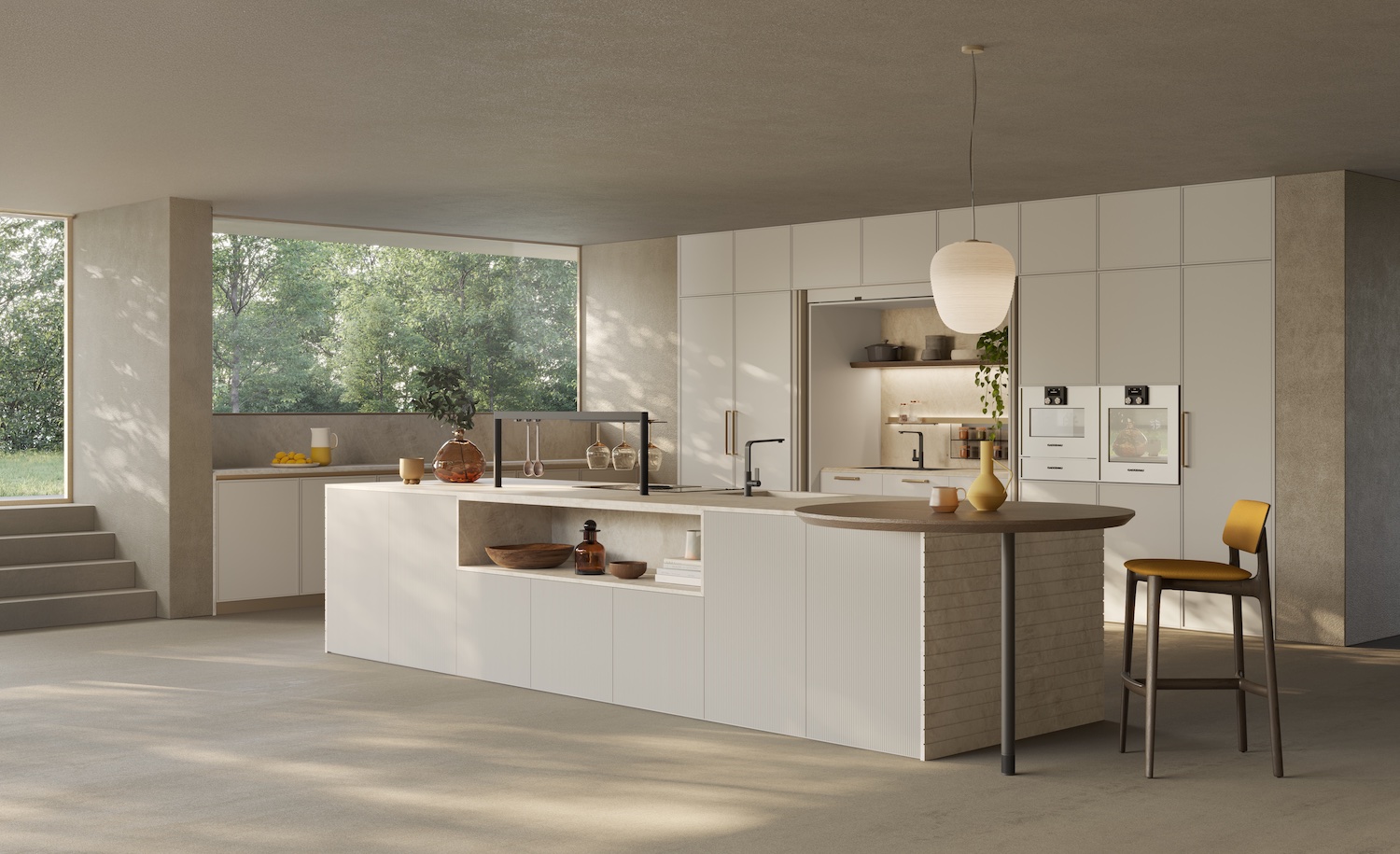
For years, grey was the symbol of the most rigorous contemporary kitchen: minimal, urban, essential. Today, this shade has changed character. It feels warmer and softer, enriched by natural nuances and textured surfaces that make the space more welcoming and personal.
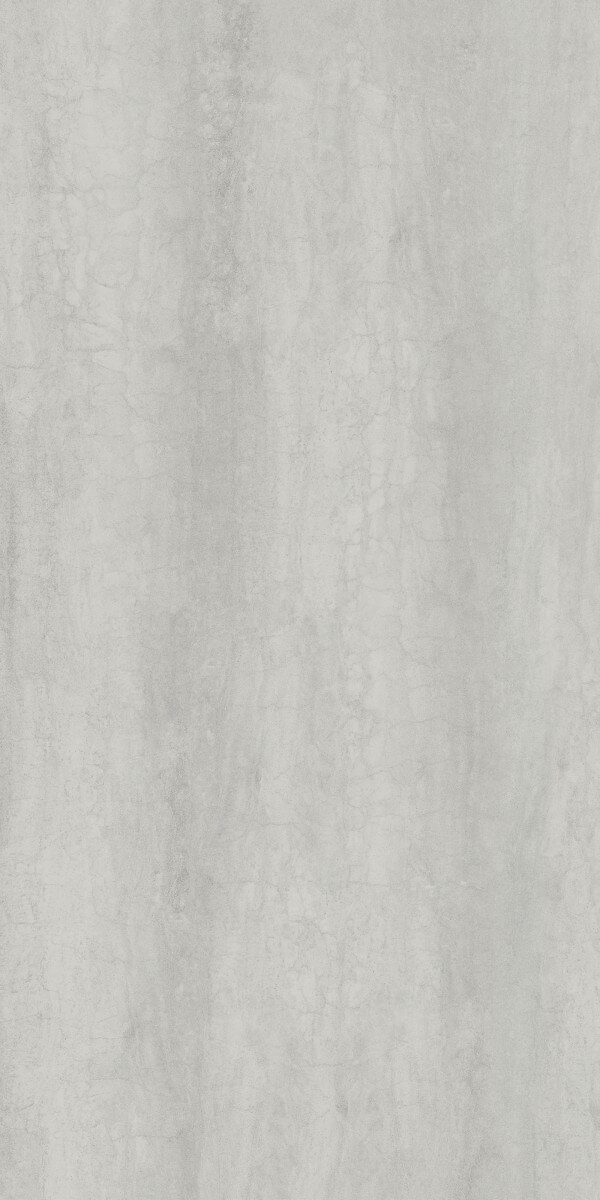
This is where the so-called ‘coloured greys’ come into play: desaturated shades that retain the depth and elegance of grey, while opening up to greige, taupe, clay, sage green and mineral notes. Quiet yet intense colours, designed to interact with light, materials and the way we experience the kitchen every day.
It is a direction that also emerges clearly in the latest kitchen trends for 2026, where design, materiality and natural colour palettes define increasingly authentic, sensory interiors.
At a glance
Contemporary grey changes temperature
Today, speaking about a grey kitchen means speaking about balance. Not cold neutrality, but evolved palettes that turn the kitchen into a refined, lived-in space.
Contemporary shades move away from industrial rigidity and closer to softer, powdery chromatics. Grey is infused with warm pigments, natural references and textures that completely change the way it is perceived.
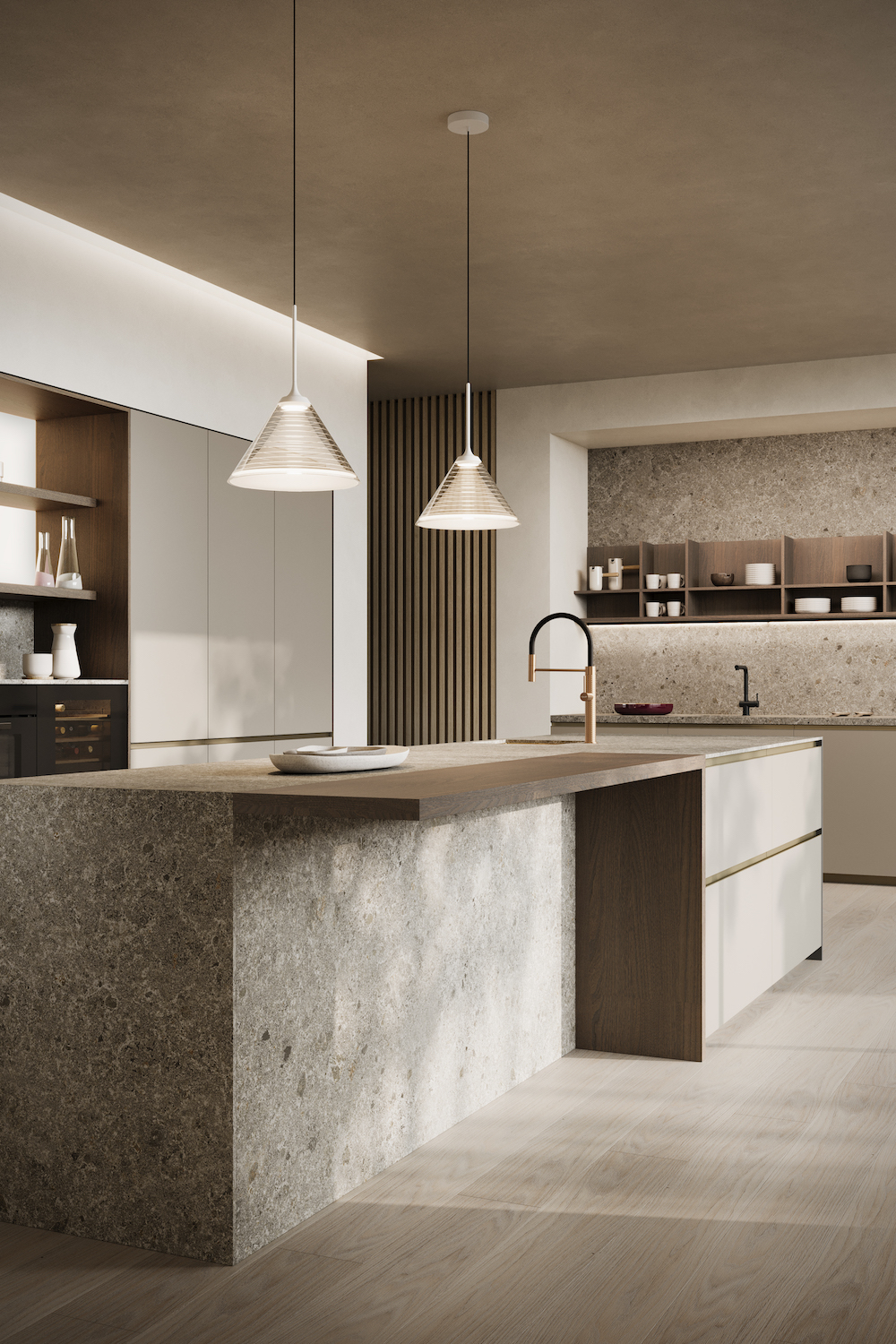
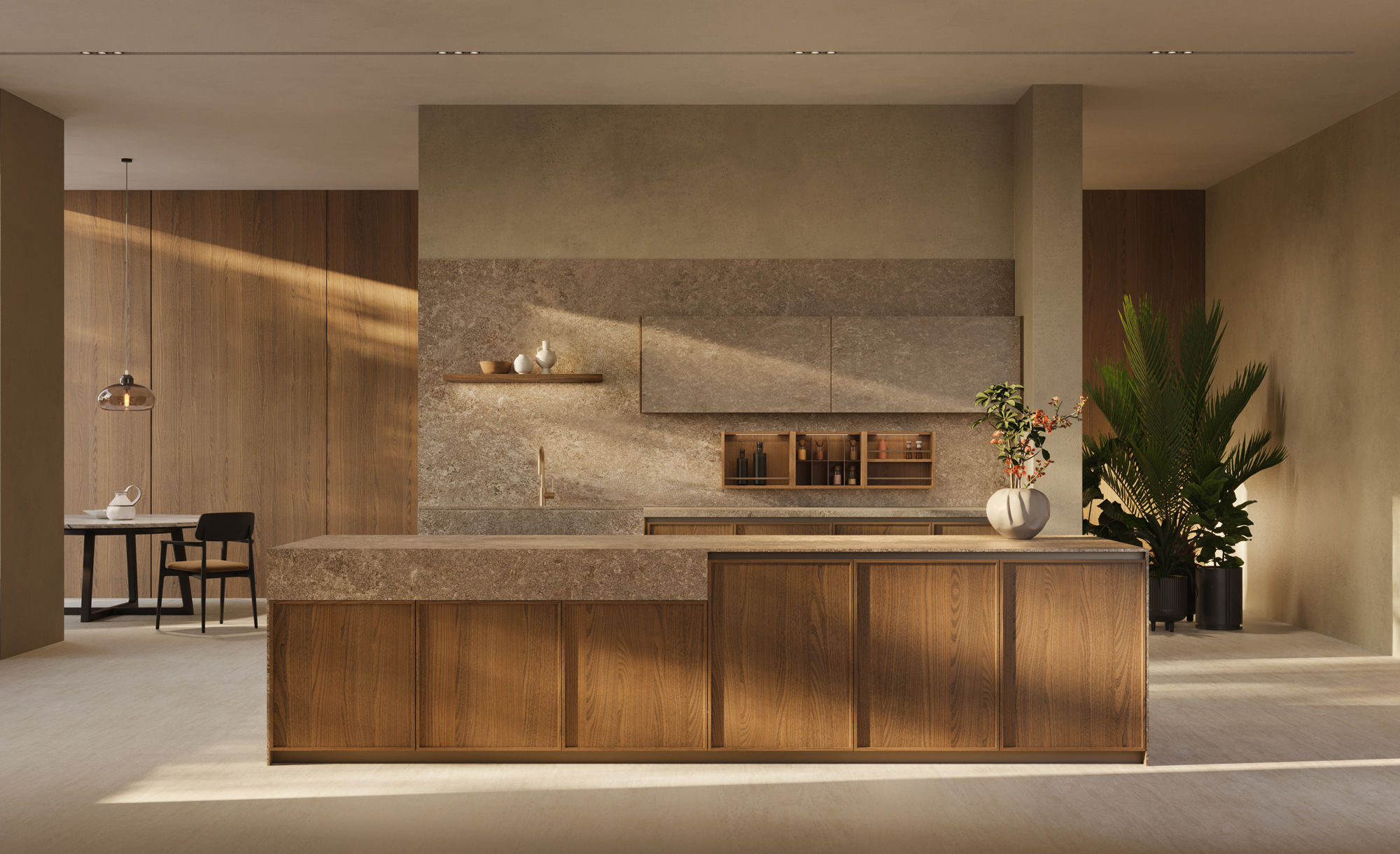
Within this process, materiality becomes central. Matt surfaces, brushed wood veneers, technical stone and soft-touch finishes bring visual depth and a more authentic tactile quality.
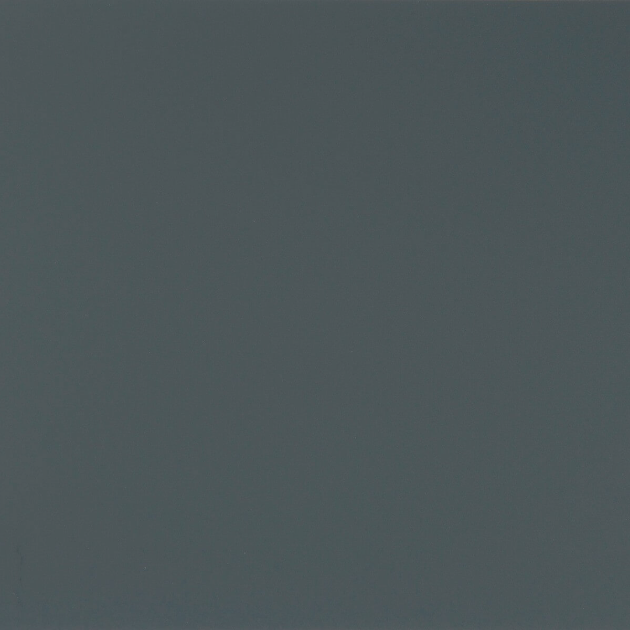
Materials such as Fenix NTM®, for example, amplify this research: anti-fingerprint surfaces, soft to the touch and characterised by low light reflectivity, ideal for enhancing the new contemporary neutrals.
From rigid minimalism to a more welcoming aesthetic
In recent years, minimalism has also evolved. Contemporary kitchens still seek essentiality, but without giving up visual comfort or emotional depth.
This is where the idea of quiet luxury becomes relevant: a discreet elegance made of authentic materials, carefully measured details and relaxed atmospheres.
In the kitchen, this approach takes shape through matt surfaces, clean volumes, soft palettes and material pairings that bring together stone, metal and natural wood veneers.
Coloured greys interpret this trend with precision because they can feel sophisticated without becoming cold. They are shades that accompany the space naturally and allow the quality of the materials to come forward.
Japandi style moves in the same direction: muted colours, natural textures and an essential design approach that conveys balance and serenity.
How to make a grey kitchen feel warmer
Not all greys work in the same way. Cooler, more uniform shades tend to make the kitchen feel more rigid, especially when paired with glossy surfaces or very technical lighting.
‘Coloured greys’, on the other hand, have a softer base because they contain subtle warm or natural undertones. This is why they feel more welcoming: the colour loses its flat effect and gains depth.
The finish also plays a decisive role in the final perception. A matt surface diffuses light more evenly than a glossy one, so grey appears less cold and more material.
This is why many contemporary projects now choose deep yet desaturated shades: they give character to the kitchen without creating contrasts that feel too strong.
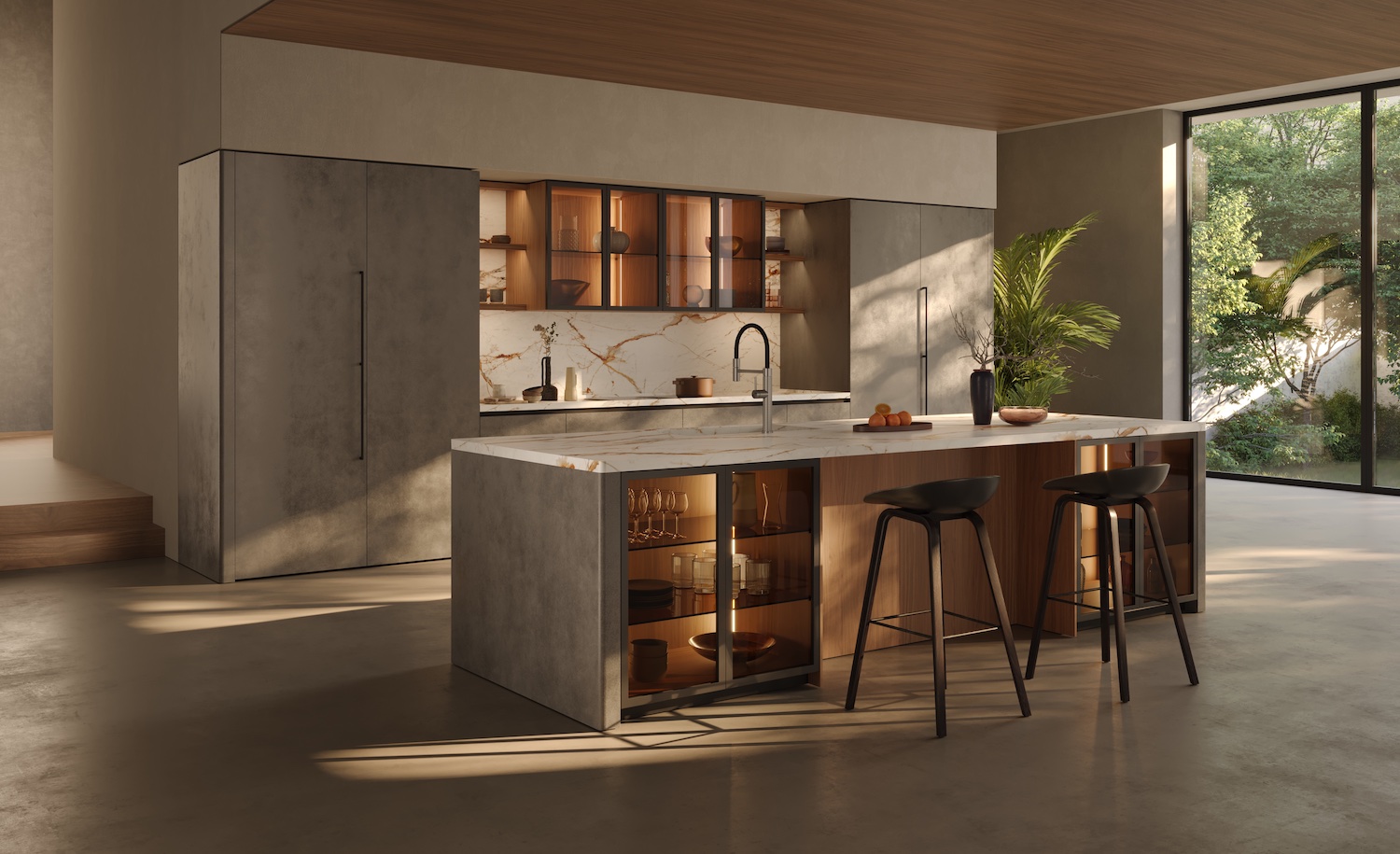
Combinations also play a key role. Contemporary greys work best when paired with natural materials and warm tones, capable of balancing their more technical component.
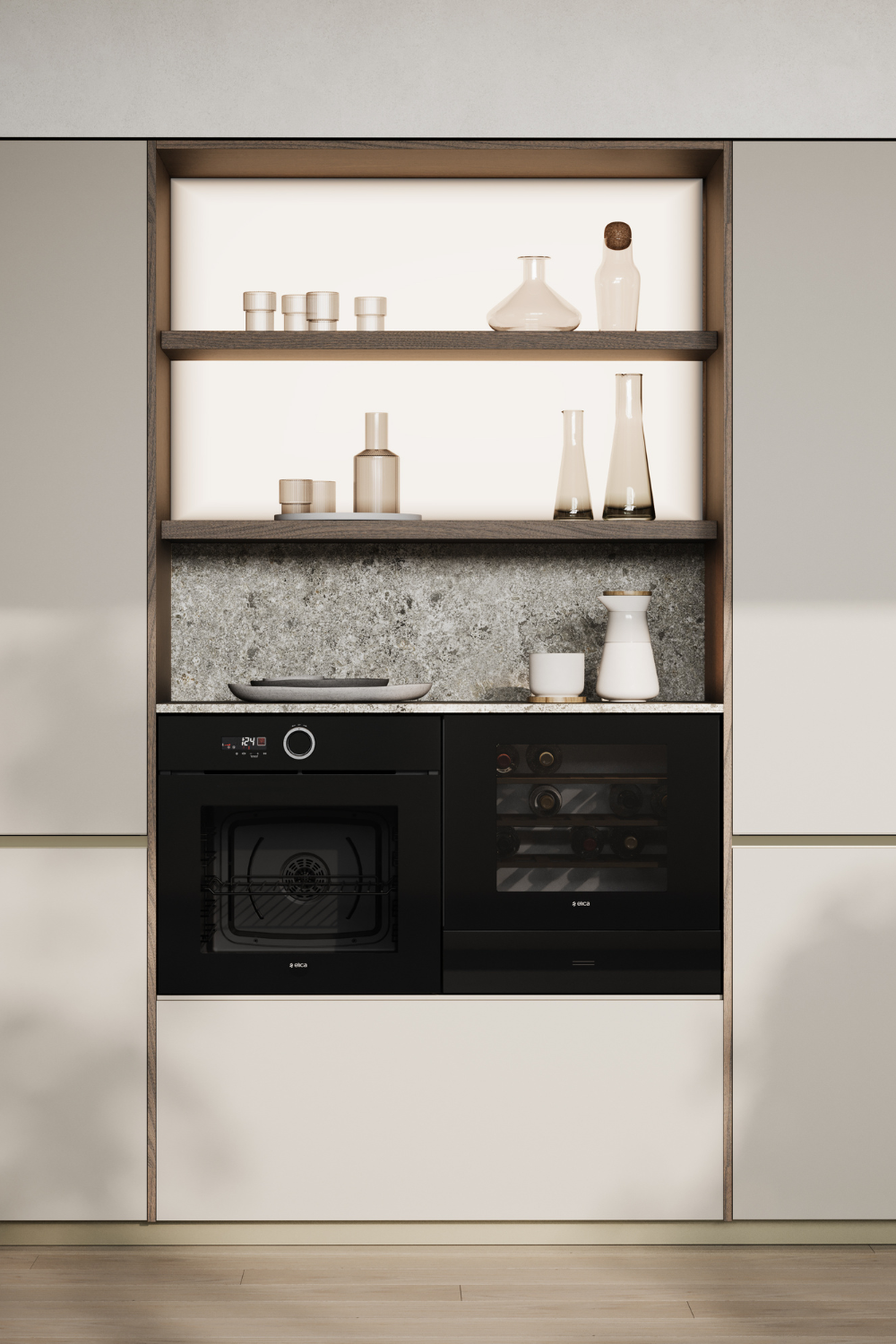
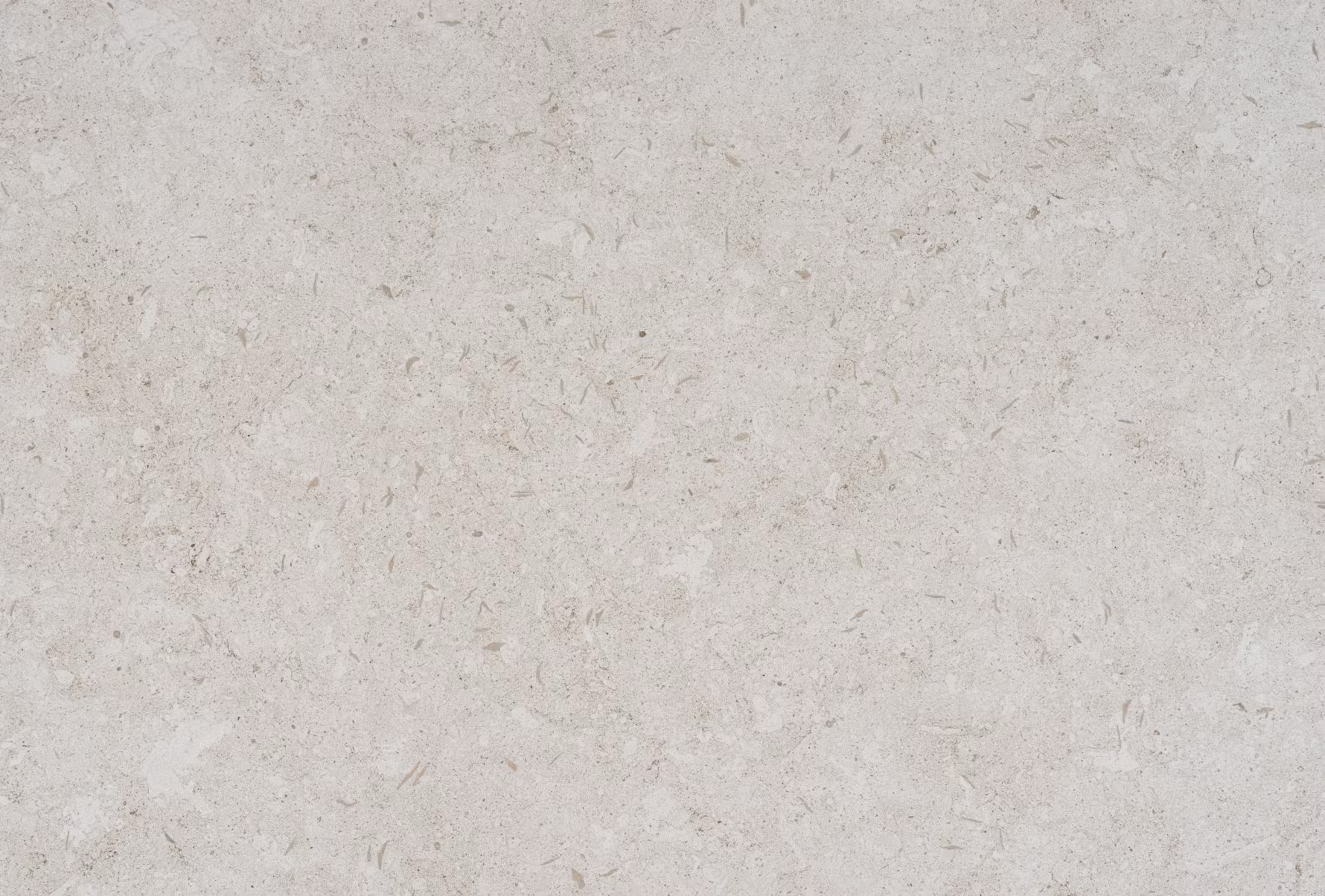
Light or heat-treated woods, stone-effect surfaces, satin metals and sand or taupe nuances help grey become softer and brighter. At the same time, they avoid contrasts that feel too sharp and make the space more balanced.
This is exactly what sets them apart from the grey kitchens of a few years ago: no longer cold, monochrome palettes, but more nuanced combinations designed to create continuity between materials, light and architecture.
The result is an elegant, contemporary kitchen that remains easy to live with over time, built around versatile shades that are less extreme.
The value of soft-touch surfaces
In modern kitchens, colour can no longer be separated from the material that interprets it.
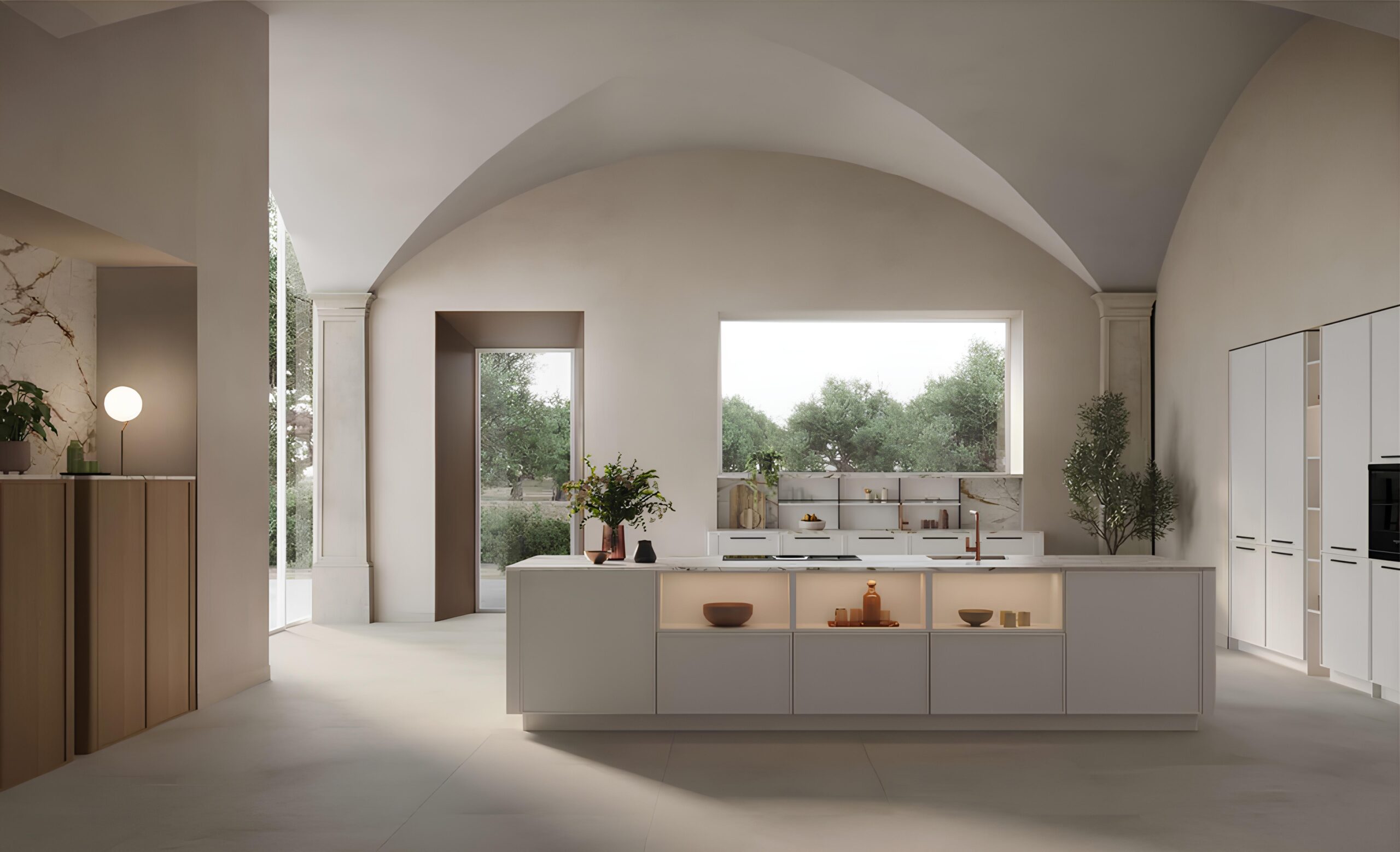
For example, soft-touch surfaces make grey feel deeper, softer and more sophisticated. Light moves across them more gently, fingerprints become less visible and the kitchen gains a more relaxing visual quality. It is a discreet beauty, one that does not seek immediate scenic effects but builds harmony over time.
This is also why technical materials are taking on an increasingly important role in contemporary design. Ceramics, sintered stone, satin metals and heat-treated wood veneers make it possible to create compositions that are coherent, elegant and pleasant to experience every day.
A palette designed to last
While cold, industrial greys are gradually giving way to softer shades, the world of interior design continues to embrace contemporary neutrals.
The new greys interact with natural light, enhance the material quality of surfaces and make it possible to design interiors that feel balanced, sophisticated and timeless.
More than a simple colour choice, they represent a new way of experiencing the kitchen: a fluid, authentic space designed to last.
Explore the Zecchinon collections and be inspired by kitchens where materials, light and contemporary chromatics meet in a natural, refined balance.





What do you think?