
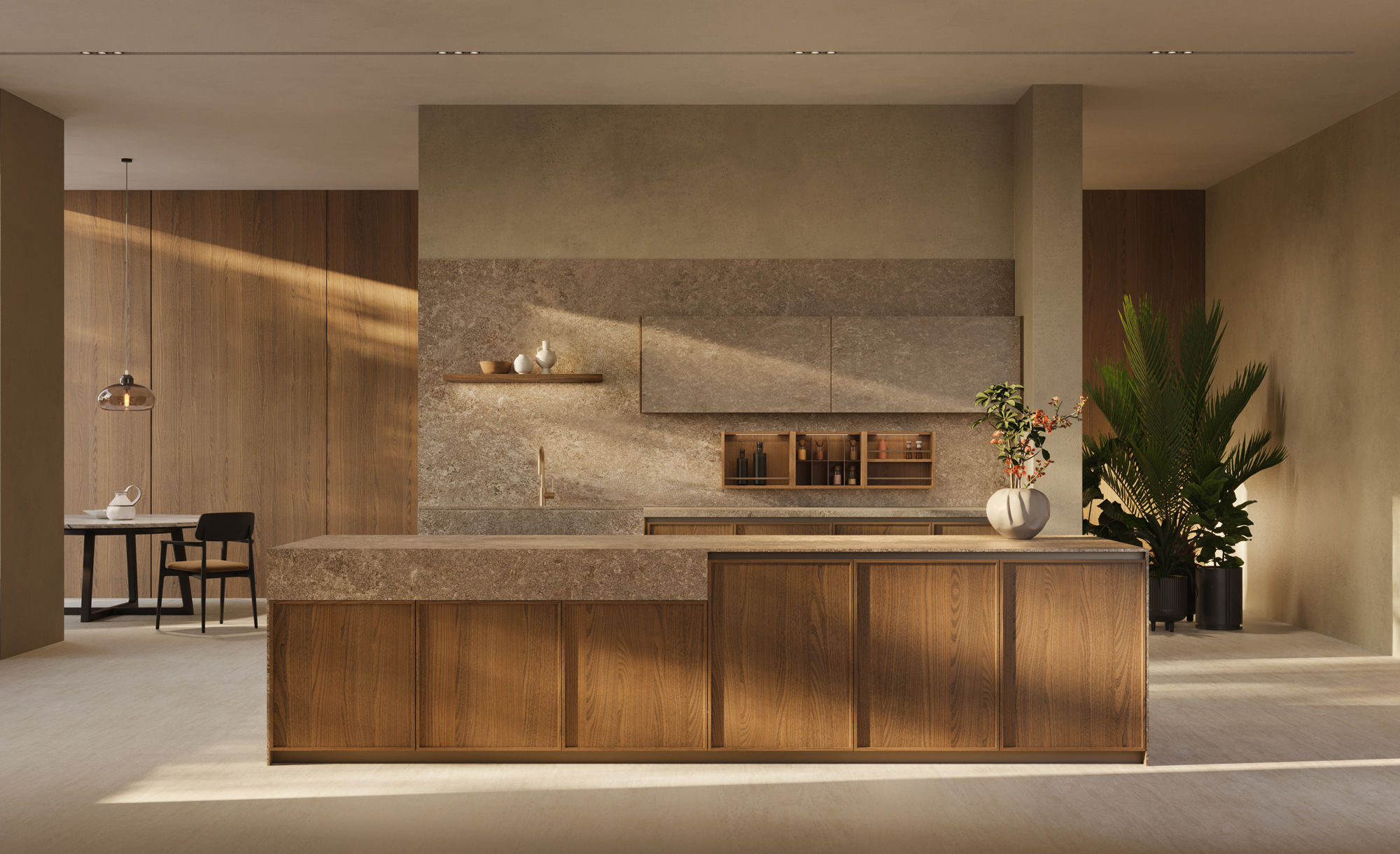
In the kitchen, minimalism is first and foremost a design principle. It focuses on what is essential, on clean lines, visual order, and the relationship between solid and open spaces. Every element has a precise purpose, nothing is superfluous, and the composition is shaped through proportion, surfaces, and continuity.
Warm Minimalism is rooted in this same design language. It does not replace or contradict it; instead, it reshapes its perception through softer palettes, tactile finishes, matte surfaces, and material pairings that bring greater visual warmth.
In the kitchen, this approach preserves the compositional clarity of minimalism while creating a more welcoming atmosphere. The project remains essential in its structure; what changes is the dialogue between materials, light, and colour.
At a glance
From minimalism to warm minimalism
Traditional minimalism is based on reduction, order, and balance. In the kitchen, it takes shape through handleless or integrated-handle doors, uncluttered worktops, precise geometries, and seamless surfaces. It is a design language that celebrates function while giving the space a sense of lightness.
Warm Minimalism starts from the same principles but introduces a different visual temperature. Lines remain clean and volumes retain their rigour, yet materials take on a more prominent role. Wood, matte finishes, stone, technical ceramics, and natural tones add depth without disrupting the overall balance of the composition.
The difference lies not in the design logic itself, but in the atmosphere the project is intended to create.
Warm minimalism and Japandi: similar languages, distinct identities
Warm Minimalism is often associated with the Japandi style because both pursue a sense of calm, simplicity, and naturalness. However, the differences are significant.
Japandi emerged from the meeting of Japanese minimalism and Scandinavian design. It is a recognisable aesthetic built on balance, light woods, restrained forms, neutral palettes, and a quiet sense of beauty. In the kitchen, it often results in harmonious, essential spaces where every element contributes to an atmosphere of serenity.
Warm Minimalism is more versatile. It is not a codified style but rather a way of interpreting essentiality. It can embrace Japandi influences, yet it can also take on more architectural, tactile, or contemporary expressions depending on the project.
The same design direction can be expressed through oak and beige, soft greys and technical stone, dark surfaces and understated metallic details. The guiding principle remains the same: reduce visual noise and create a coherent environment, allowing palettes and finishes to define the degree of warmth.
To better understand the differences, it is helpful to compare the three approaches through a few key design elements.
Aspect | Traditional Minimalism | Warm Minimalism | Japandi |
Core principle | Reduction, order, formal clarity | Essentiality with a warmer, more tactile feel | A fusion of Japanese minimalism and Scandinavian design |
Design language | Minimal lines and seamless surfaces | Minimal lines with a focus on texture, light, and colour palette | Balance, naturalness, restrained proportions, and a quiet atmosphere |
Colour palette | Pure neutrals, whites, greys, controlled contrasts | Warm whites, sand, taupe, beige, soft greys, honey tones, and oak shades | Natural tones, light woods, neutral hues, and earth-inspired colours |
Materials | Smooth surfaces, uniform finishes, technical materials | Wood, matte surfaces, stone, technical ceramics, and tactile finishes | Wood, natural fibres, matte materials, and subtle textures |
Effect in the kitchen | An essential, orderly, visually light environment | A more welcoming yet disciplined minimalist kitchen | A harmonious, calm space inspired by nature |



Materials, colours and surfaces: where warmth begins
In Warm Minimalism, warmth does not come from the number of elements in the space, but from the precision of the material choices.
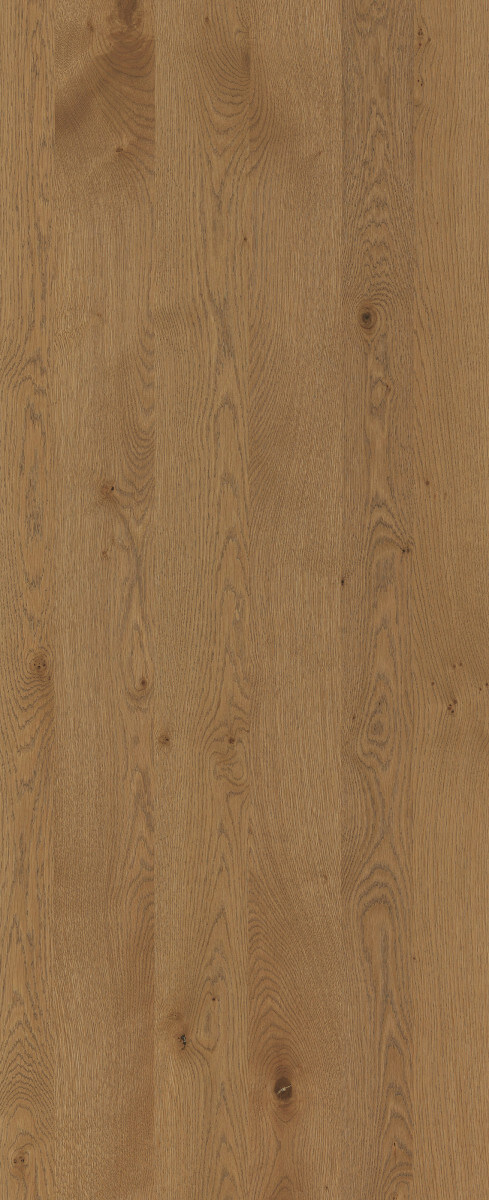
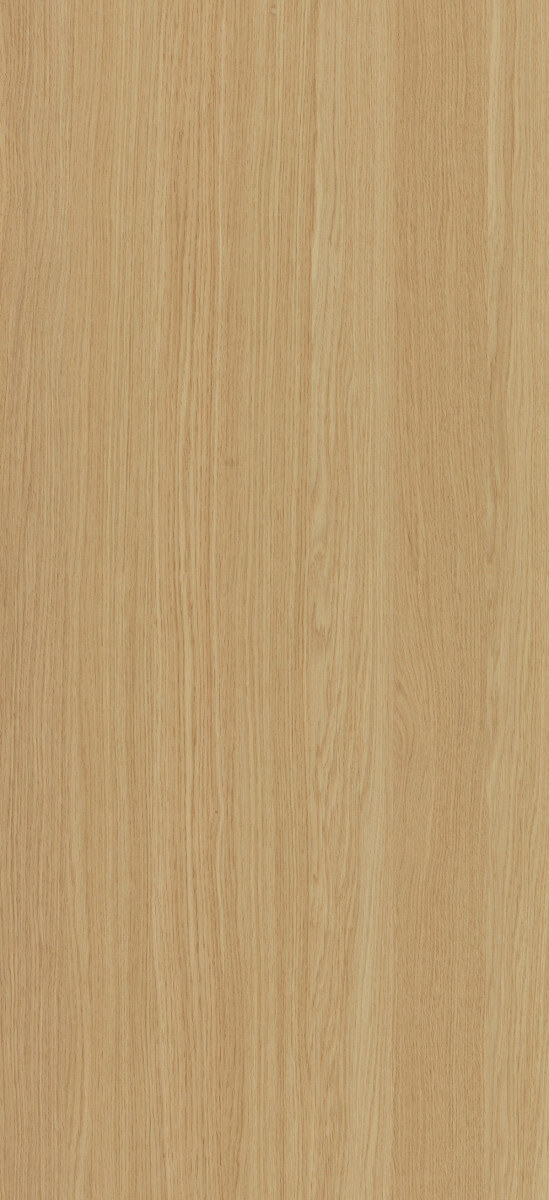
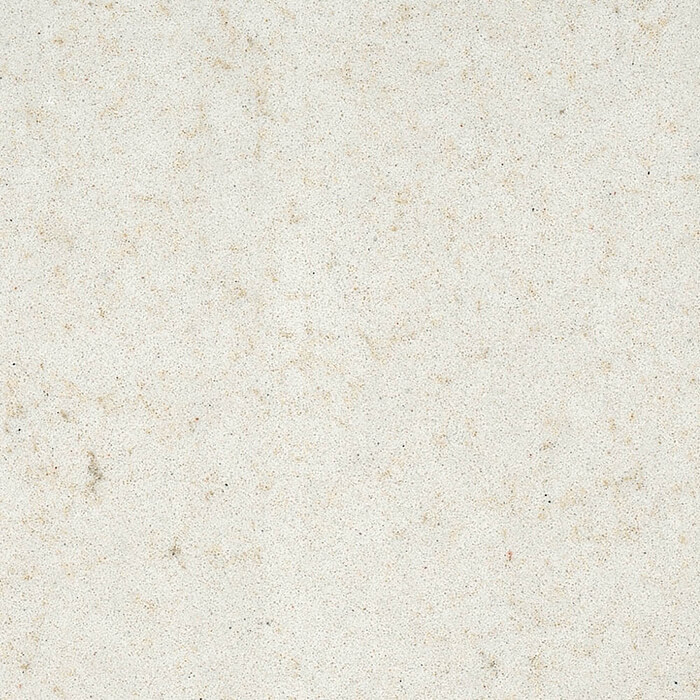
Wood introduces grain, rhythm, and a natural character. Matte surfaces diffuse light more softly than glossy ones, contributing to a more balanced perception of the space. Technical ceramics, stone, and mineral-effect materials make it possible to create seamless, durable, and visually coherent worktops.
The colour palette also plays a central role. Warm whites, sand, taupe, beige, soft greys, honey tones, and oak shades create a discreet chromatic foundation that complements the architecture of the kitchen without making it feel rigid.
These are colours that do not seek immediate contrast, but instead work through continuity between surfaces, light, and volumes. It is precisely this continuity that allows the kitchen to remain essential while gaining greater visual depth.
In this sense, Zecchinon’s selection of materials and finishes becomes a true design tool, enabling bespoke combinations where every surface contributes to defining the overall atmosphere.
The dimensions that make the design work
In a compact kitchen, there is little room for compromise. If the island is intended solely as an additional work surface or storage solution, dimensions of around 90 × 60 cm may be sufficient. If it is designed to incorporate a sink or cooktop, however, larger surfaces and generous landing areas on either side become essential.
Potential points of conflict should also be carefully considered: a dishwasher door opening in front of a storage unit, an oven door obstructing the walkway, stools that permanently extend into the circulation space, or a refrigerator that forces awkward movements within the workflow. These may seem like minor details, but in everyday use they make all the difference between a kitchen that simply looks elegant and one that is genuinely comfortable to live in.
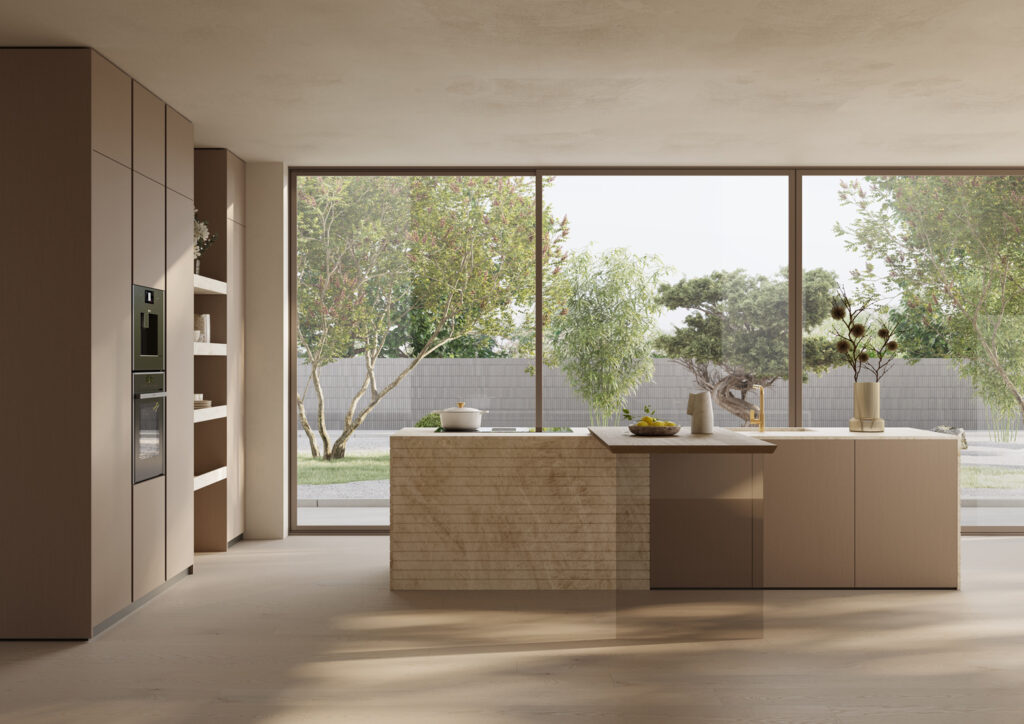
An essential kitchen built on balance
Warm Minimalism works when aesthetic coherence is never separated from functionality. An essential kitchen requires well-designed storage, uncluttered surfaces, fluid opening systems, and an organisation that supports everyday gestures without creating visual interruptions.
It is an approach that resonates with quiet luxury in kitchen design: understated elegance expressed through authentic materials, carefully considered details, and a quality that never needs to be displayed.
It does not add decoration; it works on the depth of surfaces. It does not alter the language of minimalism, but softens its perception. It does not seek an immediate effect, but a lasting sense of balance.





What do you think?