
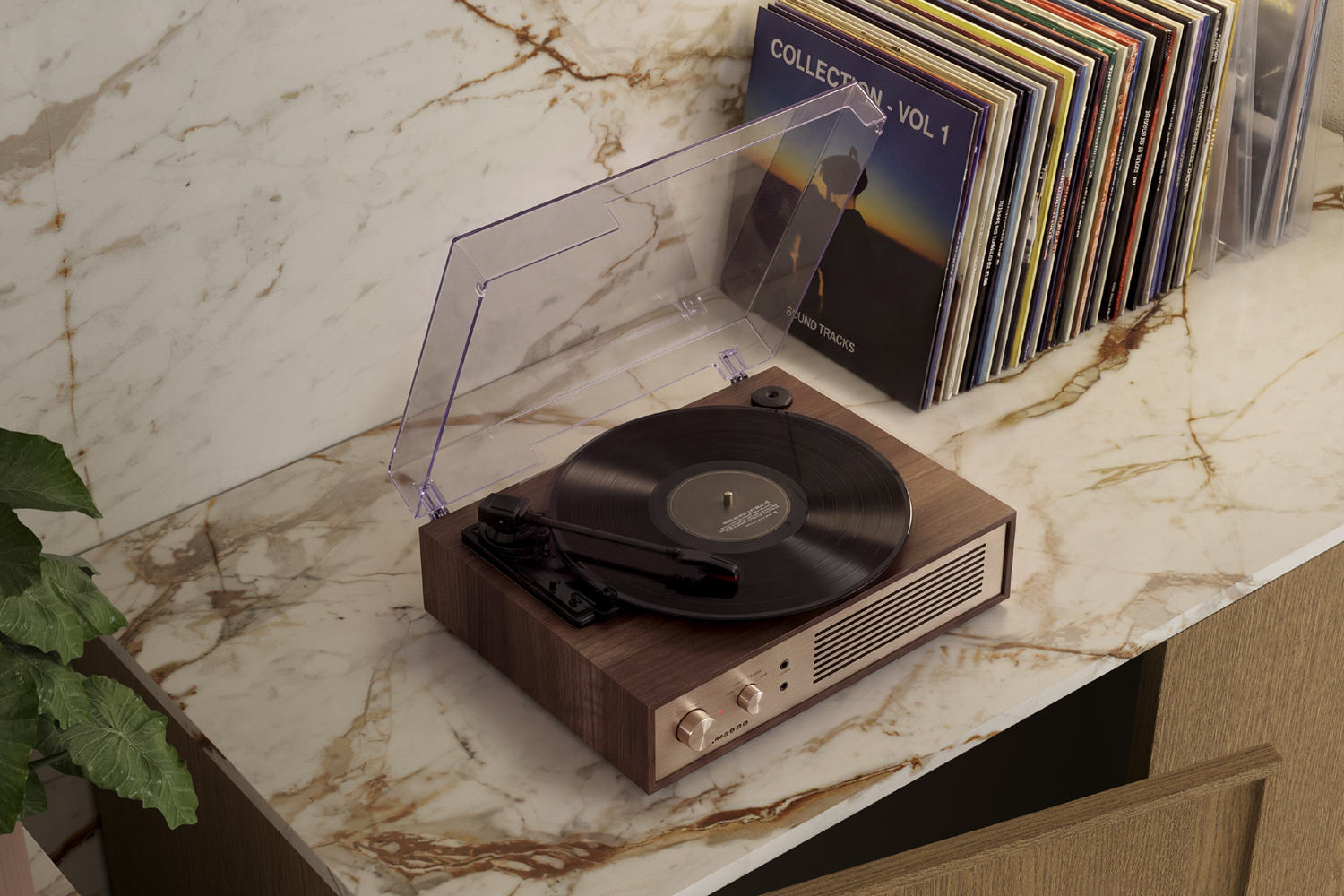
Putting a record on the turntable and letting it play all the way through. Without moving from one artist to another, without skipping a track after just a few seconds.
In a world dominated by speed, analogue has a particular appeal. Not simply because of nostalgia, but because it invites us to do something we are becoming less accustomed to: pause for a little longer and give our time and attention to what we are doing.
This is also part of the reason behind the contemporary success of listening bars: places where music once again takes centre stage and suggests a different way of experiencing shared spaces.
At a glance
From jazz kissa to a new culture of listening
The history of listening bars began long before their recent rise in popularity. Their origins take us to Japan and the jazz kissa: venues created to offer a high-quality listening experience at a time when imported records and hi-fi systems were not easily accessible.
Today, that idea is returning, reinterpreted in a contemporary way, including across European cities.
Vinyl records, high-quality hi-fi systems, intimate settings. Here, music is not background sound: it is the reason people come in and stay. There is no need to dance, and there is not necessarily a live performance to watch: you choose something to drink, and you listen.
More than the format itself, however, what it tells us is perhaps the most interesting part.
Why do we feel the need to slow down?
We can access (almost) all the music we want within seconds. And yet more and more people are choosing vinyl. A trend? Perhaps. Visual appeal? Probably. But there is more to it than that.
The same can be said of images. Instagram allows us to move within minutes from a house in Copenhagen to an apartment in Chicago, saving anything that might become a source of inspiration. And yet leafing through an interiors magazine or a catalogue is a different experience: we pause over an image, notice the details, go back to it.
It is not about deciding whether digital or analogue is better: it is about attention.
A record, like paper, is even slightly inconvenient. It does not offer endless, immediate possibilities; it forces us to choose. Perhaps it is precisely this small resistance to the automatic impulse to skip and scroll that makes it interesting again.
A new kind of conviviality also takes shape in the kitchen
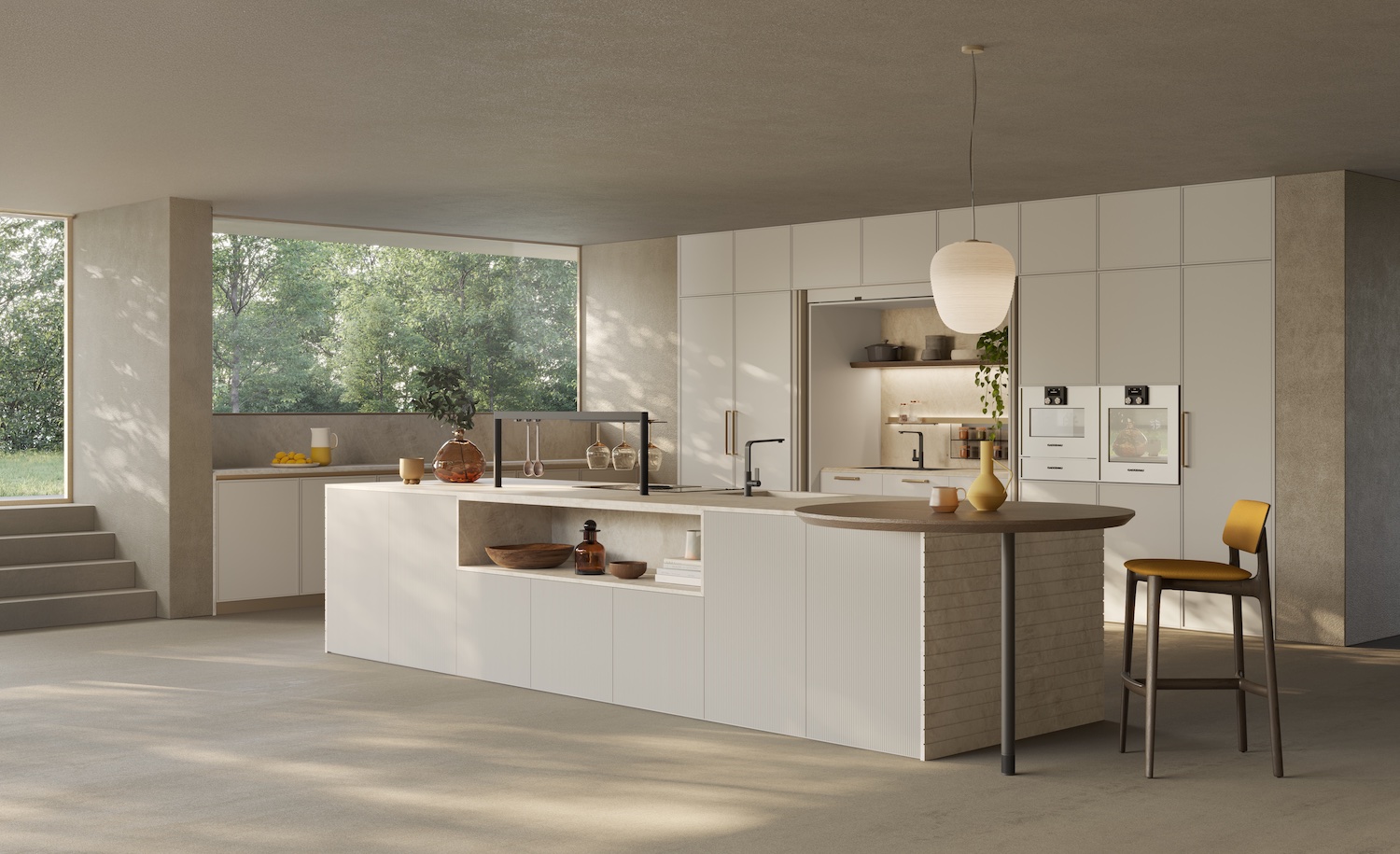
Dinner has not started yet. A bottle is already open, someone stays by the island while the final preparations are being made. There is an album on the turntable, chosen for the evening, and for a while at least, there is nothing else to choose.
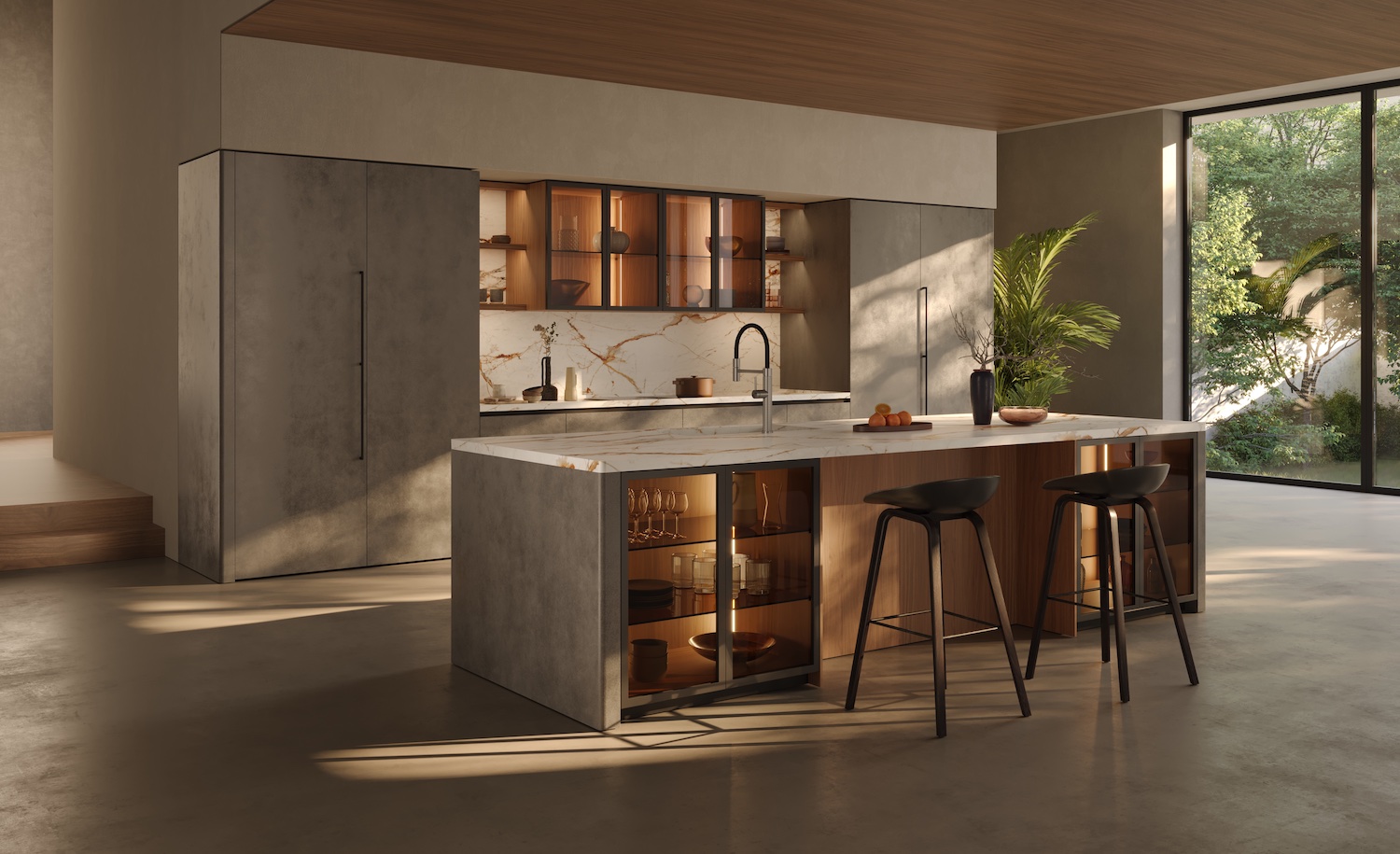
In an open-plan space, boundaries are already less rigid. The kitchen can flow naturally into the living area, and the living area into the kitchen, allowing cooking and conversation to coexist. Music moves through both.
And it is interesting that all of this is happening just as the kitchen becomes increasingly efficient. Technology shortens preparation times and simplifies many everyday tasks; meanwhile, we continue to look for good reasons to stay here a little longer.
The aperitif also fits naturally into this more personal, domestic dimension. It can come before dinner or replace it altogether, accompanied by a bottle chosen for the occasion or a freshly mixed cocktail.
Wine, after all, has already claimed its own place in the contemporary kitchen: we explored this in our article on how to create a dedicated wine area in the kitchen. And the same interest in gestures and rituals is increasingly extending to the world of cocktails.
Music fits naturally into all of this.
Not because the kitchen should imitate the aesthetic of listening bars. Rather, because when kitchen and living spaces coexist, it is natural for the home to make room for the passions of the people who live there.
A wall unit positioned away from heat sources can hold a record collection; during an evening, the snack table can become the ideal place for a turntable. Or a modular wall composition can carve out a dedicated space for music.
There is no need to design a listening room. Sometimes, it is enough to let the home tell us a little more about the people who live there.
The luxury of having time
The return of slow listening is only partly about vinyl or nostalgia.
Above all, it speaks of a desire to give time value again.
Even when it lasts no longer than a record.




What do you think?