
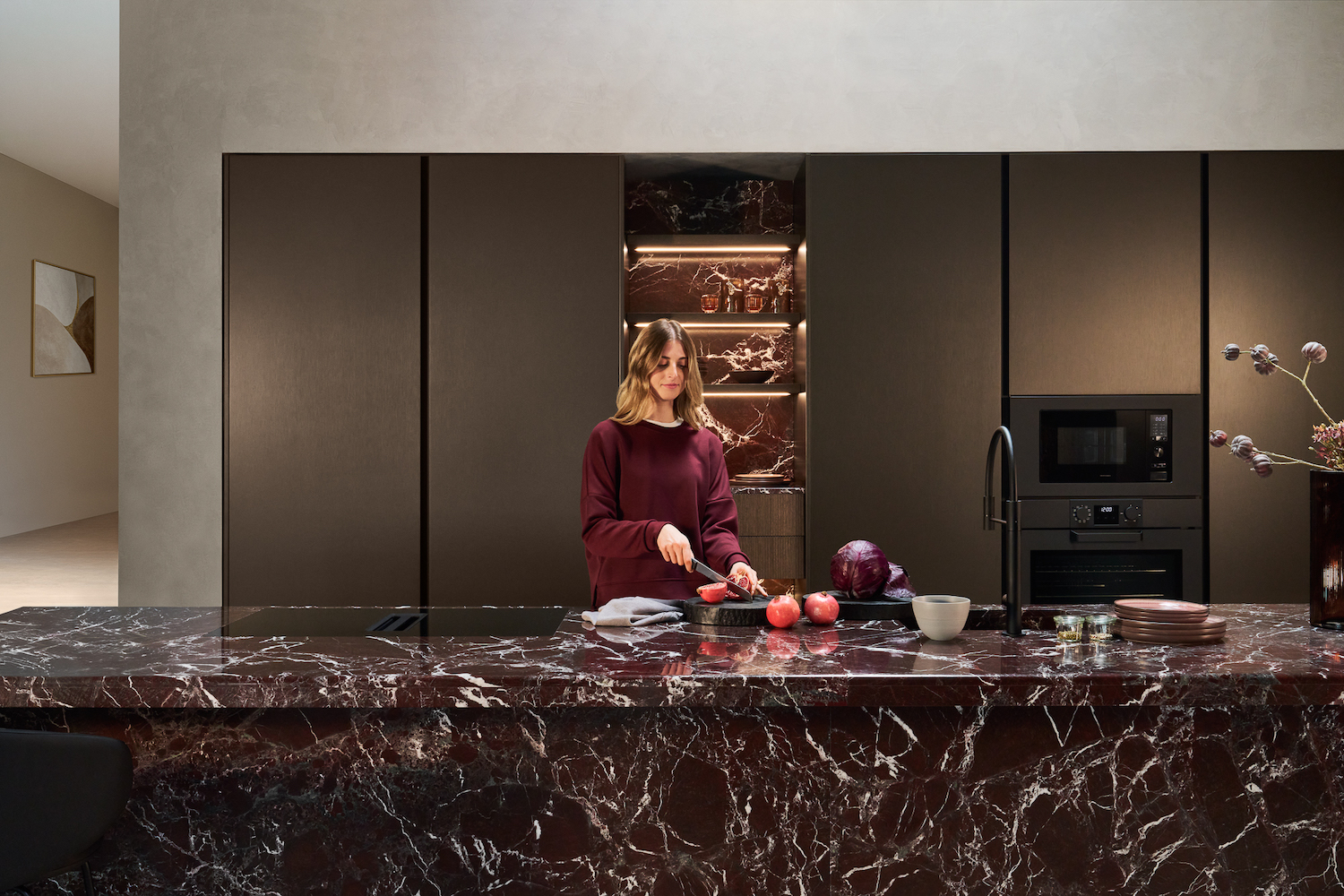
At a chef’s table, part of the experience is seeing what would normally remain behind the doors of a professional kitchen. Preparation becomes part of the menu: you watch the gestures and see a dish take shape before you even taste it. The same fascination can be found in the most refined cocktail bars, where the bartender’s movements are part of the pleasure of ordering a drink.
At home, there is no need for a brigade or a tasting menu. And yet even a dinner with friends can have its own small moments of theatre.
With one difference from a restaurant: the audience can choose to step into the action.
At a glance
Preparation, before the result
Some culinary experiences have made preparation their signature. In teppanyaki, for example, the arrangement of diners around the hotplate turns the chef’s work into a close-up performance. Benihana, which opened its first restaurant in New York in 1964, helped make this interpretation of Japanese cuisine famous, bringing technique together with an unmistakable sense of theatre.
Elsewhere, the spectacle is more discreet. It may be enough to watch the precision with which a chef finishes a dish, or the confidence of a bartender mixing a cocktail without interrupting the conversation. What often captures our attention is the natural ease of gestures shaped by long practice.
It is also what makes so much food content on social media engaging. The actions take centre stage, while editing turns the preparation into something almost choreographed.
There is no such direction in the home kitchen. A recipe may need adjusting, a conversation may linger by the hob, someone may come closer out of curiosity and stay to lend a hand. Preparation therefore becomes less predictable, with spontaneity mattering at least as much as the skill of the person cooking.
From front-row seat to worktop
The pleasure of cooking in front of others can take many different forms. A cocktail prepared in front of friends can become a small ritual, with the ingredients selected and the tools arranged on the counter. But the evening takes on a different character when guests can try mixing their own drink.
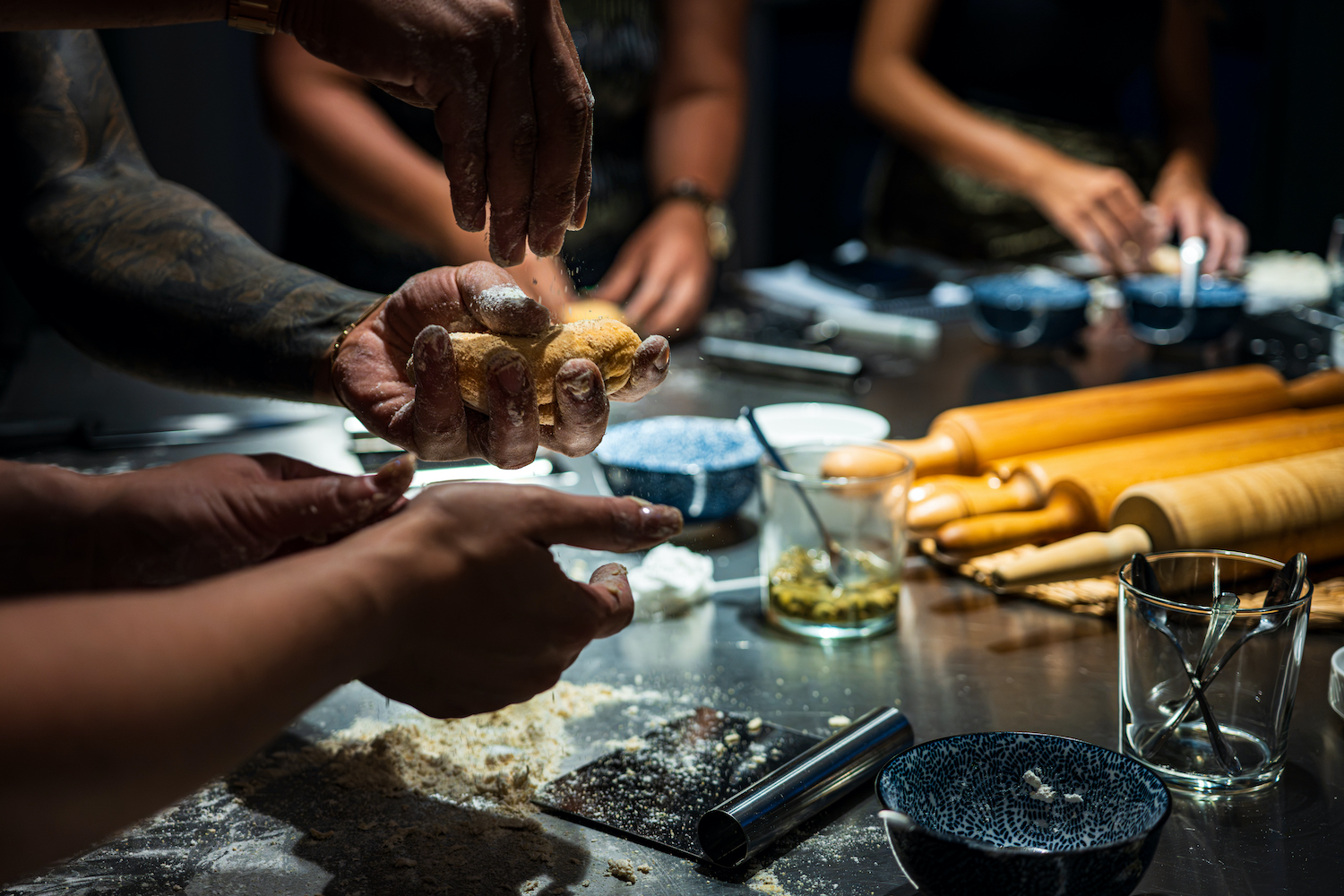
The same is true of fresh pasta. There is a certain satisfaction in watching a sheet of pasta being rolled by hand, but working together, discussing the filling or trying to seal the ravioli introduces a more spontaneous kind of conviviality.
For domestic architecture, this shift from observation to participation raises a precise question: what kind of relationship do we want to create between the person cooking and the people being hosted?
An island with seating facing the working area offers a privileged viewpoint. A surface accessible from several sides, on the other hand, invites more active participation. The position of the appliances also helps define these possibilities: a central hob can make the preparation visible, while an uncluttered island leaves more room for working together.
But designing a kitchen for entertaining does not necessarily mean anticipating every situation. A surface intended for preparation can, during an evening, become the place to serve an aperitif or work together on a recipe. A breakfast bar can host a conversation that continues late into the night.
The quality of a design can also be measured by its ability to make room for these uses without compromising the organisation of everyday functions. Modularity and the possibility of customising the composition make it possible to find a balance between defined requirements and freedom of use.
The appeal of behind the scenes
There is another aspect that professional kitchens know well: not everything that comes before a dish needs to be on display.
In larger homes, a back kitchen can accommodate preliminary preparation and service activities, leaving the main kitchen for the tasks people want to share. In more compact spaces, concealed systems and equipped storage can keep certain functions out of sight, even without the separation offered by a dedicated room.
Solutions we have also explored in our article on the back kitchen and the possibilities for organising a concealed kitchen.
The distinction between what is shown and what remains private is not only a matter of visual order. It allows preparation to follow different rhythms, without requiring the same degree of exposure at every moment.
When the kitchen changes role
In a restaurant with a chef’s table, the layout already defines the relationship between those who cook and those who watch. Guests have a privileged position, but the preparation remains in the hands of professionals.
At home, that distance is far less defined. A demonstration can turn into a collective preparation, a tasting can become a conversation around the worktop, and someone who arrived for dinner may find themselves with flour on their hands.
A well-designed kitchen must respond to the needs of the people who live in it, but it can also leave room for the unexpected. Because the most enjoyable moments, especially when entertaining, do not necessarily follow a schedule.






What do you think?