
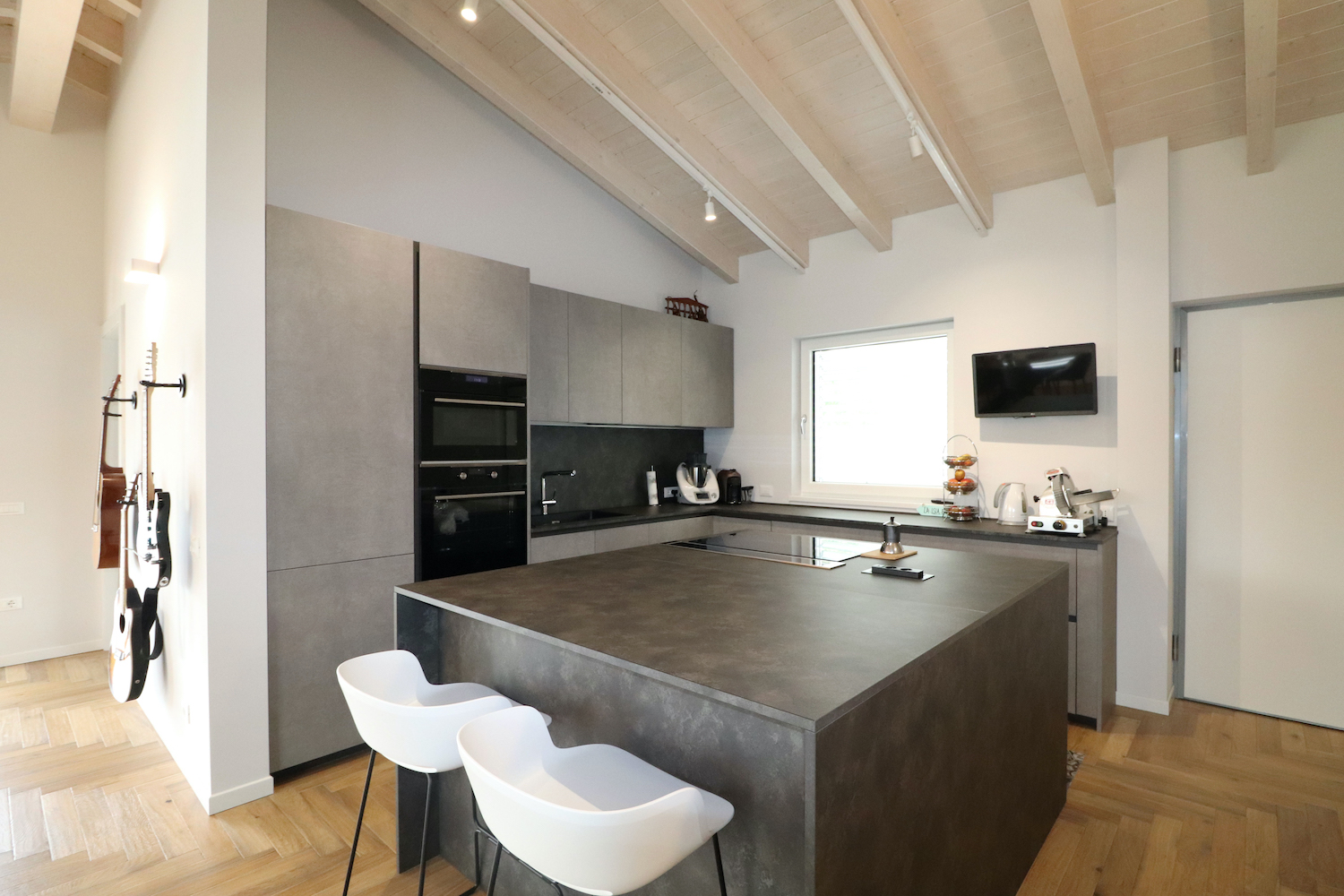
The island still carries a design misconception: that it only belongs in generous spaces. But this idea is now outdated. Even in a compact layout, it can find a coherent position, provided it is not treated as a scenic feature to be replicated in miniature.
Introducing an island into the kitchen should always respond to a real design requirement: extending the work surface, adding storage, incorporating a snack area or creating a more fluid relationship between kitchen and living area.
A small kitchen with an island works when the island is not an element added “just because it looks good”, but a response to a precise requirement.
At a glance
The island is no longer just for large kitchens
In more compact contexts, the point is not to force an island into the kitchen at all costs, but to understand what form it can take without compromising the balance of the space. When properly proportioned, it can free up the walls, organise functions more effectively and give the project a clearer centre of gravity.
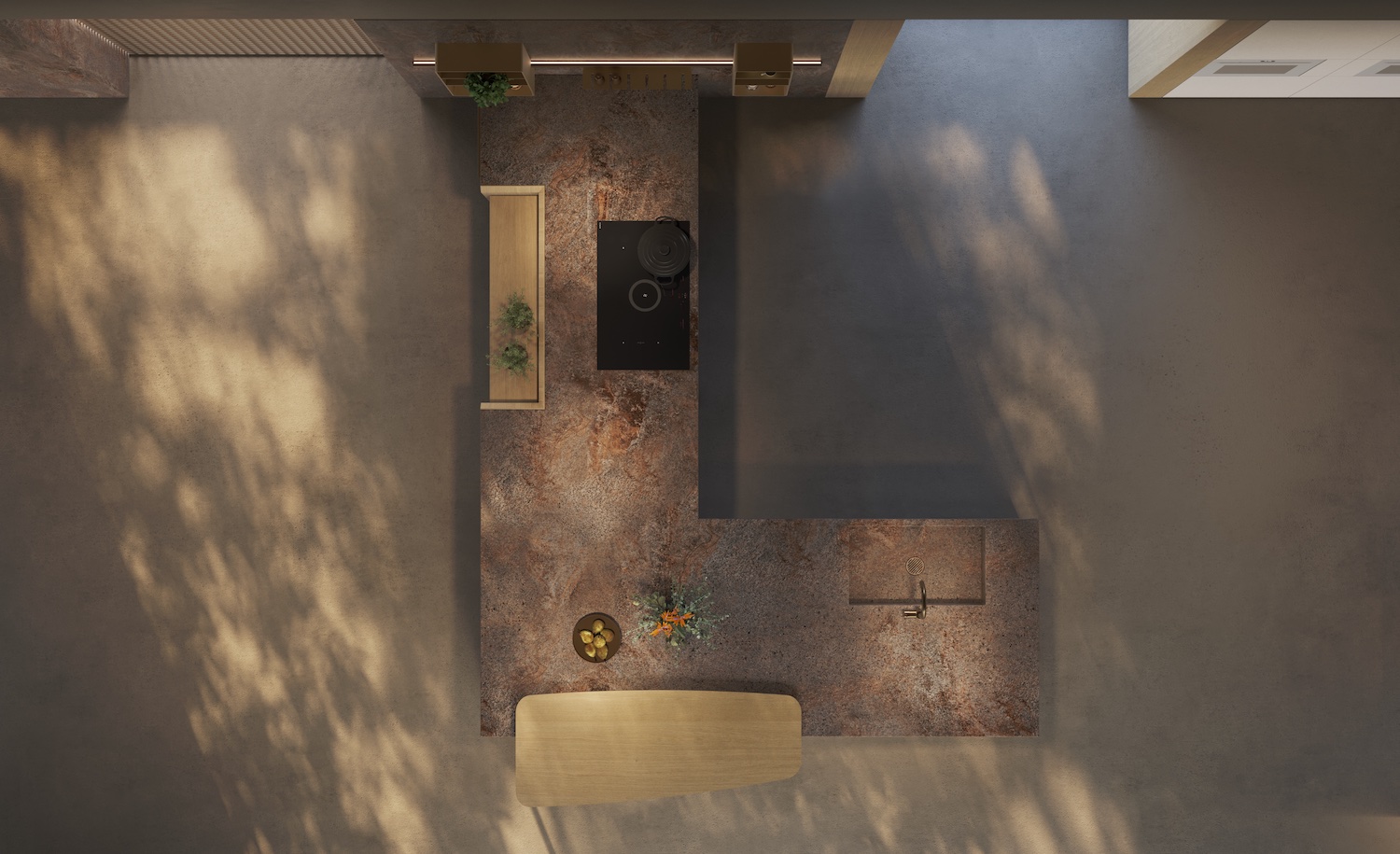
The point is not to shrink a large island, but to rethink it. A mini island, a compact peninsula or a working counter can transform the heart of the kitchen into a living surface.
For designers, the key is to ensure the island does not remain an autonomous block, but becomes part of the kitchen system through coherent proportions, materials and alignments. Modularity, compositional rhythm and the work on materials make it possible to develop this logic consistently, adapting it to different design contexts.
First question: is there really enough space?
The answer does not depend only on the total surface area of the room. It depends on the floor plan, the position of doors and windows, the need for seating and the location of services (electrical and plumbing).
As a general rule, in compact layouts it is advisable to consider 90 cm as the minimum clearance between the island and base units, walls or tall units. Where possible, it is better to reach 100–120 cm, especially if the island accommodates operational stations (such as the hob) or if the kitchen is used by more than one person at a time. Below certain thresholds, even the most beautiful island risks becoming an obstacle.
A practical rule helps assess feasibility straight away: 60 cm depth for kitchen base units, at least 90 cm of clearance, 60/90 cm for the island. If the numbers do not add up, it is better to stop before forcing the project.
Mini island, peninsula or working counter?
In compact layouts, form must follow function. The “do-it-all” island, with sink, hob, snack area, storage and preparation surface, is attractive, but it requires space, services and adequate distances.
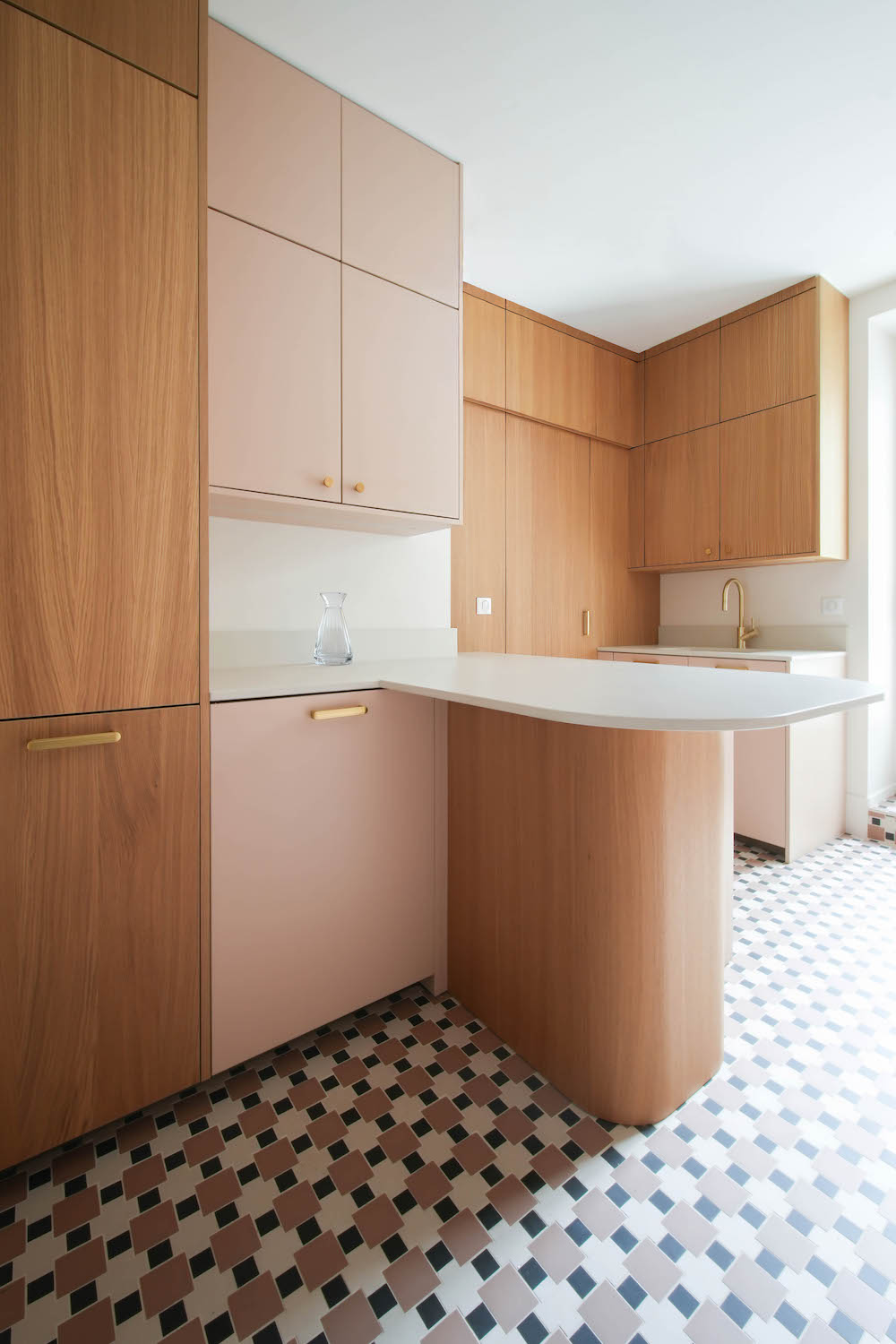
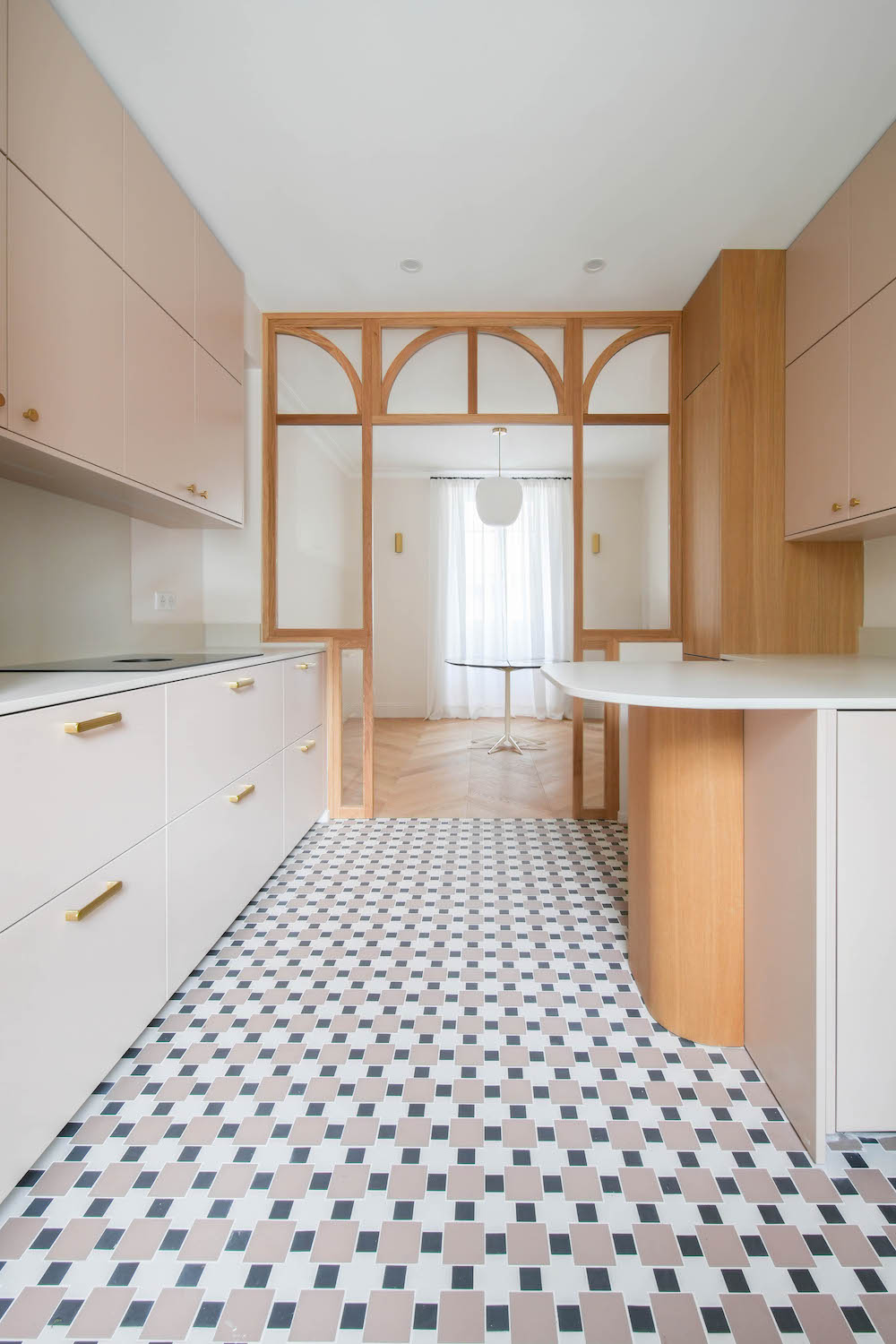
A mini island used only as an additional support surface may be enough to make preparation more fluid. A storage island, designed with deep modules and well-organised internal solutions, addresses the need for storage without overloading the walls. A peninsula, on the other hand, is often the most intelligent solution when the available space does not allow for a freestanding island accessible on all four sides: it preserves the convivial effect, while eliminating one circulation corridor.
In this sense, the shift from the classic work triangle to a functional-area approach is central. The contemporary kitchen is no longer based only on three points (sink, cooking area, refrigerator), but on small clusters organised around gestures: preparing, washing, cooking, serving, storing.
The measurements that make the project work
A compact kitchen leaves little room for approximation. If the island only provides an additional work surface or storage, a size of around 90 x 60 cm may make sense. If it has to accommodate a sink or hob, more generous surfaces and side landing areas are required.
Pay attention to conflict points too: the dishwasher open in front of a storage module, the oven door encroaching on the passageway, stools that always remain slightly pulled out, the refrigerator that forces a turn in the wrong place. These may seem like minor details, but in everyday use they make the difference between an elegant kitchen and a kitchen that is genuinely pleasant to use.
Lightening the volume: materials, lighting and details
The greatest risk, in a small kitchen with an island, is the monolithic effect. A block that is too compact, too dark or too isolated can compress the perception of space. To avoid this, the design needs to work on visual lightness.
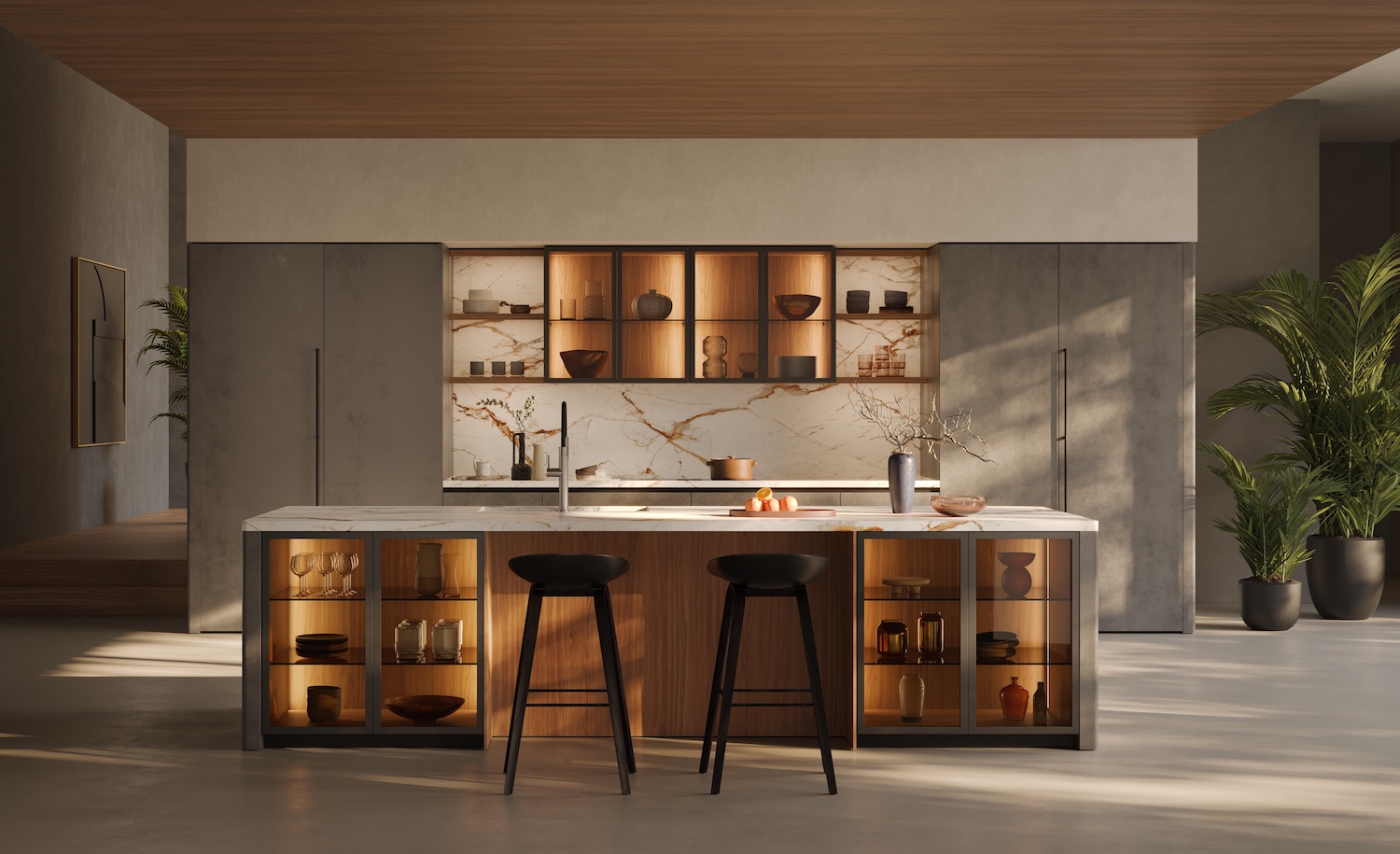
Chromatic continuity between base units, tall units and island helps avoid fragmenting the space. Matt surfaces, carefully balanced material finishes, slim worktops and recessed plinths make the volume appear more measured. Open compartments, when used sparingly, can also break up the mass and give rhythm to the composition.
When the island is not the right answer
There comes a point when the designer needs to be honest: not every small kitchen can accommodate an island. If the usable width is insufficient, if clearances fall below the minimum threshold, if services are difficult to manage or if doors and windows interfere with movement, insisting on an island means losing quality.
In these cases, a side peninsula, a cantilevered snack top, an equipped niche or a bridge kitchen composition can offer a more refined and functional solution. It is not a compromise: it is conscious design.
In summary: island or no island in compact spaces?
In compact layouts, the value of the island does not lie in its presence as such, but in its ability to improve the balance of the project. It must increase functionality without restricting circulation, add useful surface area without weighing down the composition, and integrate into the kitchen system without appearing as an autonomous element.
For this reason, in smaller floor plans, the difference is not made by the formal gesture but by the quality of the design: correct proportions, well-assigned functions, a coherent relationship between full volumes and movement areas, continuity between materials and alignments.
When these conditions are met, even a compact island can become a solid design solution, capable of bringing order, centrality and quality of use to the kitchen environment.
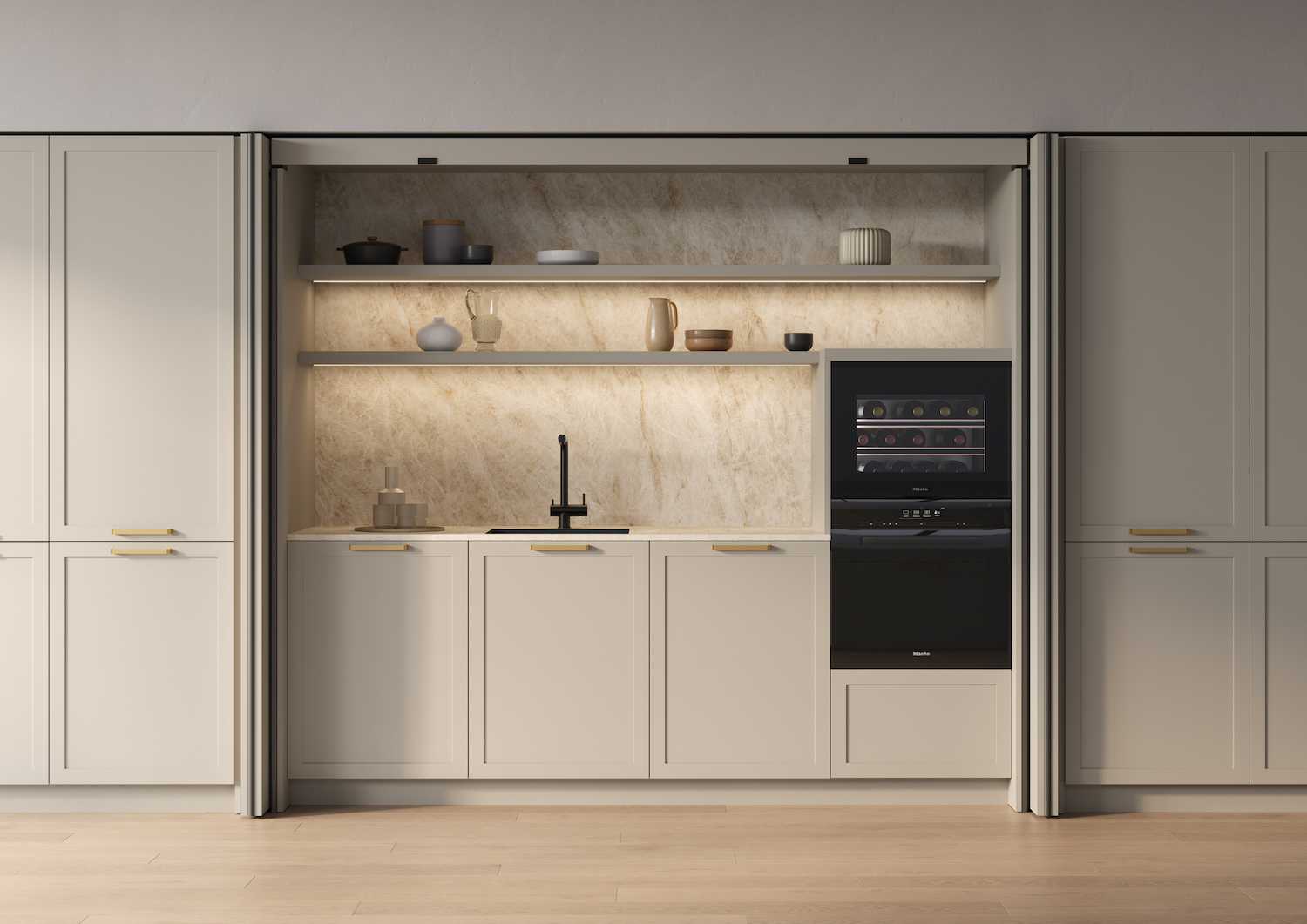
Discover the modularity of Zecchinon collections and find inspiration for your next compact kitchen project with an island.




What do you think?