
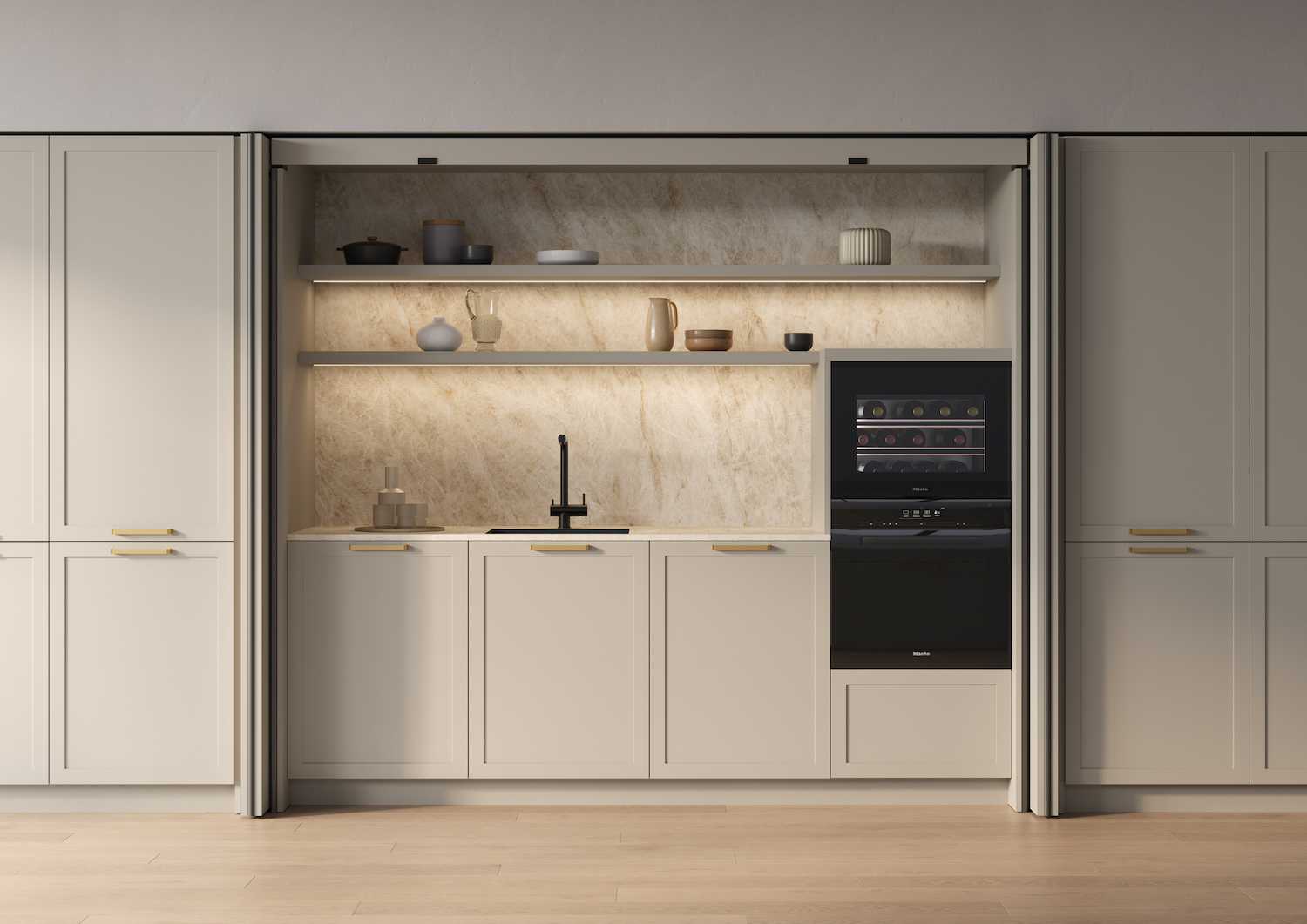
Wine does not enter the kitchen only when it is brought to the table. Choosing the bottle, storing it, opening it and serving it form a small ritual that can — and should — have a clearly defined place within the design.
A wine cooler can be integrated into base units or tall units, face the living area or work alongside a surface dedicated to aperitivo. It is not an element added to the composition, but a true workstation capable of transforming the way the kitchen is experienced.
A colpo d'occhio
From storage to a new way of experiencing the kitchen
The contemporary kitchen accommodates different moments that are no longer limited to preparing meals. It is the space for morning coffee, for a conversation while cooking, for a glass of wine shared before dinner.
Designing a wine area means giving form to one of these moments, bringing bottles, glasses, accessories and a clear serving surface together in one place. It is a principle that contemporary kitchen design shares with the world of luxury hospitality, where every function is organised around the gesture and integrated into the architecture of the space.
The solution can be understated, with a built-in wine cooler installed beneath the worktop, or developed into a more articulated composition. The starting point remains the same: understanding not only what needs to be included, but how it will be used.
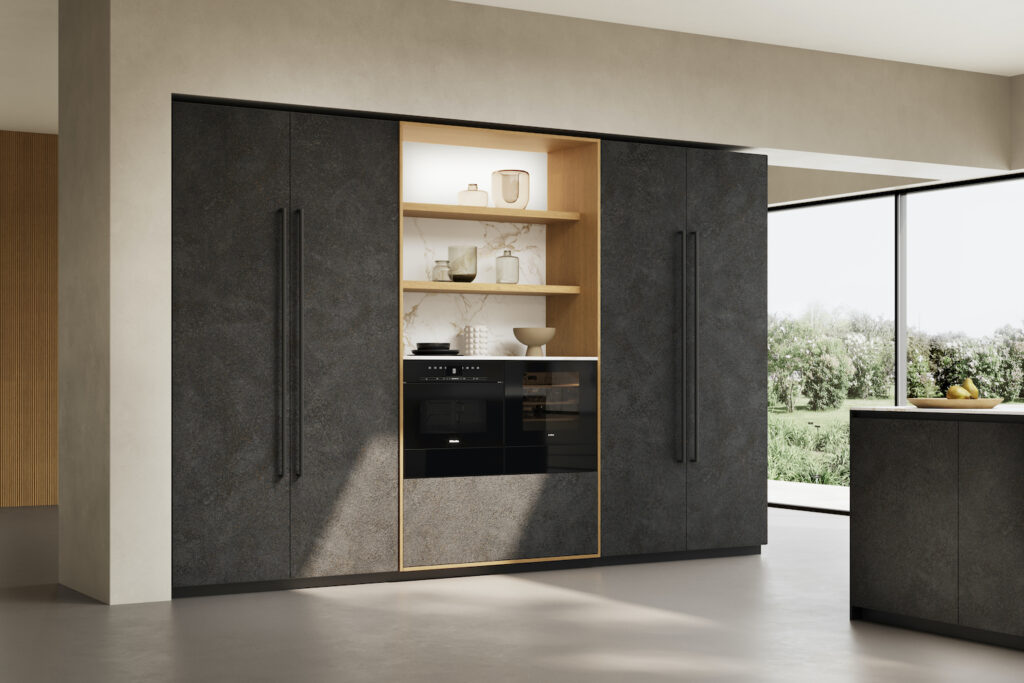
Built-in wine cooler or integrated bottle rack?
A refrigerated wine cooler and a bottle rack respond to different needs.
A built-in wine cooler stores bottles in controlled conditions and keeps them at the most appropriate serving temperature.
An integrated bottle rack offers a more immediate approach to storage. It can hold a limited selection of bottles or become a visible part of the composition through an open compartment, a pull-out module or an internal divider.
The two solutions can also coexist. The wine cooler protects wines that require precise conditions, while the bottle rack keeps bottles intended for more frequent consumption or an upcoming occasion close at hand.
Solution | Main requirement | Possible integration |
Built-in wine cooler | Store wine at a controlled temperature | Base units, island or tall units |
Open bottle rack | Store and display a limited selection | Niches, wall panelling or open modules |
Pull-out module | Make the most of a compact space while maintaining visual order | Base units or tall units |
Fully equipped wine area | Bring together storage, accessories and serving | Fitted wall or transition area towards the living space |
Where to position a wine cooler in the kitchen
The position of the wine cooler affects the aesthetics of the composition, but above all the natural flow of movement.
Placing it in whatever space is left at the end of the design process rarely produces the best result. It is preferable to consider it from the outset, assessing its relationship with the working area, circulation paths and the place where serving takes place.
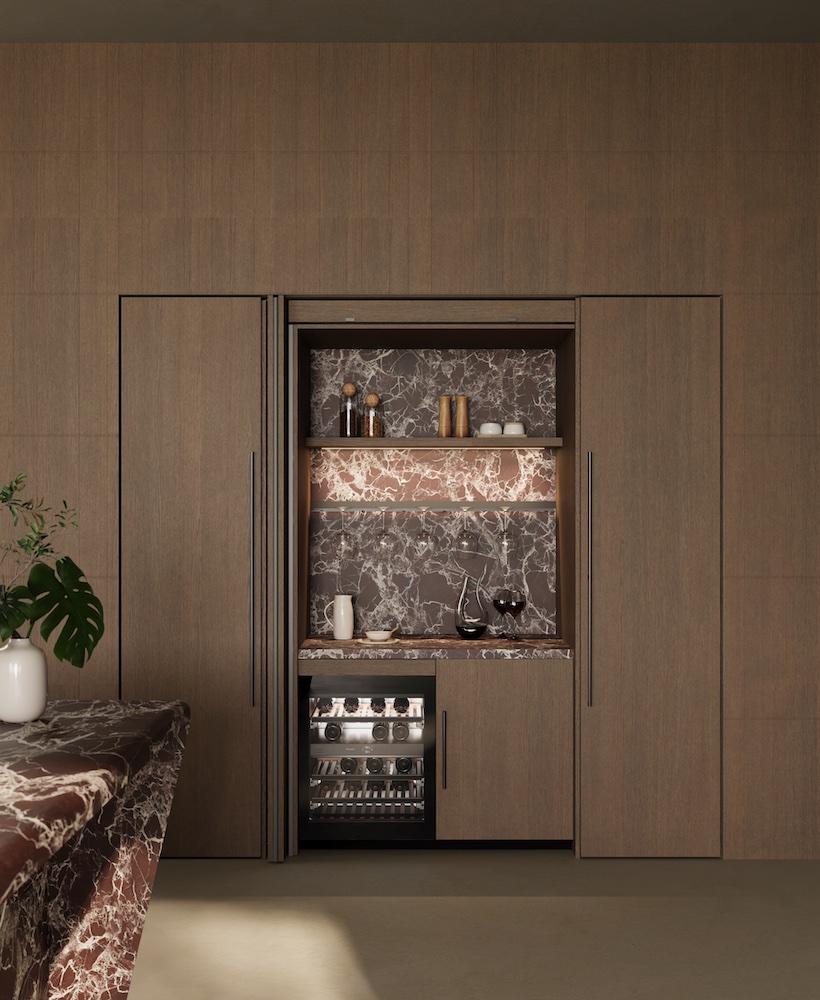
Under the worktop
Integrated into the base units, the wine cooler maintains a discreet profile without interrupting the continuity of the worktop. Its proximity to a clear surface makes it possible to set down and open the bottle and prepare the glasses without occupying the cooking area.
It is also a suitable solution for more compact kitchens.
In the island or peninsula
When the island is the centre of conviviality, the wine cooler can be positioned on the side facing the living or dining area. This keeps the bottles accessible even while the working side of the kitchen is in use.
Pairing it with a breakfast bar or snack counter makes the function even more immediate, as storage and serving come together within the same volume.
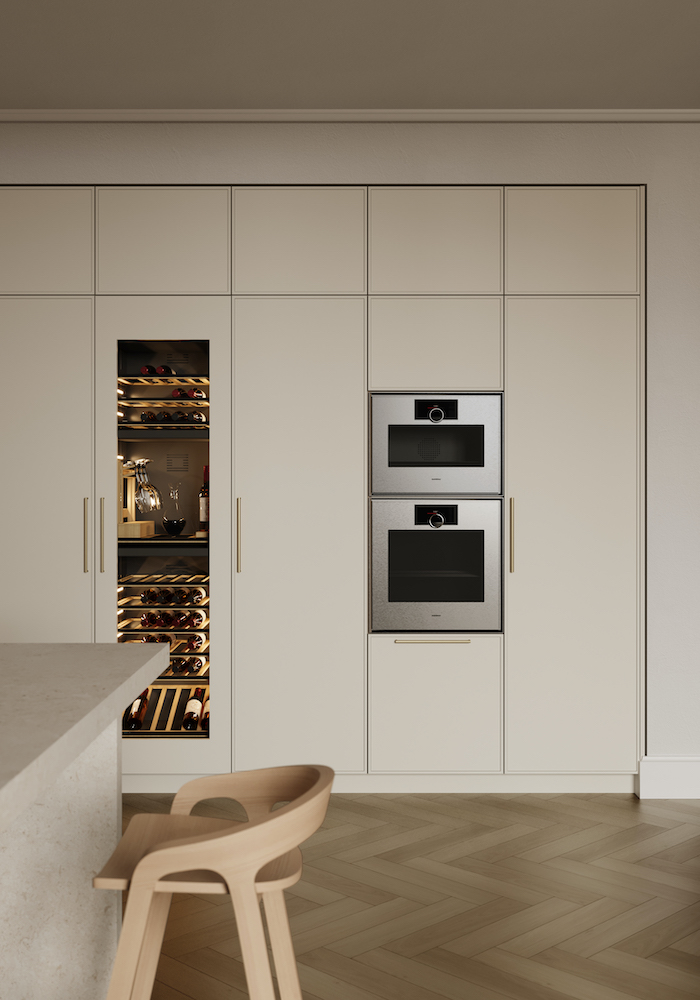
Within tall units
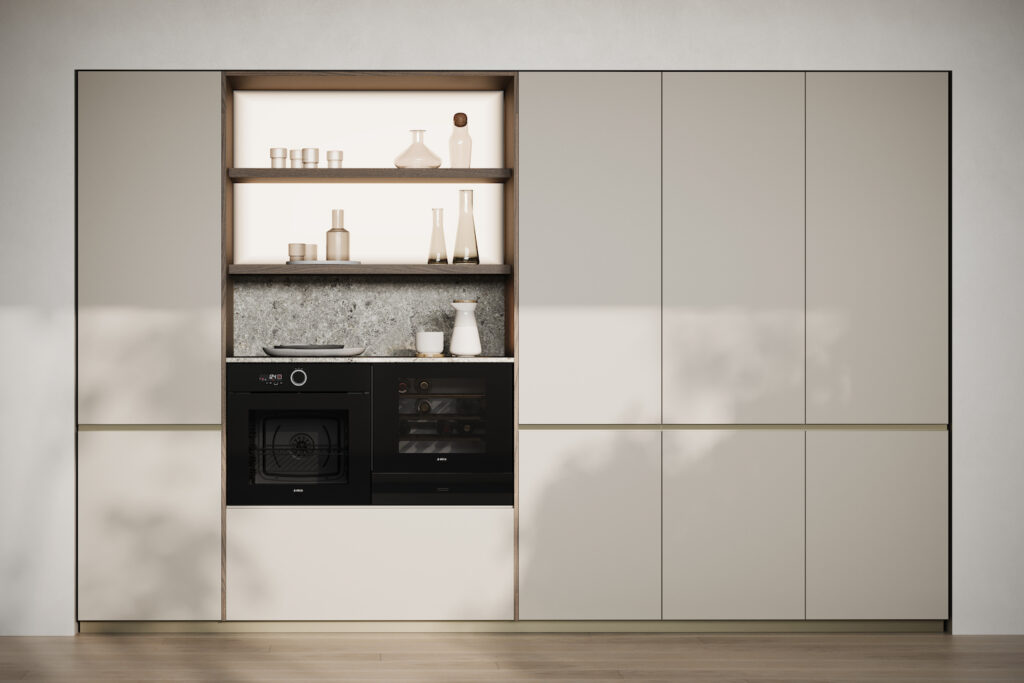
The glazed front can align visually with ovens and other appliances, while a raised position makes labels easier to read and shelves easier to access.
In this case, the result depends on the balance between proportions and alignments; the wine cooler should not appear as an isolated volume, but become part of the overall rhythm of the wall composition.
Between kitchen and living area
Fitted wall panelling, a niche or a double-sided cabinet can extend the language of the kitchen towards the living area, maintaining continuity between the two spaces.
The function changes with the point of view: storage and practical support towards the kitchen, a dedicated space for serving and entertaining towards the living area. In this way, the wine zone supports different ways of experiencing the same environment.
On display, concealed or integrated into the composition
Not every wine area needs to have the same visual presence. Its character depends on the role it plays within the space.
An open solution is particularly suited to kitchens that connect directly with the living area and also serve a showcase function.
A concealed wine area, by contrast, keeps the composition visually essential when it is not in use.
Between these two options are more discreet configurations: a wine cooler aligned with the other appliances, an open module integrated into the wall panelling, or a bottle rack that subtly breaks the continuity of the fronts.
Technical aspects to define at the design stage
Integrating a wine cooler requires precise checks. Niche dimensions, the ventilation system, electrical connection, door opening direction and the clearance required to pull out the shelves vary according to the model selected.
The distance from heat sources, direct exposure to light and the manufacturer’s installation instructions must also be considered. These aspects are barely visible in the finished design, yet they are essential to the correct operation of the appliance and to the quality of wine storage.
A personal space to enjoy every day
A large kitchen is not essential to create a wine area. In a compact space, an undercounter wine cooler, a drawer for accessories and a nearby serving surface may be all that is needed. In a larger environment, the same ritual can take shape through fitted tall units, display cabinets, wall panelling and volumes opening onto the living area.
The dimensions may change, but the principle remains the same: start from everyday habits and translate them into a precise design solution.




What do you think?